The short version
- Warm muscles contract faster and feel less stiff, and cold hands grip less strongly, so cold studios need a longer warm-up.
- On cold days, warm up for about 15 minutes, from heart rate to spine and shoulders and then the wrists.
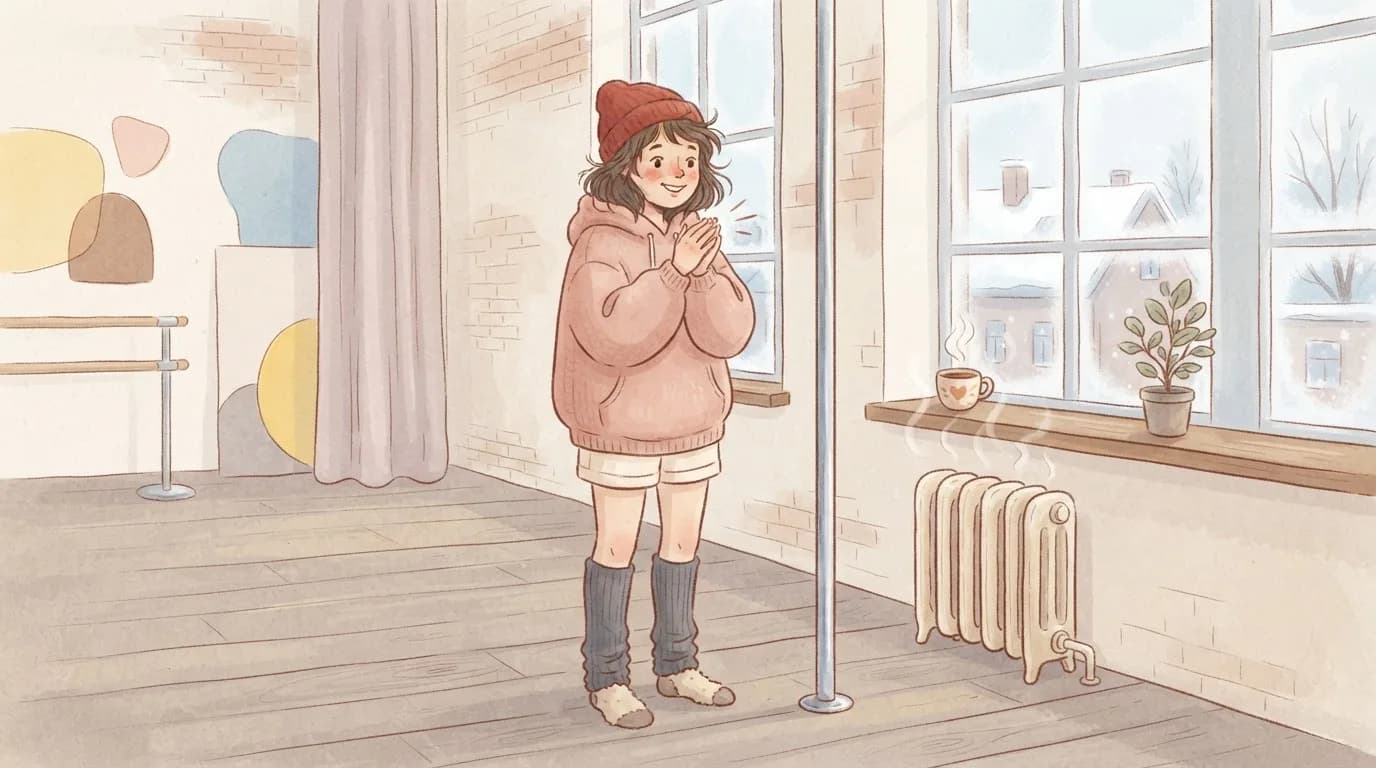
- Layer in clothes you can peel off for skin-contact moves, and put them back on between turns so you don't cool down.
- A waist warmer keeps your lower back warm for warm-ups, stretching and waiting, and can stay on for much of class.
- A heat pack is great for warming hands and back before class, but don't use heat on a fresh injury.
In a cold studio, warm up for longer than usual, keep layers on until your body and hands are properly warm, and put them back on between turns so you don't cool down again. Warm muscles contract faster and feel less stiff, and cold hands lose grip strength, which matters a lot when your grip is holding you on a pole. A waist warmer keeps your lower back warm through warm-ups and stretching, and a reusable heat pack is a cosy way to warm your hands or back before class.
Plenty of pole and aerial studios are in old buildings, basements and halls that never quite warm up in winter, and anyone who trains at home knows the feeling of a cold pole on a dark evening. These are the habits that help.
Why does a cold studio make pole harder?
Most of the benefit of a warm-up comes from raising the temperature of your muscles. Warmer muscles contract and relax faster, feel less stiff and send signals along the nerves more quickly (Bishop, 2003). In a cold room you start further from that point and lose heat faster once you stop moving, so the warm-up you do in summer isn't enough in January.
Your hands feel it most. Studies on hand temperature have found that cold hands grip less strongly (Ramadan, 2017), and on the pole a weaker grip means you squeeze harder, tire faster and put more load through your wrists. Pole dancers argue about whether cold poles are grippier, because a cool room usually means less sweat, but cold and dry hands don't stick well either, and stiff fingers make it harder to place your hands well.
Your lower back and hamstrings are the other places people feel the cold, especially before backbends, deadlifts, inverts and splits.
How should you warm up in a cold studio?
Give yourself about 15 minutes instead of 10, keep your layers on, and work from big movements to small ones.
- Get your heart rate up, 4 minutes. March or jog on the spot, skip, dance to a couple of songs or do some jumping jacks until you feel warm and slightly out of breath.
- Mobilise the spine and lower back, 3 minutes. Cat and cow on your hands and knees, hip circles standing, and slow glute bridges. Your back should feel looser and warmer, never pinched.
- Warm the shoulders, 2 minutes. Big arm circles, shoulder rolls and a few slow scapular squeezes.
- Do a shortened wrist warm-up, 6 minutes. Fist to star, wrist circles, forearm rotations, gentle tabletop rocks and a few lean-back grip holds on the pole. Our 10-minute wrist warm-up for pole and aerial has every step with timings, and after the bigger moves above you can do a quicker pass through it.
Take your layers off only when you start moves that need skin contact, and only the layers that are in the way.
Masha's tip: On cold days, I'd keep the first ten minutes of pole work for easy spins and combos you know well. Save the new tricks and the handsprings for when your hands are properly warm and you can feel the pole again.
What should you wear to train in a cold studio?
Pole needs bare skin to grip, so the trick is layering in a way that's easy to peel off and put back on.
- A loose hoodie or zip top for the warm-up and between turns.
- Leg warmers or loose joggers over your shorts, which come off for moves that need leg grip.
- A waist warmer around your lower back and tummy, which you can often keep on for much of class because pole rarely needs skin contact there.
- Socks or warm-up booties until you need your feet, especially on a cold floor.
- Wrist wraps, if you wear them, which keep the wrist joint warm while leaving your hands bare for the pole.
The habit that makes the biggest difference is putting your layers back on between turns. If you're waiting for the pole or watching the teacher demonstrate, you're cooling down, and a review of studies found that keeping heat in with extra insulation between a warm-up and the effort itself helped people keep more of their power (Cowper and colleagues, 2022).
Why keep your lower back warm?
Pole and aerial ask a lot of the lower back in backbends, inverts, layouts and every move where you hold your body away from the pole. A cold lower back tends to feel stiff and slow to loosen, and that's why many dancers like a waist warmer for the warm-up, for stretching and while they wait between turns.

Our waist warmers are a stretchy band that sits around your waist and lower back over your shorts and top. They come in sizes by waist measurement, and hoop people like them because they also add a soft layer between your back and the hoop. Take yours off if a move needs skin contact on your waist, and my guide to waist warmers for dancers covers how to wear and layer one in class.
How can a heat pack help before training?
A reusable heat pack is a lovely way to take the edge off a cold evening. Warm it following the instructions, then hold it in your hands on the way to class, rest it on your lower back while you change, or tuck it around your neck and shoulders while you wait for your turn. It won't replace a warm-up, because moving is what warms your muscles from the inside, but warm hands and a warm back make that warm-up a lot more pleasant.
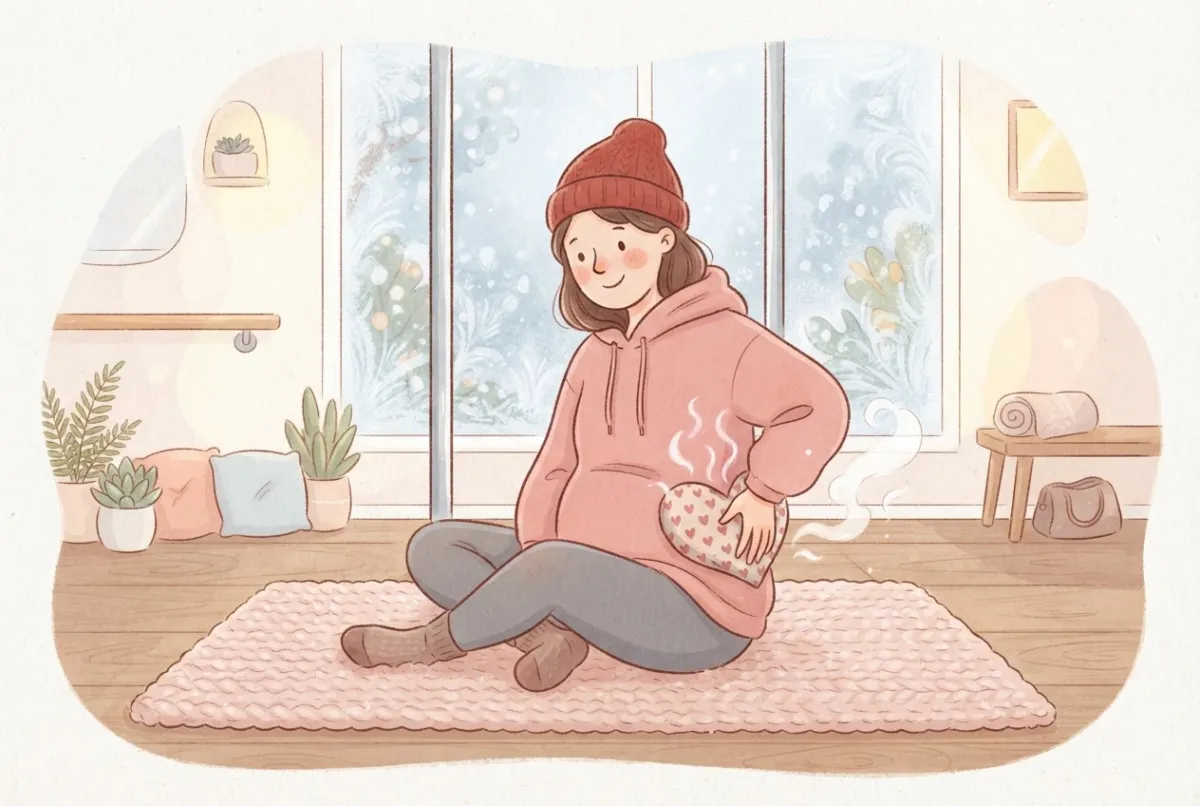
Ours is heart-shaped, made of cotton and filled with rice and lavender, and you heat it in the microwave. It can also go in the freezer to use as a cold pack. Always check the temperature against the inside of your wrist before putting it on your skin, keep a layer between the pack and your skin if it feels too hot, and don't fall asleep on it.
One important exception: don't put heat on a fresh injury. The NHS advice on sprains and strains is to avoid heat for the first couple of days after a sprain or strain, and to use cold instead. If your wrist or back is swollen, bruised or painful after a slip or a fall, get it checked rather than warming it up, and our guide to pole wrist pain lists the signs to watch for.
What else helps when you train pole in winter?
- Arrive a few minutes early so you can warm up before class starts, especially if the studio heating has just come on.
- Keep your hands warm on the way. Gloves and warm hands on arrival make the first spins far less miserable.
- Watch your skin. Cold air and heating both dry it out, so if your grip suffers, a grip aid made for dry skin can help, but keep moisturiser for after class.
- Cool down and layer up straight after. Put your warm clothes back on before you stretch at the end, because it's easy to get cold fast once you stop.
- Look after your wrists between classes. Our six-week wrist conditioning plan builds the strength that keeps you comfortable all year, and our wrist wrap guide explains how to wear wraps without them touching your grip.
If you train hoop or silks, the same rules apply, with extra attention to warm hands before your first hang. Our guide to wrist care for aerial hoop and silks covers grip endurance in the air.
More in Pole & aerial training
- Wrist Pain from Pole Dancing: Why It Happens and What Helps
- Exotic Pole Floorwork in Heels: How to Look After Your Wrists and Knees
- A 20-Minute Home Pole Conditioning Session (Most of It Needs No Pole)
- How to Clean a Dance Pole: Chrome, Brass, Stainless, Powder-Coated and Silicone
- Pole Kisses: Why Pole Dancing Bruises You and When a Bruise Needs Checking
- Can You Still Pole Dance With a Sore Wrist? What to Train While It Settles
- Pole Grip Aids Compared: Which Type Suits Dry, Sweaty or Cold Hands?
- Pole vs Aerial Hoop vs Silks: Which Is Hardest on Your Wrists?
Questions people ask
Is it harder to grip the pole when it's cold?
Often, yes. Cold hands lose grip strength and stiff fingers are harder to place well. A cool room can mean less sweat, but very cold, dry hands don't stick well either, so warm your hands up before you start pole work.
How long should I warm up in a cold pole studio?
About 15 minutes, starting with moves that raise your heart rate and then working on your spine, shoulders and wrists. Keep layers on until you start moves that need skin contact.
Can I wear a waist warmer during pole class?
Yes, for much of class, because few moves need skin contact around the waist. Take it off for any move that does, and keep it on during warm-ups, stretching and between turns.
Should I use a heat pack on a sore wrist before training?
For general stiffness, gentle warmth before a warm-up can feel nice. Don't use heat on a new injury with swelling or bruising in the first couple of days, and get any injury after a fall checked.
Is it bad to stretch when you're cold?
Stretching cold muscles tends to feel stiffer and less comfortable, so do your stretching after a proper warm-up, or at the end of class with your warm layers back on.
Shop the fix
Wraps made for exactly this
Handmade in Slovenia by a pole teacher, with firm compression that sits low on the wrist.
Sources we checked
- Bishop (2003): Warm up I, potential mechanisms and the effects of passive warm up on exercise performance, Sports Medicine
- Cowper et al. (2022): The impact of passive heat maintenance strategies between an active warm-up and performance
- Ramadan (2017): The effects of industrial protective gloves and hand skin temperatures on hand grip strength
- NHS: Sprains and strains
Written by
Masha Pinner
Pole dance teacher at Pandora Art of Pole in Slovenia and former fashion designer. Masha started SneakyDeez in 2017 after years of teaching on sore wrists, and she still designs every pair.
Read Masha’s story