The short version
- Pole bruises happen because your skin presses and rubs hard against the pole, which can leak blood from tiny vessels under the skin.
- They're most common on the inner thighs, backs of the knees and inner arms, especially while you're learning new holds.
- A normal pole bruise sits where the pole touched you, changes colour and usually fades within about two weeks.
- See a GP for unexplained, frequent or large bruises, a bruise that won't fade, a hard lump, severe pain, numbness or other bleeding.
- Placing yourself into holds slowly, squeezing actively and sorting out your grip all mean fewer pole kisses.
Pole bruises, which dancers lovingly call pole kisses, happen because your skin presses and rubs hard against the pole while you hold on, and that pressure can leak a little blood from tiny vessels under the skin. They're very common when you're learning new holds and usually fade within about two weeks. See a doctor if you start bruising without a clear knock, get lots of large bruises, have a bruise that isn't fading after a couple of weeks, or notice a hard swelling, severe pain or numbness.
Almost every pole student I've taught has turned up at some point with purple knees and asked whether that's normal. Usually it is, and it tends to calm down as your technique improves, but it's worth knowing the difference between a proud pole kiss and a bruise that needs a doctor.
Why does pole dancing leave bruises?
On the pole, your skin is what holds you up. In a pole sit your inner thighs squeeze the metal, in a knee hold the back of your knee carries your weight, and in a forearm grip the pole presses into the soft inside of your arm. That squeeze has to be firm enough to hold your body, and the pressure, plus any twisting or sliding of the skin, can damage the small blood vessels underneath. The blood pools under the skin and shows up as a bruise (Cleveland Clinic).
New moves cause the most bruising because you haven't yet learned exactly where the contact point is, so you slide around, drop into the hold instead of placing yourself in it, and squeeze in the wrong spot. You're definitely not alone, either. In a survey of pole athletes in Ukraine, bruises and other soft-tissue injuries were by far the most commonly reported kind of injury (Antonova, 2023).
Where do pole bruises usually show up?
| Where | Typical moves | What usually helps |
|---|---|---|
| Inner thighs | Pole sits, thigh holds, crucifix | Squeeze before you let go with your hands, and find the exact spot high on the thigh |
| Back of the knee | Knee holds, outside and inside leg hangs | Lower into the hang slowly with your hands still on, and pull the toes towards you to lock the knee hook |
| Inner arm and forearm | Forearm grip, elbow grip, armpit holds | Place the arm before you load it, and avoid sliding down into the grip |
| Shins, ankles and tops of the feet | Climbs and floorwork | Climb with control rather than shuffling, and wear kneepads or leg warmers for floorwork |
| Hips, ribs and the side of the body | Waist holds, pole hugs and some spins | Spread the contact over a bigger area and keep your body engaged |
Is it normal to bruise from pole, or should you worry?
A normal pole bruise appears where the pole touched you, feels tender when you press it, and changes colour as it heals. Bruises often start red or purple and then go brown, green or yellow on lighter skin, while on darker skin they may look purple, dark brown or black, and most fade within about two weeks (Cleveland Clinic). New dancers often bruise in the same spots for a few weeks, and many find it eases once they stop sliding into holds.
Some bruising is a reason to see a GP or doctor rather than shrugging it off. The NHS says to see a GP if you often get lots of bruises or large bruises, and it lists frequent nosebleeds, bleeding gums and heavy periods as other signs that your blood may not be clotting as it should. Please get checked if:
- You get bruises where nothing touched you, or you suddenly start bruising much more than usual.
- Your bruises are often large, or you get lots of them from light contact.
- A bruise hasn't faded after about two weeks, or keeps coming back in the same place.
- A hard lump forms under the bruise, or there's painful swelling that gets bigger.
- The pain is severe, keeps getting worse, or you can't move the joint properly.
- You have numbness, tingling or a cold, pale limb near the bruise.
- You bruise easily along with nosebleeds, bleeding gums, very heavy periods, or blood in your pee or poo.
- You take blood thinners or other medicines and notice much more bruising than before.
- You fell from the pole and hit your head, which needs medical advice whatever the bruise looks like.
How do you look after a pole bruise?
Most pole kisses need nothing more than time, but a little care in the first couple of days helps them settle.
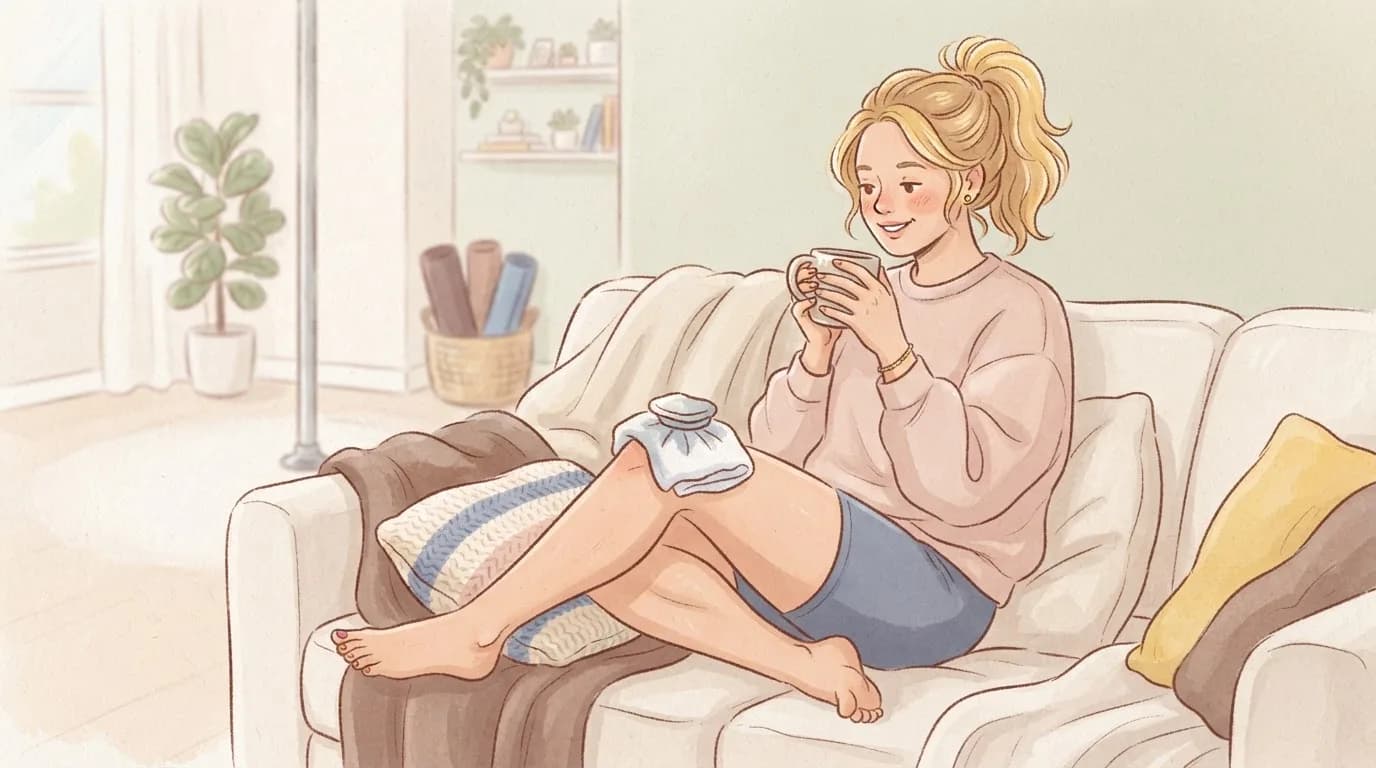
- Cool it early. In the first day or two, hold a cold pack or a bag of frozen peas wrapped in a towel on the bruise for up to 15 minutes at a time, a few times a day. Never put ice straight on your skin.
- Raise it if it's on a leg and feels swollen, for example with your feet up on a cushion in the evening.
- Switch to warmth after a couple of days if it still feels sore, since Cleveland Clinic suggests a warm compress from about day two.
- Leave it alone. Pressing and prodding to check it, or massaging it hard, won't make it go faster.
- Give that spot a break. Choose moves that use a different contact point for your next class, so the same bruise isn't squeezed again before it heals.
If you need to hide a bruise for work or an event, that's fine, but for the next class wear shorts as usual, because covering your legs takes away the skin grip you need and you'll slide more. Our guide to what to wear to pole class explains why bare skin matters.
How can you bruise less on the pole?
You'll never be completely bruise-free in pole, but you can make pole kisses much rarer. The main fixes are technique and strength rather than toughening up your skin.
Place yourself into holds instead of dropping into them
Most bruises come from the moment you arrive in a hold, when your skin hits the pole with speed or slides down it. Learn new holds low on the pole, keep your hands on until the leg is firmly engaged, and lower into the position slowly so the contact point is exactly where it should be. Ask your teacher to show you where the pole should sit, because a few centimetres higher or lower can be the difference between a solid hold and a bruise.
Build the strength to squeeze actively
A hold that's actively squeezed sits still, while a hold you're hanging in passively tends to grind. Strong inner thighs, hamstrings and grip let you engage on purpose and stay put. This short routine, two or three times a week, makes a big difference.
- Inner-thigh squeezes, 3 sets of 10 squeezes of 5 seconds. Lie on your back with your knees bent and squeeze a cushion or soft ball between them. You should feel your inner thighs working hard by the end.
- Hamstring curls with a towel, 3 sets of 10. On a smooth floor, lie on your back with your heels on a towel, lift your hips and slowly slide your heels in and out. It builds the strength behind your knees that knee holds rely on.
- Low pole sit holds, 3 holds of 10 to 20 seconds. Climb just high enough to sit, squeeze, and keep your hands on the pole. Aim for a still hold with no slipping.
- Grip hangs, 3 holds of 10 to 20 seconds. Hang with both hands and your feet still touching the floor, taking some of your weight. Tired forearms are a sign it's working, but stop if your wrist hurts.
For a longer plan that also looks after your wrists, see our six-week pole conditioning plan.
Sort out your grip so you slide less
Sweaty or dry skin makes you slip, and slipping is what turns a firm contact into a scraping one. The right grip aid for your skin, used in the right amount, means less sliding and fewer friction marks, and our comparison of pole grip aids helps you choose.
Masha's tip: Learn new leg holds at the start of class while your legs are fresh, and keep the number of attempts small. Ten tired attempts at a knee hold will leave you with more bruises than three careful ones, and the careful ones teach you more.
Do pole bruises get better with time?
For most dancers they do. As you get more precise about where the pole sits, stronger at squeezing, and calmer about arriving in holds, the bruising usually becomes much rarer, and new pole kisses mostly show up when you start learning the next level of moves. If you're in your first few months, our guide to your first month of pole explains what else your body is getting used to.
If you keep bruising heavily even on moves you know well, or you notice any of the warning signs above, please check in with a doctor rather than putting it down to pole.
Questions people ask
What are pole kisses?
Pole kisses is the friendly name pole dancers use for the bruises and marks the pole leaves on your skin, usually on the inner thighs, behind the knees and on the inner arms.
Is it normal to bruise a lot from pole dancing?
Bruising where the pole touched you is very common, especially when you're learning new holds, and it usually becomes rarer as your technique improves. Bruising without a knock, lots of large bruises, or bruises with nosebleeds or bleeding gums are reasons to see a GP.
How long do pole bruises take to heal?
Most bruises fade within about two weeks, changing colour as they heal. If one hasn't faded after a couple of weeks, or there's a hard lump or growing swelling, get it checked.
Should I put ice or heat on a pole bruise?
In the first day or two, a cold pack wrapped in a towel for up to 15 minutes at a time can help. After a couple of days, Cleveland Clinic suggests a warm compress if it's still sore.
Can I wear leggings to stop pole bruises?
Covering your legs reduces the skin contact you need for leg holds, so you'll slide more, and sliding causes more marks. It's better to learn holds slowly and build the strength to squeeze actively, and keep leggings or kneepads for floorwork.
Do pole bruises stop happening?
For most dancers they become much rarer once you know exactly where the pole sits and can engage into holds instead of dropping into them. They often come back for a while when you start learning the next level of moves.
Sources we checked
Written by
Masha Pinner
Pole dance teacher at Pandora Art of Pole in Slovenia and former fashion designer. Masha started SneakyDeez in 2017 after years of teaching on sore wrists, and she still designs every pair.
Read Masha’s story