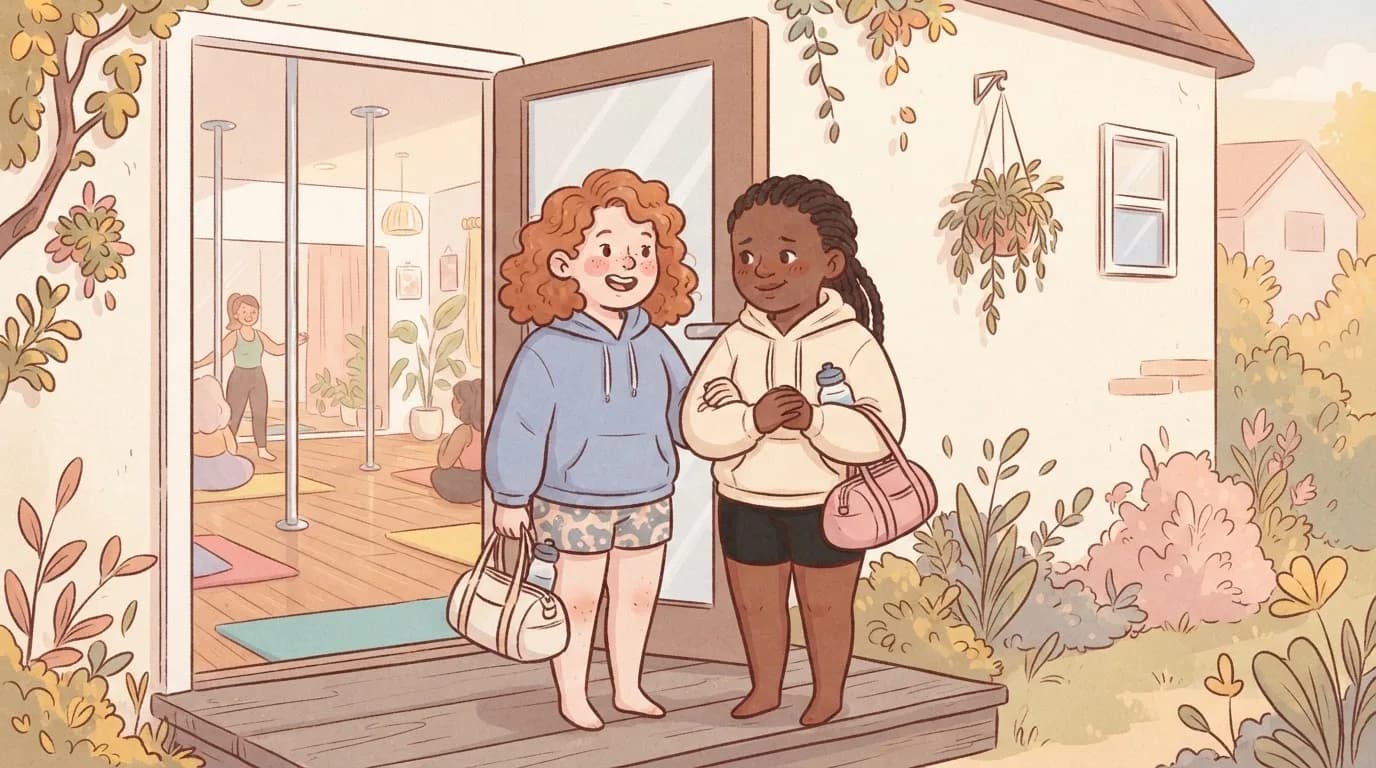
The short version
- Wear fitted shorts and a sports bra or fitted top, because bare skin is what grips the pole.
- Skip moisturiser and body lotion from the morning of class and take off your jewellery.
- Bring water, a hair tie, a small towel and a warm layer for the warm-up.
- A first class usually covers a warm-up, holding and walking around the pole, simple spins and a short combo.
- Tell your teacher about any injuries or health conditions, and go at your own pace.
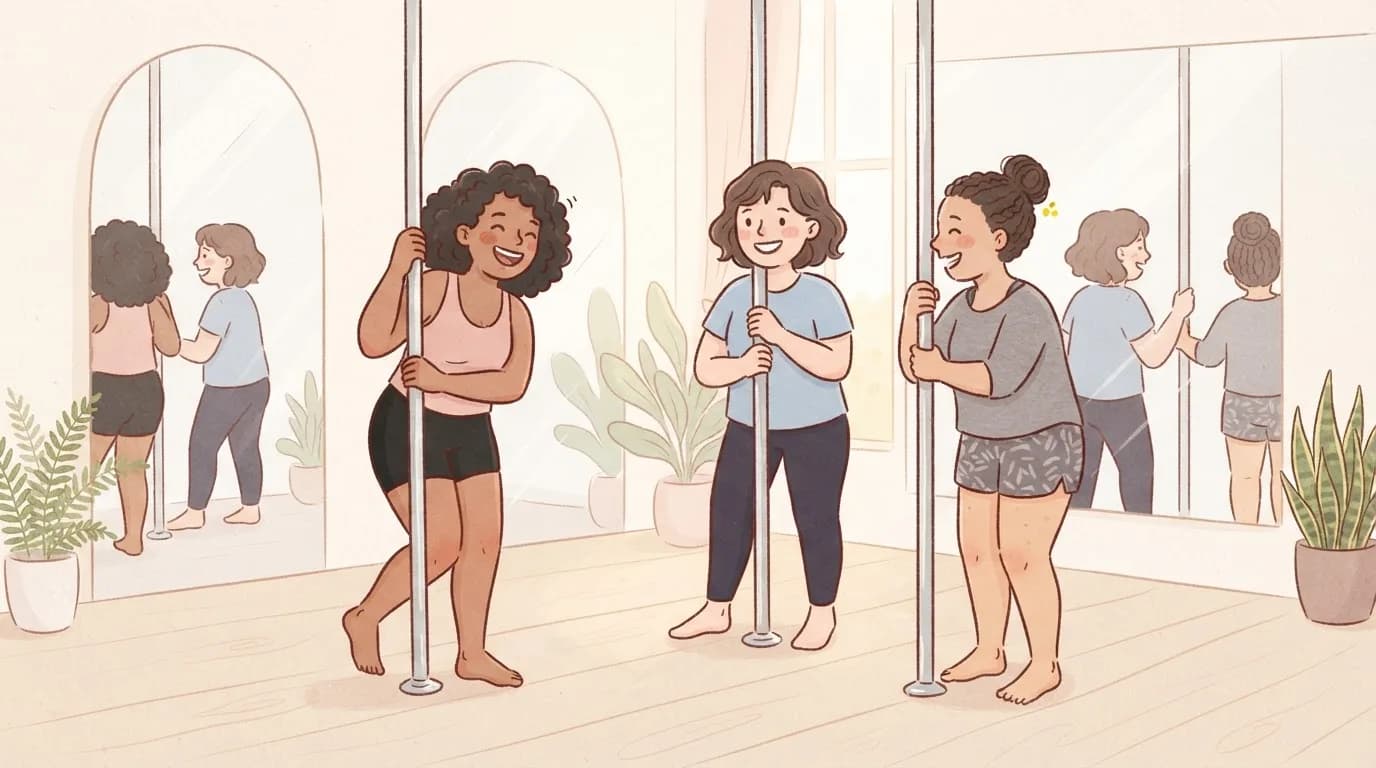
For your first pole class, wear shorts and a fitted sports top or sports bra, because your skin needs to touch the pole to grip, and skip body lotion and hand cream that day. Bring water, a hair tie and a warm layer for the warm-up, take off your jewellery, and you'll usually dance barefoot. You don't need to be fit, flexible or confident to start, because everyone in a beginner class is new too.
When I teach first classes at Pandora Art of Pole in Slovenia, the questions people ask in the changing room are almost always the same ones, so I've put the answers in one place.
Why do you need to show skin in pole class?
Pole grip comes from skin on metal. Fabric slides on a chrome pole, so the parts of you that hold on, like the inside of your knees, your thighs, the backs of your knees and the inside of your arms, need to be bare. That's the whole reason pole wear looks the way it does, and honestly nobody in class is looking at your body, because they're all too busy working out how to get their own leg round the pole.
In a first class you won't do many moves that need your legs to grip, so you can start with what you're comfortable in and work towards less fabric as you get into it.
What should you wear to your first pole class?
Bottoms
Fitted shorts are best, such as cycling shorts, running shorts or proper pole shorts if you have them. Choose something that stays put when you lift your leg and doesn't ride up uncomfortably. Long leggings will let you do the warm-up and walks, but they'll make it harder to try anything where your leg holds the pole.
Top
A sports bra or a fitted sports top that leaves your arms bare. Loose T-shirts tend to slip up when you turn upside down later on, and they get caught between you and the pole. Pick something supportive that you can move in freely.

Feet
Most beginner classes are barefoot. Some studios run heels classes, and some let you wear grippy socks for the warm-up, so check with your studio if you're unsure. If you're coming to a heels class, the studio will usually tell you what kind of shoes to bring.
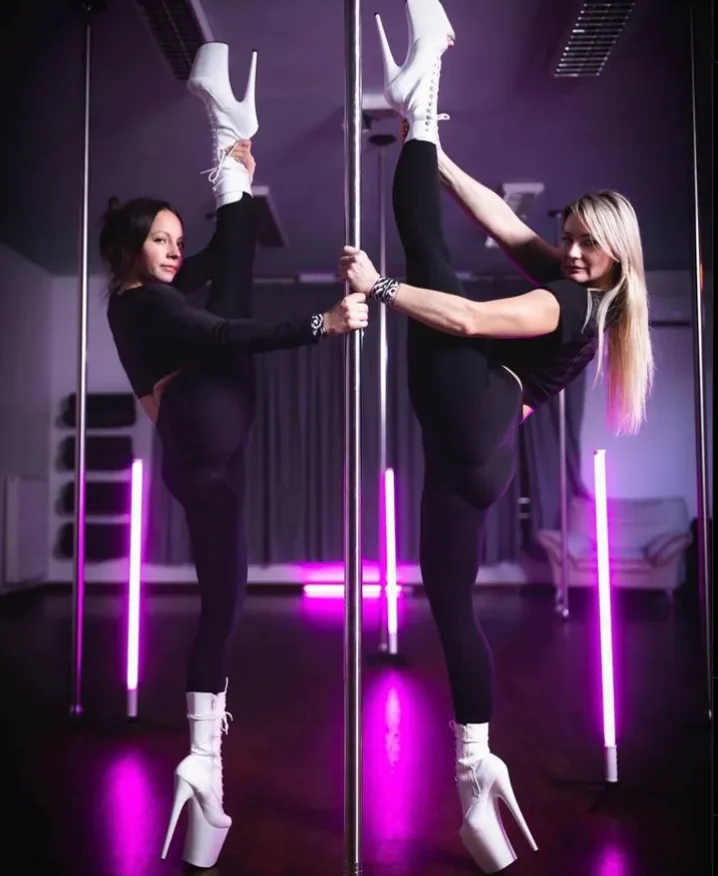
A warm layer
Bring a hoodie, leg warmers or a waist warmer for the warm-up and the cool-down. Cold muscles and cold hands don't grip well, and studios can be chilly, especially in winter. Our tips for training in a cold studio explain why keeping warm between moves helps.
What should you avoid on the day?
- Moisturiser, body lotion and oils. They make you and the pole slippery, and they can stay on your skin for hours, so leave them out from the morning of class.
- Jewellery. Rings, bracelets and watches scratch the pole and can pinch your skin or catch. Small stud earrings are usually fine.
- Fabric that's too loose or slippery, like wide-leg trousers or silky tops.
- Coming in on an empty stomach, or straight after a big meal. A light snack an hour or two before is ideal.
What should you bring in your bag?
- Water, because you'll be working harder than you think.
- A hair tie, so your hair stays out of the way and doesn't get trapped between you and the pole.
- A small towel for your hands and face.
- Grip aid, only if your hands are very dry or very sweaty and your studio allows it. Most first-timers don't need any, so ask your teacher before you use one.
- Wrist wraps, if you'd like some support. They aren't something you must have, but many beginners like them, because the first classes ask a lot of your hands and wrists. A wrap that sits low on the wrist gives firm compression and warmth while your hand stays free to grip, and you can take them off for the parts of class where you don't need them. Our guide to wrist wraps for pole explains how to choose and wear them, and measuring your wrist only takes a minute.
- A change of clothes and a plaster or two, in case you find a new bruise.
What happens in a first pole class?
Every studio is different, but a beginner class usually follows a similar shape.
- Warm-up. Around 10 to 15 minutes of moving your whole body, with special attention to wrists, shoulders and hips.
- Getting to know the pole. Your teacher will show you how to hold it, how to walk around it and how much to squeeze.
- A first spin or two. Simple spins with your feet starting on the floor, so you learn how it feels to let the pole carry you.
- A little floorwork or a short combo. Many teachers finish with a few moves put together to music, which is usually where everyone starts grinning.
- Cool-down and stretch.
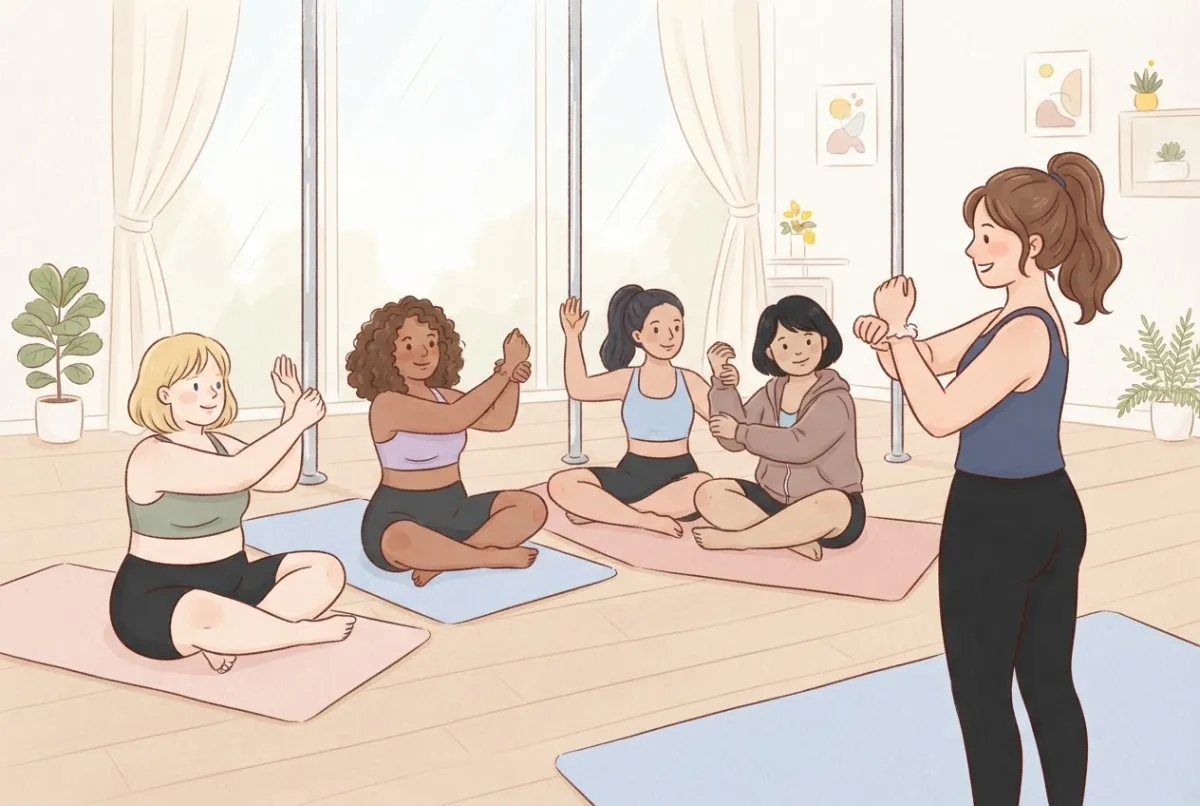
Expect your forearms and hands to feel tired by the end, and expect a bit of soreness a day or two later. That's normal, and our guide to your wrists in the first month of pole explains what's usual and what isn't.
What if you're nervous about your first pole class?
Almost everyone is. People worry that they're not strong enough, not flexible enough, too old, too big or too shy, and then they find a room full of people who worried about exactly the same things. Beginner classes are built for people who have never touched a pole, so you won't be asked to go upside down or do anything you're not ready for. If age is the worry, my guide to starting pole dancing after 40 was written with you in mind.
- Tell your teacher before class if you have an injury, a health condition or you're pregnant, so they can adapt things for you.
- Go at your own pace. You can always sit out a move or try an easier version.
- Arrive a few minutes early so you can get changed calmly and say hello.
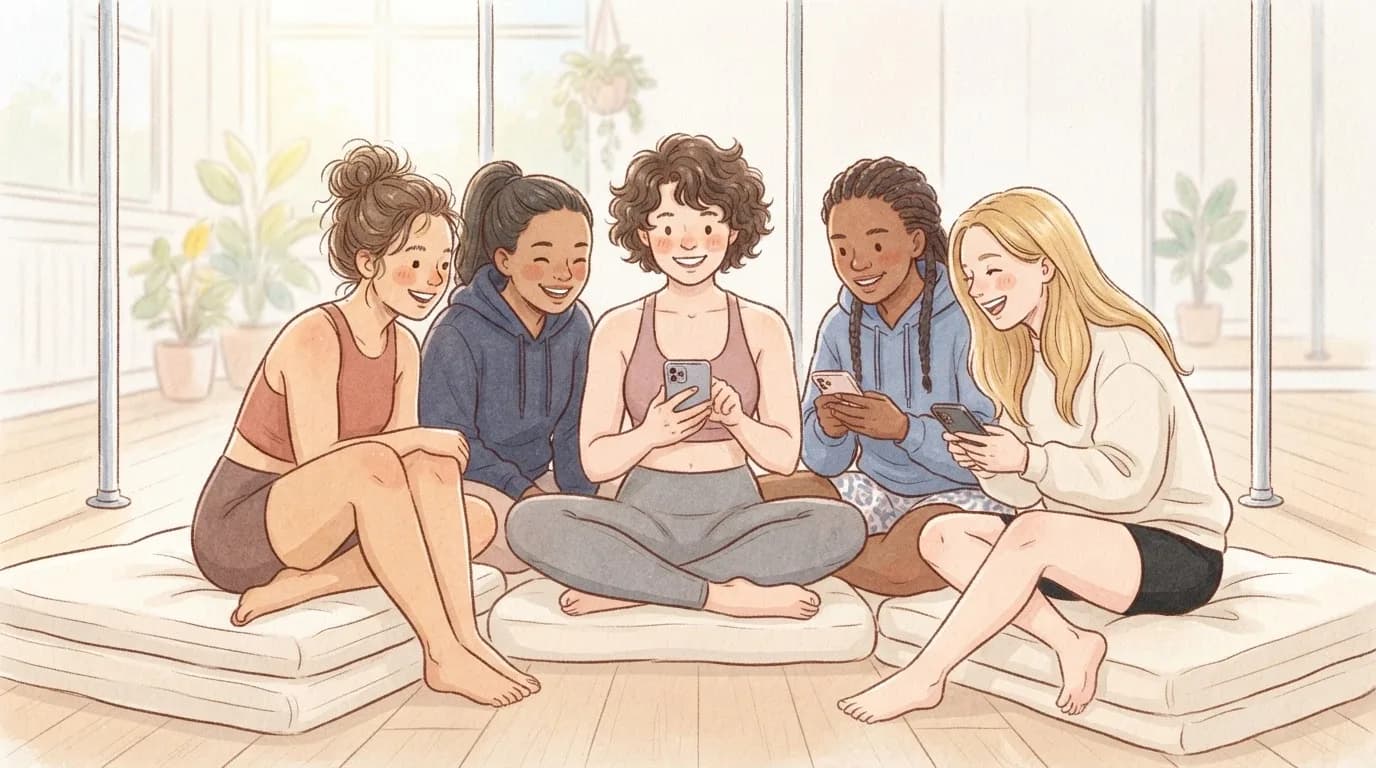
- Bring a friend if you can, because it's much easier to laugh at the awkward bits together.
Masha's tip: Try not to spend your first class watching yourself in the mirror. Listen to the music, laugh with the people next to you and let yourself be a proper beginner, because the moment your first spin works is a lovely one and it's a shame to miss it while you worry about how you look.
Is it a good idea to start pole with a friend?
Starting together makes the first few weeks so much easier. You can book the same class, share the nerves, compare bruises and remind each other to keep going when your arms are sore. If a few of you are starting at once and you'd all like wraps, our group buy lets each of you choose your own design and size through one shared link. It all arrives in one parcel, and the discount grows with the number of pairs, starting at 10% off for two. Our guide on how to organise a group order for your class walks you through it.
After a few weeks, if you'd like to look after your wrists as you start trying more, our 10-minute wrist warm-up for pole is a good habit to start early.
More in Starting pole & aerial
- Pole Dance for Beginners: Your Wrists in the First Month
- Aerial Hoop for Beginners: Your Hands and Wrists in the First Month
- How to Choose a Pole Studio: What to Look For Before You Book
- Starting Pole Dancing After 40: A Kind, Practical Guide for Your Joints
- Wrist Wraps for Pole Studios: A Guide for Studio Owners and Instructors
- Gift Ideas for Pole Dancers and Aerialists They'll Actually Use
- How to Organise a Group Order of Wrist Wraps for Your Pole Class
Questions people ask
Can I wear leggings to my first pole class?
You can, and they're fine for the warm-up, walks and spins. They make it harder to do anything where your legs grip the pole, so most people switch to shorts once they start learning those moves.
Do you wear shoes in pole class?
Most beginner classes are barefoot. Heels classes are the exception, and your studio will tell you what to bring if that's the class you've booked.
Why can't you wear moisturiser before pole?
Lotions and oils make your skin slippery on the pole, which makes holding on harder and less safe. It's best to leave them out from the morning of class and moisturise afterwards instead.
Do I need to be strong or flexible to start pole?
No. Beginner classes are made for people starting from zero, and strength and flexibility build up as you go.
Should I wear wrist wraps to my first pole class?
You don't need them, but many beginners like the extra support and warmth because the first classes work the hands and wrists hard. Choose wraps that sit low on the wrist so your hand stays free to grip.
Shop the fix
Wraps made for exactly this
Handmade in Slovenia by a pole teacher, with firm compression that sits low on the wrist.
Written by
Masha Pinner
Pole dance teacher at Pandora Art of Pole in Slovenia and former fashion designer. Masha started SneakyDeez in 2017 after years of teaching on sore wrists, and she still designs every pair.
Read Masha’s story