The short version
- Achy forearms, tender palms, early calluses and bruises on the backs of the knees are normal in your first month of hoop.
- Sharp pain in one spot, swelling, pain that stays after a move, or numbness and tingling are signs to ease off and get advice.
- Wrap your whole hand around the bar, squeeze only as much as the move needs and keep your shoulders engaged when you hang.
- Keep calluses smooth, leave blisters intact and save hand balm for after class.
- Supported hangs, wrist curls, finger extensions and farmer's holds two or three times a week build grip gradually.
In your first month of aerial hoop it's normal for your forearms to ache a day or two after class, for your palms to feel tender and start building calluses, and for your grip to give out sooner than you'd like. It isn't normal to have sharp pain in one spot of your wrist, swelling, pain that starts during a move and stays, or numbness and tingling in your hand. Go to one or two classes a week, warm up your hands and wrists every time, and spend your days off on gentle grip conditioning.
A lot of our customers fly on hoop, and the same questions come up again and again from people in their first few weeks, mostly about sore hands and whether what they feel is normal. This guide covers your hands and wrists in month one, from grip and skin to soreness, conditioning and what to bring.
Why is aerial hoop so hard on your hands at first?
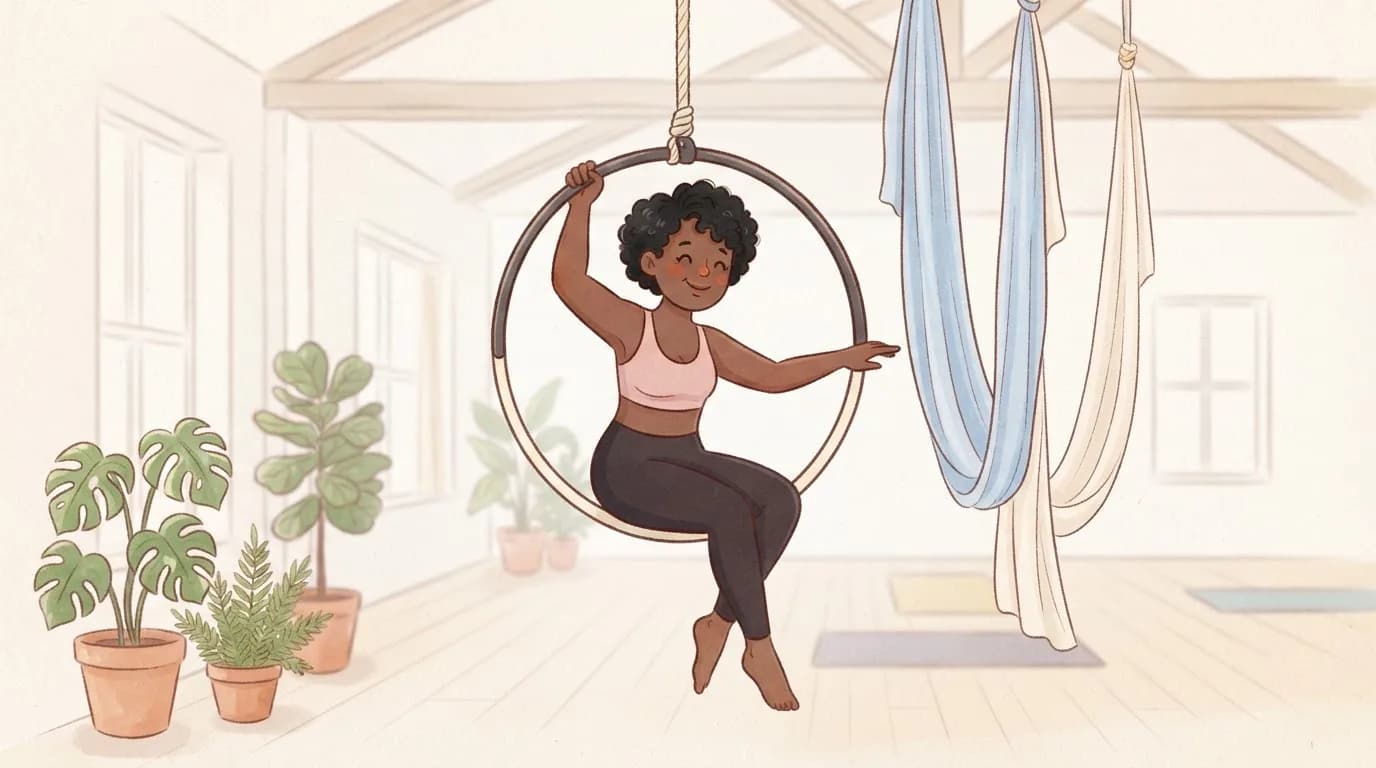
A hoop is a steel ring, usually wrapped in grippy tape, and the bar you hold is narrower than most things you've ever hung from. Your fingers have to close tightly around it, and in many positions your wrist sits bent forwards or sideways while it holds your weight. The muscles that close your hand live in your forearm, so after a class of hangs and mounts the whole area from your fingers to your elbow can feel tired and tender.
Your skin is working hard too. The tape gives you grip by creating friction, and friction on soft palms means redness, tenderness and sometimes blisters until your skin toughens up. That's part of the process for nearly everyone, and it usually gets easier within a few weeks.
How should you hold the hoop?
Your coach will show you the grip they teach, so follow their cues first. These are the basics most coaches agree on.
- Wrap your whole hand. Hold with your palm and fingers, and close your thumb around the bar unless your coach asks for something else. A thumb wrapped around the bar is more secure than one resting alongside your fingers.
- Squeeze as much as the move needs. A death grip burns through your forearms in minutes and leaves nothing for the next move.
- Keep your shoulders switched on. When you hang, draw your shoulders gently down away from your ears so the joint isn't just dangling off your grip.
- Keep your wrist fairly straight. A wrist roughly in line with your forearm handles load better than one sagging into a deep bend. If it starts collapsing, that's usually fatigue and a good moment to come down.
- Use your legs and body. Hooks behind the knees, seated positions and good body tension all take weight off your hands.
What happens to your skin in the first month?
Expect your palms and the base of your fingers to feel a bit raw after your first classes, and expect a few bruises on the backs of your knees, your hips and your inner arms where the hoop presses. Over the weeks your palms build calluses, which are thicker patches of skin that form wherever there's regular friction and protect the skin underneath (Cleveland Clinic).
Calluses are useful, but very thick or ridged ones can catch and tear, so keep them smooth by filing them gently after a shower and moisturising your hands in the evening. Avoid hand cream before class, because it makes the bar slippery. If you get a blister, leave it intact, keep it clean and cover it with a soft plaster, and stop doing whatever caused it until it heals, as the NHS advice on blisters explains. A blister that becomes hot, red or filled with yellow or green pus may be infected and needs to be seen.
Is it normal soreness or pain you should listen to?
Muscle soreness usually appears a day or two after training, spreads across the muscle and fades within a few days (Cleveland Clinic). Pain that behaves differently is worth taking seriously.
| Usually normal in month one | Ease off and get advice |
|---|---|
| Achy, tired forearms a day or two after class | Sharp pain in one spot of the wrist or elbow |
| Hands that won't fully open straight after a long hang | Pain that starts during a move and stays afterwards |
| Tender palms and early calluses | Swelling, or pain after a slip or a fall onto your hand |
| Bruises on the backs of the knees, hips and arms | Numbness, tingling or pins and needles in your hand |
| Soreness that eases as you warm up | Pain that gets worse class after class, or wakes you at night |
If anything from the right-hand column shows up, stop the moves that hurt and tell your coach. See a doctor or physio if it doesn't settle within about two weeks, or straight away after a fall, which matches the NHS advice on wrist pain. In a year-long study of circus artists, the shoulder was the most commonly injured area and most injuries came from repetitive use (Greenspan and Stuckey, 2023), so keep an eye on your shoulders as well as your hands.
What does a first month of hoop usually look like?
Every studio has its own syllabus, so take this as a rough picture.
Weeks 1 and 2
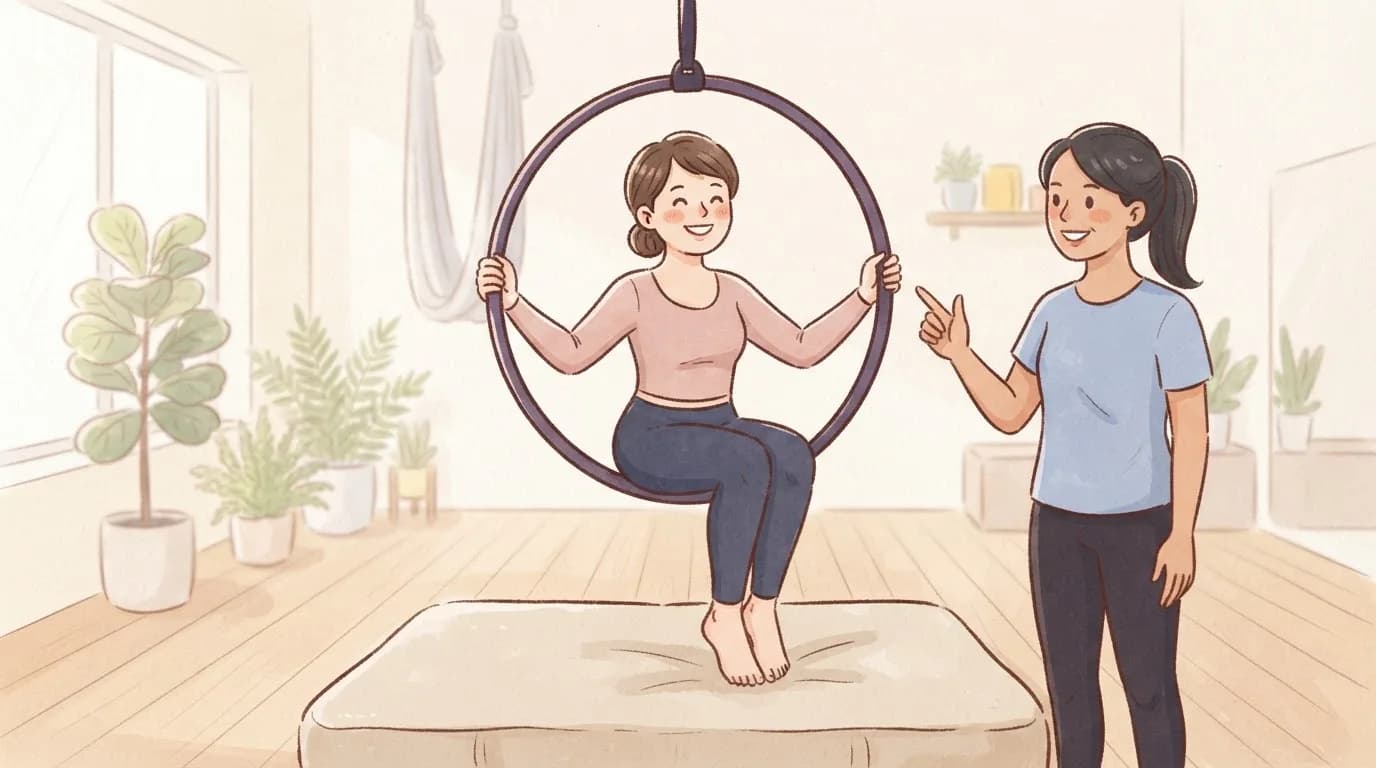
You'll learn how to hold the hoop, how to hang with active shoulders, and how to get into the hoop from a low height, often with your feet on a mat or a block. Seated and standing positions inside the hoop come early, and so do a lot of short hangs. Your forearms will notice, and your palms will probably be tender.
Weeks 3 and 4
Many classes start working on a mount from a hang, simple balances, and transitions between positions. Mounts are where most of the grip and pulling strength goes, so they're also where your hands get tired fastest. Take a proper rest between attempts, shake out your hands, and don't go straight back up while your forearms are still burning.
Masha's tip: If you can't fully open your hand after a hang, give it a few minutes before the next attempt. A rested grip learns the move faster than a tired one, and you'll waste fewer tries.
What conditioning helps your grip and wrists?
Two or three short sessions a week on days you're not in class are plenty to start with. Keep each exercise smooth and controlled, and stop if anything feels sharp.
- Supported hangs, 3 sets of 10 to 15 seconds. Hang from a bar with your feet touching the floor or a step, shoulders gently drawn down. Rest a minute between sets. It should feel like hard work in your hands, never like a pull in your elbow.
- Scapular pulls, 2 sets of 6. From a supported hang, draw your shoulders down and slightly back without bending your arms, then release slowly.
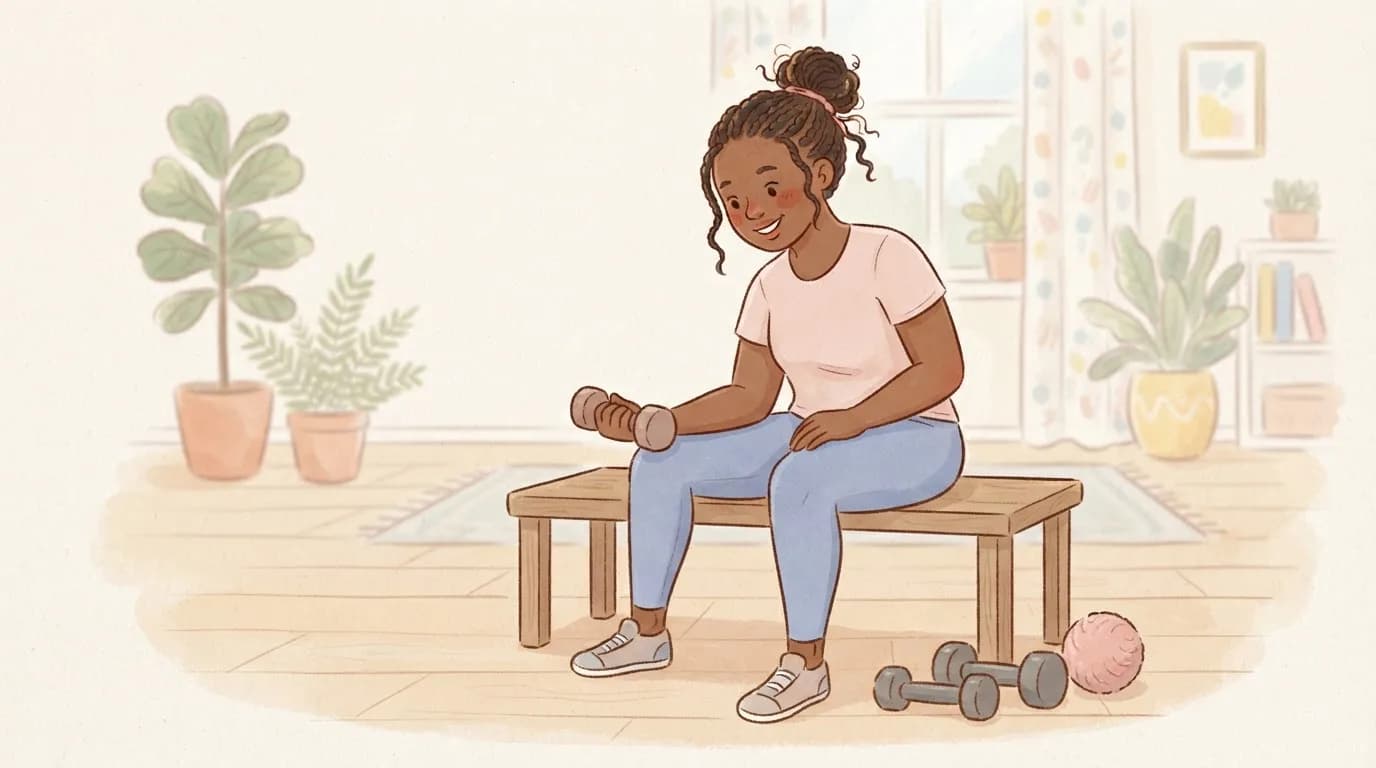
- Wrist curls and reverse curls, 2 sets of 12 each. Use a light dumbbell or a full water bottle with your forearm resting on your knee. The last few reps should feel like work and stay smooth.
- Finger extensions with a rubber band, 2 sets of 20. Put a band around your fingers and open them against it. This balances all the squeezing hoop asks for.
- Farmer's holds, 3 sets of 20 seconds. Hold a heavy bag or a dumbbell in each hand with your arms by your sides and your shoulders level.
Tendons adapt more slowly than muscles, so increase hang times by a few seconds at a time over weeks rather than all at once. Our guide on how to strengthen your wrists has more exercises to add later, and our wrist care guide for hoop and silks goes deeper into grip technique in the air.
How should you warm up before hoop?
Do a general warm-up, then give your hands and wrists their own few minutes. Wrist circles, opening and closing your fists, and gentle rocking on all fours wake things up, and our 10-minute wrist warm-up for pole and aerial has the whole routine. Finish on the hoop with your feet on the floor, holding the bar and leaning back, before your first full hang.
What should you wear and bring to hoop class?
- Leggings or long shorts. The backs of your knees and your thighs take a lot of pressure on the hoop, and many beginners find leggings kinder at first. Ask your coach whether some moves need bare skin.
- A fitted top. Something that won't ride up or catch when you're upside down. Many people like sleeves, because the hoop presses into the inner arms and armpits.
- No jewellery or zips. Rings, bracelets and zips scratch the hoop and can pinch or catch.
- Water and a small towel. Wipe your hands between turns if they get sweaty.
- Hand balm for after class. Keep it for the evening, because it makes your grip slippery.
- A warm layer. A hoodie, leg warmers or a waist warmer keeps you warm during the warm-up and between turns.
- Grip aid and wrist wraps, if you like them. Check with your studio about grip aids, as some have rules about what can go on the hoop tape.

If you'd like a wrap, choose one that sits low on the wrist so it stays clear of the bar in your hand. It gives compression and warmth and a feeling of support while your grip strength catches up, and it doesn't replace warming up or getting a sore wrist checked. Our guide to choosing and wearing wrist wraps covers sizing and fit, and measuring your wrist takes about a minute.
Questions people ask
Is it normal for my hands to hurt after aerial hoop?
Tender palms and tired, achy forearms are very common in your first weeks and usually ease as your skin toughens and your grip gets stronger. Sharp pain in one spot of the wrist, swelling or numbness is not normal and is worth getting checked.
How do I stop getting blisters on the hoop?
Build up your time on the hoop gradually, keep your calluses smooth by filing them gently, and moisturise in the evening rather than before class. If you do get a blister, leave it intact, keep it clean and cover it until it heals.
How often should a beginner do aerial hoop?
One or two classes a week with a rest day between them is a good start. Use your days off for gentle grip conditioning and add classes one at a time.
What should I wear to my first aerial hoop class?
Leggings or long shorts and a fitted top that won't ride up, with no jewellery or zips. Bring water, a towel and a warm layer for the warm-up.
Can I wear wrist wraps on the aerial hoop?
Yes, many aerialists do. Choose a wrap that sits low on the wrist so it stays clear of the bar in your hand, and make sure it's firm without causing numbness or tingling.
Shop the fix
Wraps made for exactly this
Handmade in Slovenia by a pole teacher, with firm compression that sits low on the wrist.
Sources we checked
Written by
Masha Pinner
Pole dance teacher at Pandora Art of Pole in Slovenia and former fashion designer. Masha started SneakyDeez in 2017 after years of teaching on sore wrists, and she still designs every pair.
Read Masha’s story