The short version
- You can start pole at 40, 50 or later, and you don't need to be strong or flexible first.
- Tendons in older adults still adapt to strength training, but the changes take months, so progress slowly.
- Warm up your wrists and shoulders properly before every class and keep your shoulders engaged when you hang.
- Start with one or two classes a week with a day between them and use the next-morning test to judge the load.
- See a doctor or physio for swelling after a fall, numbness or tingling, night pain, weakness or pain lasting more than about two weeks.
It's never too late to start pole dancing, and plenty of people take their first class in their forties, fifties or later. Your muscles and tendons still get stronger with training at any age, but they like a gentler start, so give yourself a longer warm-up, add new moves and extra classes slowly, and leave more time to recover between sessions. If you have a heart condition, osteoporosis, arthritis or an injury, or you haven't exercised for a long time, have a quick chat with your GP before you start.
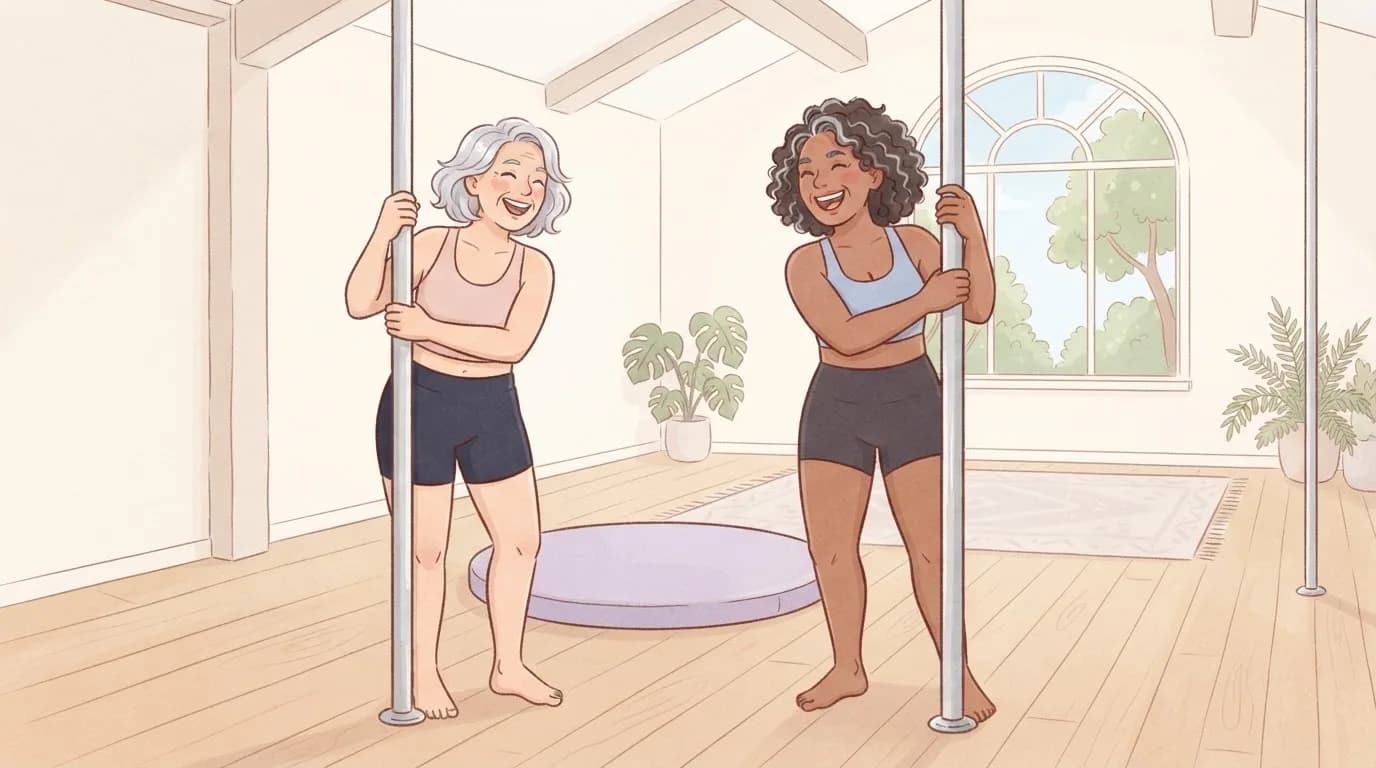
People often ask me, a little nervously, whether they're too old for pole, and I always want to hug them, because the question usually means they really want to try it. This guide is for you if you're starting later and want to look after your joints while you fall in love with it.
Is it too late to start pole dancing at 40 or 50?
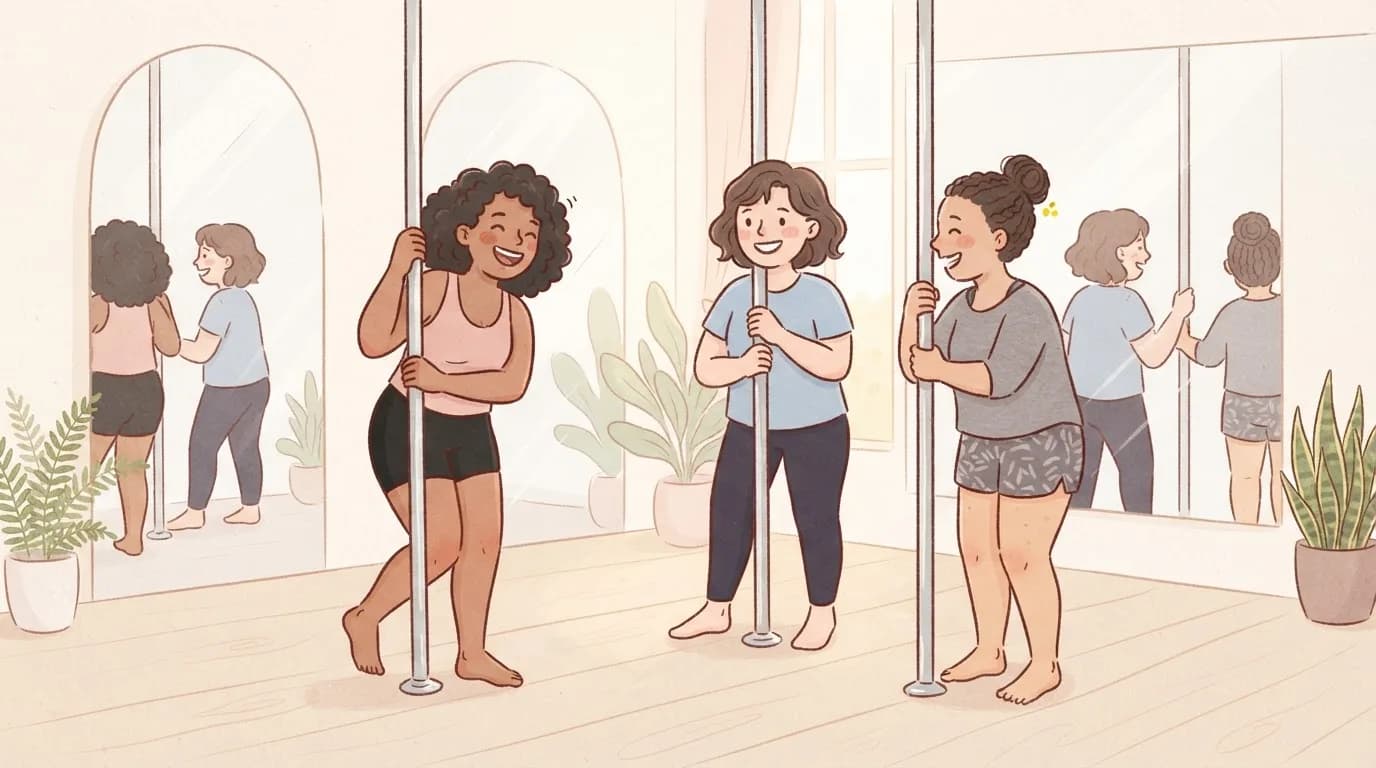
No. Pole is a skill you learn step by step, and every beginner class starts with walks, simple spins and learning how to hold on, whatever age the people in it are. You don't need to be flexible, slim or already strong, because the strength comes from the classes.
What does change with age is how much runway your body needs. You may take a little longer to recover from a hard class, and your joints may complain sooner if you jump ahead. That just means planning your progress a little more patiently, which is a good habit at any age.
What changes in your body after 40, and what doesn't?
Tendons tend to get less stiff as we age, and muscle strength drops if we don't use it. The encouraging part is that tendons in older adults still respond to strength training: a review of the research found that after 12 to 14 weeks of training, older adults' tendons changed by similar amounts to younger adults' (McCrum and colleagues, 2018). The same review notes that those changes took months of consistent work, which is a good reminder that patience is part of the plan.
Strength training is also good for you in general. The NHS recommends that adults do activities that strengthen all the major muscle groups on at least two days a week (NHS physical activity guidelines), and it lists bodyweight and resistance exercise among the things that help keep bones strong (NHS: preventing osteoporosis). Pole works your arms, shoulders, back, core and legs in every class, so it fits that description very nicely, and it's a lot more fun than counting reps in a gym.
How do you look after your wrists, shoulders and joints?
Wrists
Pole asks your wrists to hold your body weight, to twist in spins and to bend back under your weight on the floor. None of that is something daily life prepares you for, so your forearms will feel it after the first few classes. Hold the pole with your whole hand instead of just your fingers, squeeze only as hard as the move needs, and treat floorwork that puts weight through your hands as something to build up to. Our guide to wrist pain from pole dancing explains what each grip asks of your wrist.
Shoulders
In a large survey of pole dancers the shoulder was the most commonly injured area (Lee and colleagues, 2020), so it deserves your attention from the start. When you hang or lean away from the pole, keep your shoulders gently engaged, drawn down away from your ears, instead of dropping into the joint. If your shoulders are stiff, tell your teacher, because there's usually a version of each move that suits the range you have today.
Knees, hips and back
Pole uses skin contact behind the knees and on the thighs, and floorwork means kneeling and sliding, so knee pads or a folded towel are welcome for floor sections if your knees are sensitive. Keep your lower back warm during the warm-up, and if you have a back or hip problem, mention it before class so your teacher can suggest alternatives.
How should you warm up when you start pole after 40?
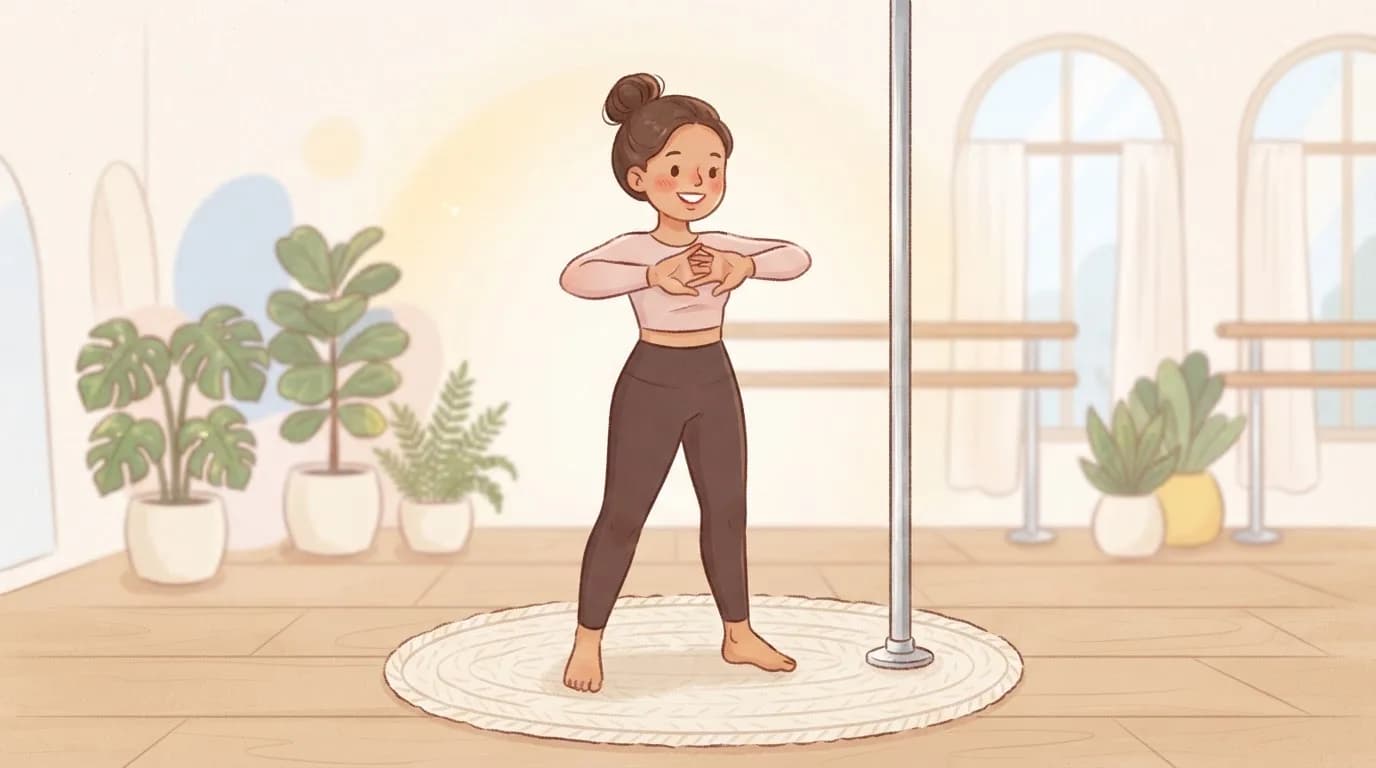
A good studio warms up the whole class, but it's worth arriving ten minutes early to give your wrists and shoulders a bit of extra time. This short routine is gentle and works well before any class.
- March and swing your arms, 2 to 3 minutes. Keep going until you feel warm and your breathing has picked up a little.
- Shoulder circles, 10 forwards and 10 backwards. Start small and make them bigger, and keep them slow and comfortable.
- Wrist circles, 10 each way. With your fingers loosely laced together, roll your wrists in both directions.
- Make a fist and spread your fingers, 10 times. Squeeze gently, then open your hand as wide as you can.
- Kneeling wrist rocks, 10 slow reps. On all fours with your hands under your shoulders, rock forward a little over your hands and back. You should feel a mild stretch at the front of the wrist, and you should stop if you feel a pinch on top.
- Easy lean-backs on the pole, 3 holds of 10 seconds. Hold the pole with both hands, feet on the floor, and lean back with straight arms and engaged shoulders.
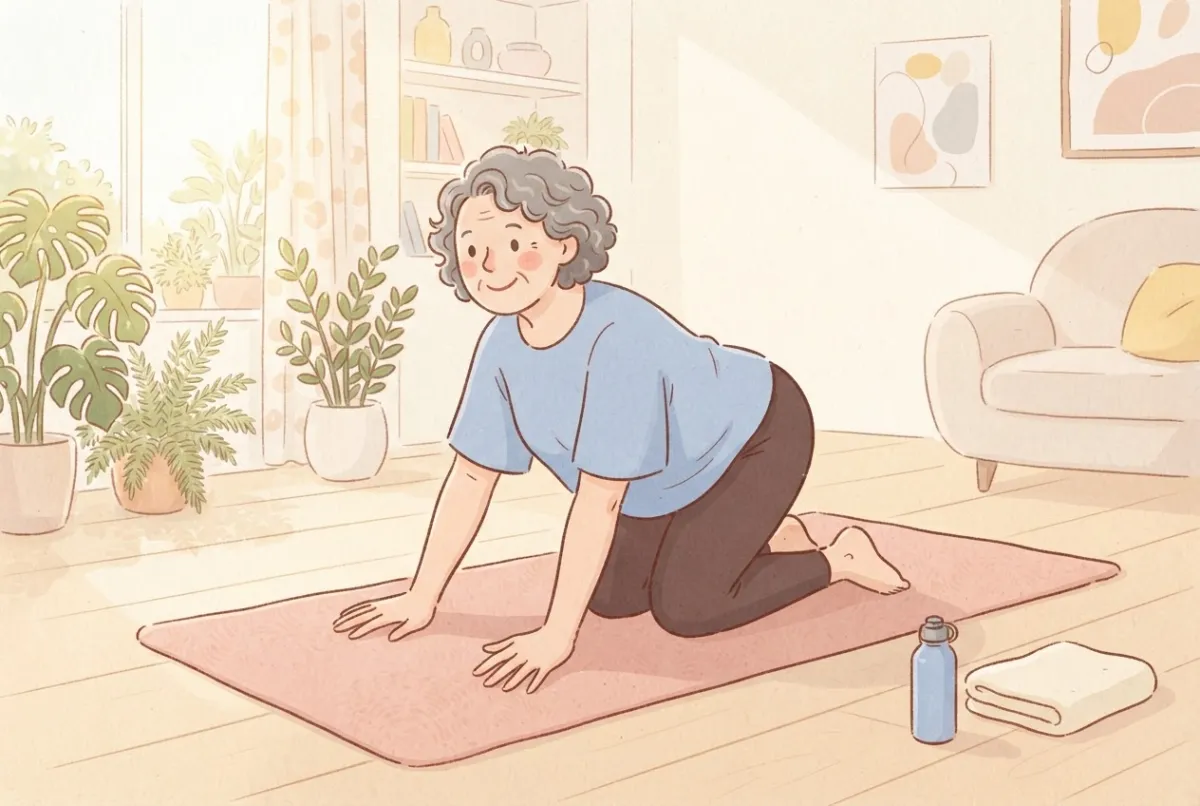
Our full 10-minute wrist warm-up for pole and aerial has more options, and if your studio is chilly in winter, read our tips for warming up in a cold studio.
How much recovery do you need?
Start with one or two classes a week, with at least a day between them, and keep that rhythm for the first couple of months before you add more. Tired, achy forearms a day or two after class are normal at first, and they usually ease within a few days. On rest days, gentle movement such as a walk, a stretch or an easy swim usually helps more than sitting still.
I like the next-morning test for working out whether a class was the right amount. If your wrists and shoulders feel the same or better the morning after, the load was fine. If they're stiffer or sorer than the day before, your next session should be lighter, and that isn't a step backwards because it's how your body tells you what it's ready for. Sleep and regular meals help recovery more than any gadget, and a warm shower or a heat pack on tight shoulders in the evening is a lovely way to wind down.
Masha's tip: Try not to compare yourself with whoever is on the next pole. Compare yourself with where you were last month, because steady classes over months are what get you to the moves you're dreaming about.
How do you choose a pole class when you're over 40?
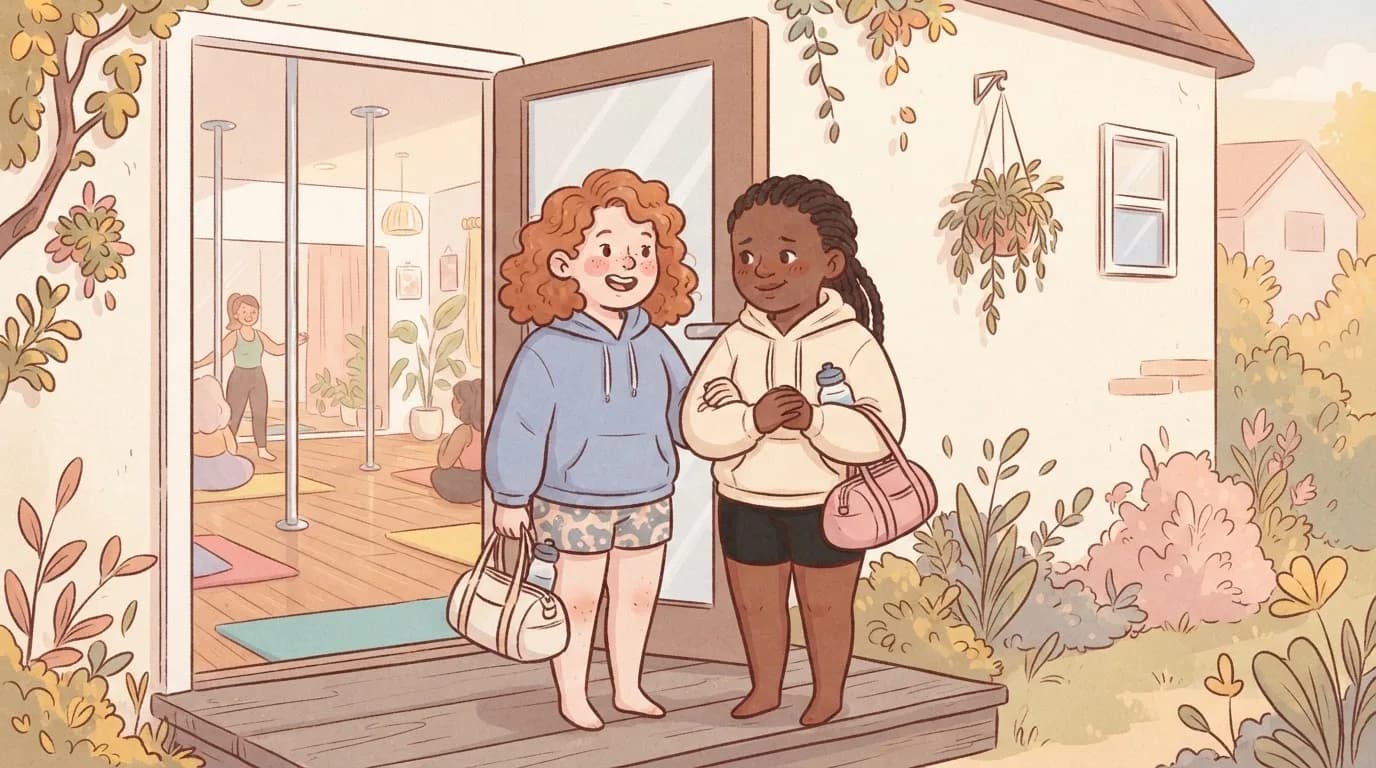
Look for a studio with a proper beginner course that builds over several weeks, rather than dropping you into a mixed-level class. A good teacher will ask about injuries and health conditions before you start, offer easier versions of moves, and make sure the class warms up properly. Small classes help, because the teacher can actually see you and correct you.
Styles vary a lot too. Some classes focus on tricks and strength, some on flow and floorwork, and some are heels classes with a sensual style, so pick the one that makes you excited to go. Some studios also run classes for grown-ups or for a particular age group, which many people enjoy. Our guide on how to choose a pole studio covers the questions to ask before you book.
How do you tell soreness from pain?
Muscle soreness arrives a day or two after class, spreads across the muscle and fades within a few days. Pain that's sharp, sits in one spot of a joint, starts during a move or gets worse class after class is your body asking you to stop that move and get advice. These are the signs from the NHS advice on wrist pain that mean you should see a doctor or physio:
- Swelling, bruising or an odd shape after a slip or a fall onto your hand.
- Numbness, tingling or pins and needles in your hand that doesn't go away.
- Pain that wakes you at night or is there even when you rest.
- Weakness, or a sudden loss of grip.
- Pain that hasn't improved after about two weeks of lighter training.
Do wrist wraps help when you start later?
Some people like the feeling of firm compression around the wrist while they train, because it keeps the joint warm and gives a sense of support, especially in grip-heavy classes. Ours sit low on the wrist, so your palm stays bare on the pole. A wrap doesn't replace a good warm-up or a gradual start, and if you have arthritis or a diagnosed wrist problem, ask your physio whether compression suits you. Our guide to wrist wraps for pole explains how to choose a pair, and you can see every design in the shop.
Most of all, enjoy it, because starting something new and a bit daring takes courage at any age and you deserve to have fun with it.
Questions people ask
Am I too old to start pole dancing?
No. Pole is taught in small steps from the very first class, so people start in their forties, fifties and later. If you have a health condition or haven't exercised for a long time, check with your GP first.
Is pole dancing good exercise after 40?
Pole is a full-body strength workout, and the NHS recommends muscle-strengthening activity on at least two days a week for adults. Build up gradually and give yourself enough recovery between classes.
How often should I do pole if I start after 40?
One or two classes a week with at least a day between them is a good start. Keep that rhythm for a couple of months before adding more, and add one class at a time.
Will my wrists cope with pole as an older beginner?
Most people's wrists adapt well with a proper warm-up, a whole-hand grip and a gradual build-up of floorwork and weight-bearing moves. Sharp pain in one spot, swelling or numbness are signs to stop and get checked.
What kind of pole class should I choose after 40?
Look for a structured beginner course with small classes, a proper warm-up and a teacher who asks about injuries and offers easier versions of moves. Pick the style that excites you, whether that's tricks, flow or heels.
Shop the fix
Wraps made for exactly this
Handmade in Slovenia by a pole teacher, with firm compression that sits low on the wrist.
Sources we checked
- McCrum et al. (2018): Alterations in leg extensor muscle-tendon unit biomechanical properties with ageing and mechanical loading, Frontiers in Physiology
- NHS: Physical activity guidelines for adults aged 19 to 64
- NHS: Preventing osteoporosis
- Lee, Lin and Tan (2020): Prevalence of pole dance injuries from a global online survey
- NHS: Wrist pain
Written by
Masha Pinner
Pole dance teacher at Pandora Art of Pole in Slovenia and former fashion designer. Masha started SneakyDeez in 2017 after years of teaching on sore wrists, and she still designs every pair.
Read Masha’s story