The short version
- Look for trained, insured instructors with first aid who ask about injuries and offer easier versions of moves.
- Every class should start with a proper warm-up, and every pole should have a crash mat for moves that leave the ground.
- Small classes and a structured beginner course give you more feedback and a safer progression.
- Pole finish, diameter and static or spin mode all change how a pole feels, and smaller poles are easier on small hands.
- Book a trial class, ask questions before you commit, and walk away from pressure, skipped warm-ups or missing mats.
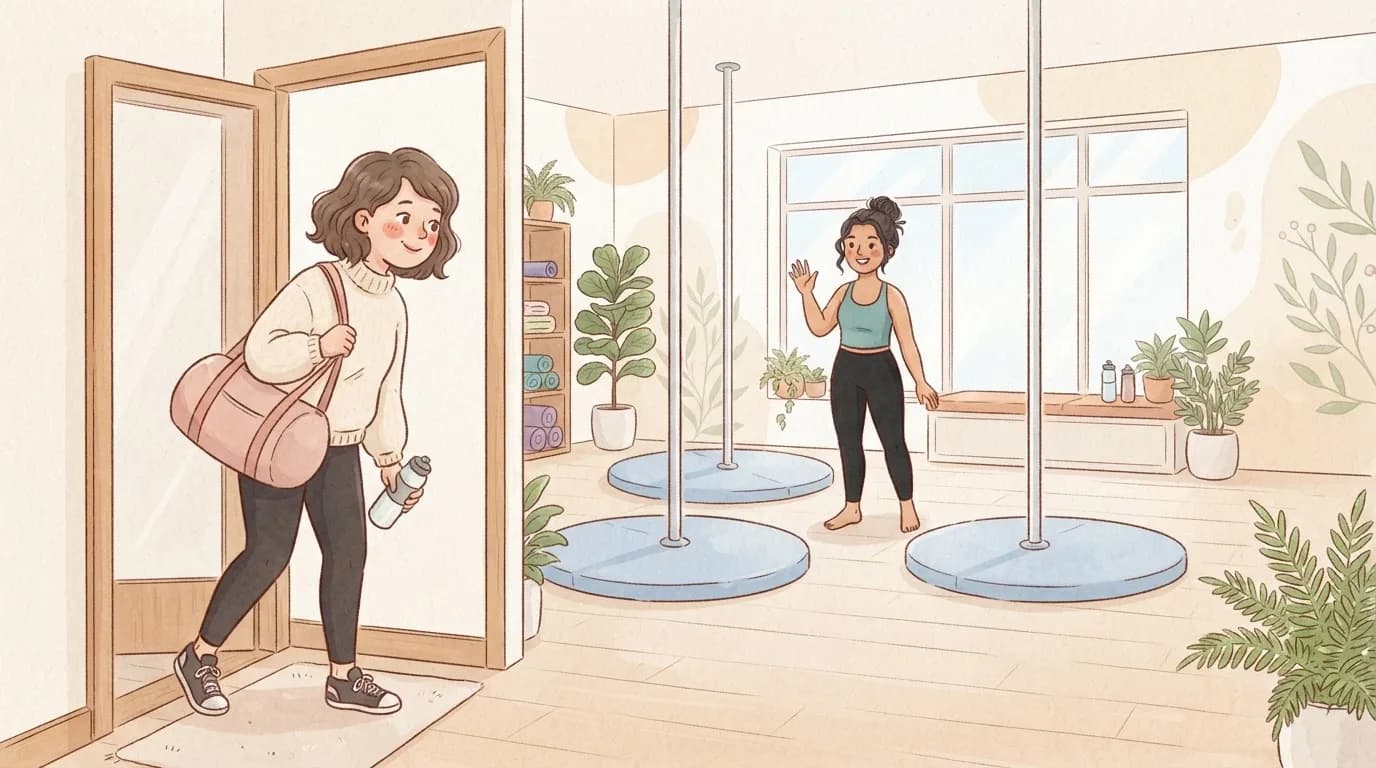
A good pole studio has trained, insured instructors who teach in clear progressions, a proper warm-up at the start of every class, classes small enough that the teacher can actually watch you, crash mats under anything that leaves the ground, and well-kept poles. It should also have a real beginner programme and a friendly, respectful atmosphere where you feel comfortable. Book a trial or intro class, ask a few questions before you pay for a course, and trust your gut about how the place makes you feel.
I teach pole at Pandora Art of Pole in Slovenia, and I've seen how much the right studio shapes someone's first year, from how quickly they progress to whether their wrists and shoulders stay happy. This is what I'd look for if I were choosing a studio as a student today.
Are the instructors properly trained?
Teaching pole well takes more than being good at pole. Ask whether the instructors have a recognised pole instructor qualification, whether they have current first aid training, and whether the studio and its teachers are insured. Experience of teaching beginners matters too, because breaking a move into safe steps and spotting someone properly are skills of their own.
A good instructor will ask about injuries and health conditions before your first class, give you an easier version of a move when you need one, and explain why you're doing something as well as how. If you mention a sore wrist or a stiff shoulder, they should take it seriously and adjust, rather than telling you to push through.
Does every class start with a proper warm-up?
A proper warm-up gets your heart rate up, mobilises your shoulders, spine and hips, and gives your wrists and forearms some attention before you hang from them. In most classes that takes around ten to fifteen minutes. If a studio regularly skips it to fit more tricks in, that's a sign they're not thinking about your body in the long run. Our 10-minute wrist warm-up for pole and aerial shows what a good wrist warm-up looks like, so you'll recognise one when you see it.
How big are the classes?
Small classes mean more feedback and safer spotting. Sharing a pole with one other person is normal in many studios and gives you a rest between turns, but if three or four people queue for every pole you'll spend most of the class waiting and cooling down. Ask how many students there are per pole and per teacher, and whether there's a second instructor or assistant when the class is big or working on inverts.
Are there crash mats, and does the teacher spot?
Every pole should have a crash mat under it whenever someone is learning a move that leaves the ground, and especially for inverts and anything upside down. In a small series of pole sport injuries, most of them to the head, neck or spine, the authors suggested that proper training equipment such as landing mats could probably reduce accidents (Dittrich and colleagues, 2020). It was only five cases, but the advice matches what good teachers already do.
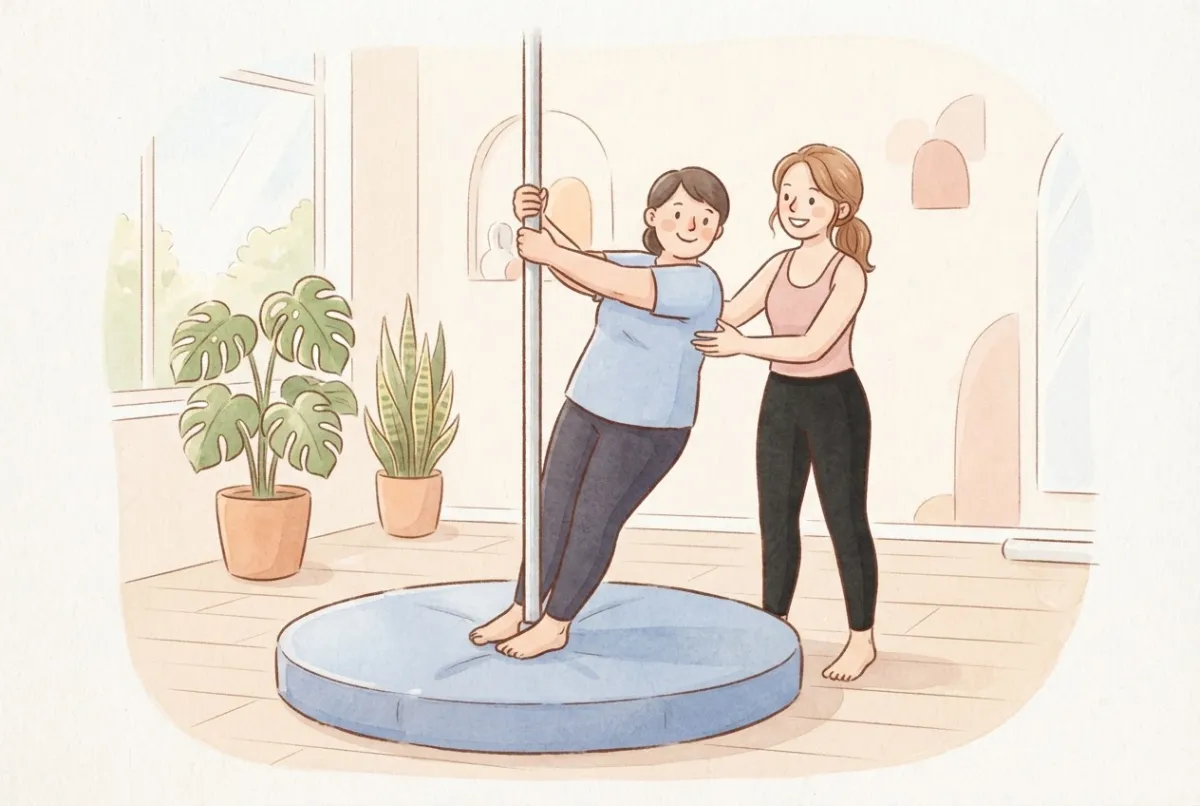
Spotting means the teacher stands close and supports you through a new move until you can do it safely on your own. A good teacher will tell you where their hands will be before they spot you and will check that you're comfortable with being touched.
What kind of poles does the studio have?
You don't need to be an expert on poles, but knowing the basics helps you ask sensible questions and understand why one studio might feel different from another.
| Feature | What it means for you | What to ask |
|---|---|---|
| Chrome or stainless steel | The most common finishes. Stainless can feel slippery to some people, especially in a warm room | What finish are the poles, and do they keep them clean between classes? |
| Brass or titanium-coated | Often feel grippier, and some dancers prefer them | If you have a metal allergy, ask what the poles are made of |
| Powder-coated or silicone | Very grippy, so sits and holds feel easier, but spins and slides behave differently and the friction can be harsher on skin | Do classes use these for particular moves only? |
| Diameter | Common sizes are 45 mm, 40 mm and 38 mm. Smaller poles are easier to wrap your hand around | Do they have a mix of sizes for different hand sizes? |
| Static and spinning | Static poles stay still, spinning poles turn with you. Beginners usually start on static | Can poles be switched, and when do classes start using spin mode? |
| Fitting | Poles are either fixed to the ceiling or held by pressure between floor and ceiling, and both need checking regularly | How often are the poles checked and tightened? |
Pole size matters more for your wrists than most beginners realise, because a pole that's too wide for your hand means a harder squeeze and more work for your forearms. Our guide to wrist pain from pole dancing explains how grip affects the wrist.
Is there a real beginner programme?
The best start is usually a beginner course that runs over several weeks with the same group, building from walks, spins and basic holds towards climbs and invert preparation. Drop-in classes are great once you know the basics, but for a total beginner a mixed-level class can mean either being left behind or being rushed into moves your body isn't ready for.
Ask whether the studio has levels, how students move from one level to the next, and whether a teacher has to sign off on things like inverts before you try them. Clear progressions are a good sign, and so is a studio that's happy for you to repeat a level. If you're nervous about the first weeks, our guide to your wrists in your first month of pole explains what to expect, and what to wear to your first pole class covers the practical bits.
What should the vibe feel like?
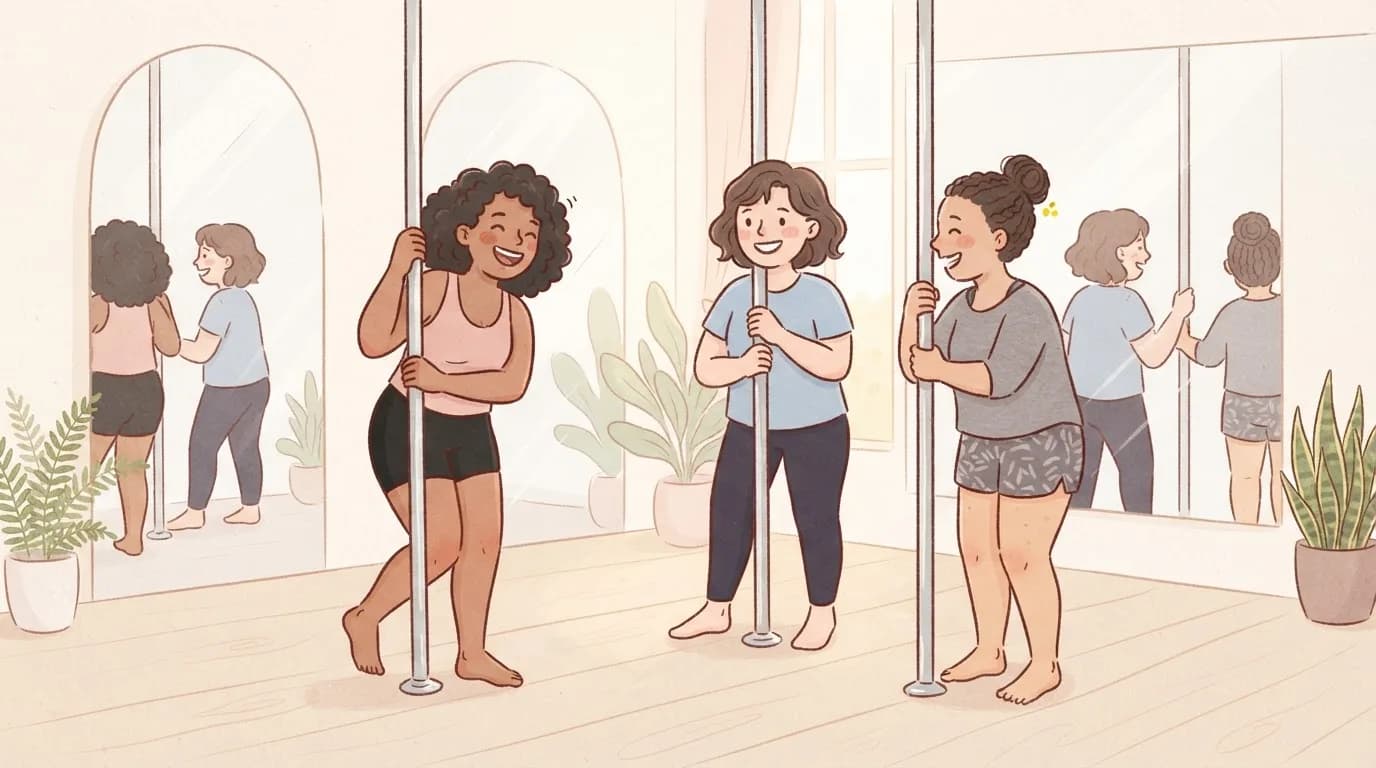
This part is personal, and it matters just as much as the safety checklist, because you'll only keep going to a place you enjoy. Pole comes in many flavours, from tricks and strength to flow, floorwork and heels, so look at the timetable and pick a studio whose classes excite you. Notice how the teachers talk about bodies, whether people of different shapes, ages and genders are welcome, and whether the changing area and the rules about filming and photos make you feel comfortable.
A good studio feels encouraging without pressure. Nobody should push you to go upside down before you're ready, comment on your body, or make you feel silly for asking a question. If you're starting later in life, our guide to starting pole after 40 has a few extra things to look for.
What questions should you ask before you book?
- What qualifications and first aid training do the instructors have, and is the studio insured?
- Is there a beginner course, and how long does it run?
- How many students are there per pole and per teacher?
- Are crash mats used for every move that leaves the ground?
- What size and finish are the poles, and are they checked regularly?
- How long is the warm-up, and is there a cool-down or stretch at the end?
- What happens if I have an injury or need to miss a class?
- Can I try an intro or trial class before I commit to a course?
What are the red flags?
- Classes that skip the warm-up or squeeze it into two minutes.
- No crash mats, or mats only for some poles.
- Teachers who encourage you to try inverts or drops in your first classes, or who don't spot new moves.
- So many students per pole that you barely get a turn.
- Poles that wobble, look scratched or never get cleaned.
- Pressure to buy a long, non-refundable contract before you've tried a class.
- Comments about your body, or a culture that makes you feel you have to push through pain.
Masha's tip: Watch the teacher during your trial class as much as you watch the moves. If they notice when someone is tired, tell people to rest and adjust things for sore wrists, you've found a good one.
Should you start pole with a friend?
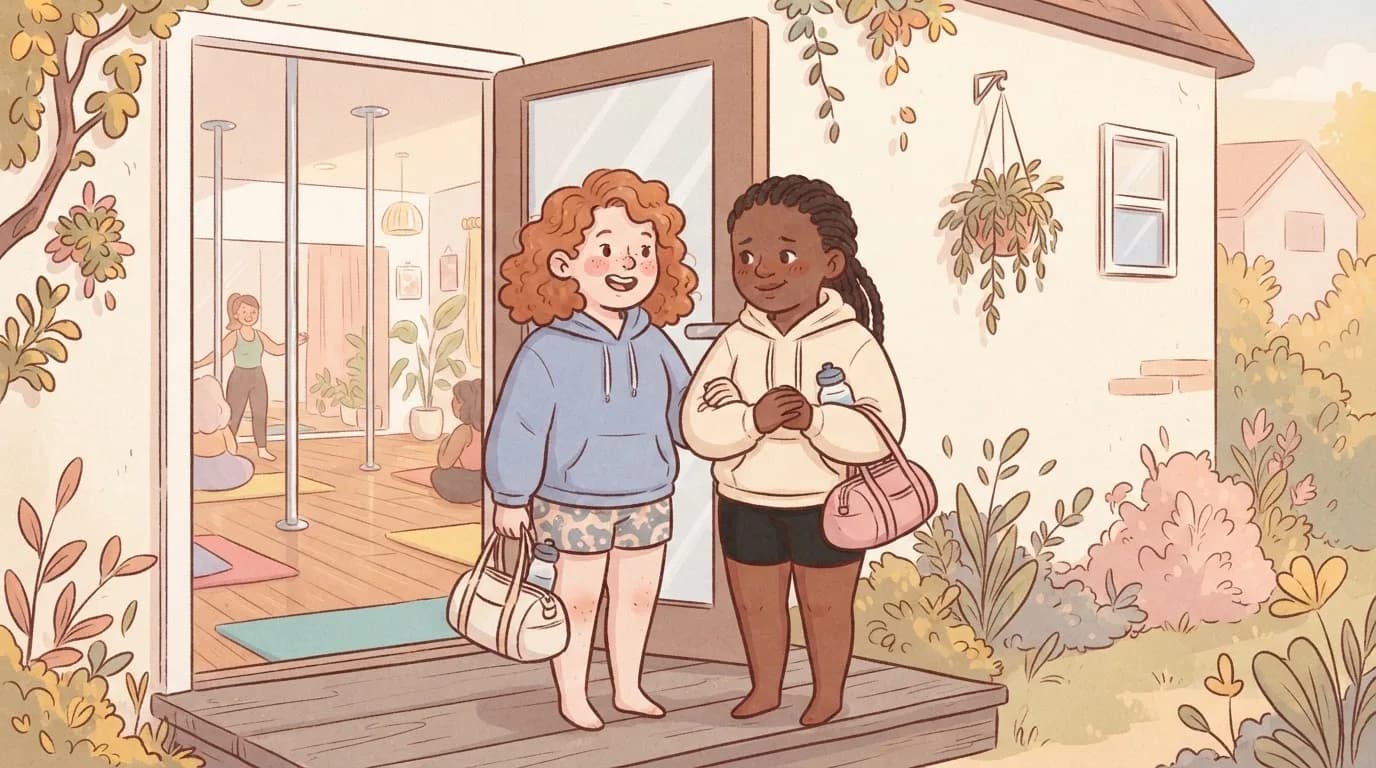
If you can, yes. Walking into a new studio is much easier with someone you know, you'll laugh about the awkward first classes together, and you're far more likely to keep going when someone's expecting you. It also means someone to share a pole with who won't mind your bruises.
If a few of you start together and want wrist wraps for the grip-heavy weeks, our group buy lets each of you pick your own design and size from one shared link. Everything arrives in one parcel with one shipping fee, and the discount grows with the number of pairs. Our guide to organising a group order for your class walks you through it.
Questions people ask
What should I look for in a pole studio?
Qualified, insured instructors with first aid training, a proper warm-up in every class, small classes, crash mats, well-maintained poles, a structured beginner course and an atmosphere where you feel welcome and respected.
How many people should share a pole in class?
Sharing a pole with one other person is common and gives you rest between turns. If several people queue for each pole, you'll spend much of the class waiting, so ask about pole and teacher ratios before you book.
Do pole studios need crash mats?
A crash mat should be under any pole where someone is learning a move that leaves the ground, especially inverts. A good teacher will also spot new moves until you can do them safely on your own.
What size pole is best for beginners?
Many studios use 45 mm poles, while 40 mm and 38 mm poles are easier to wrap a smaller hand around. If you have small hands or sore wrists, ask whether the studio has a mix of sizes.
Should I take a drop-in class or a beginner course?
For a total beginner, a course that runs over several weeks with the same group is usually best, because it builds skills in order. Drop-in classes work well once you know the basics.
Sources we checked
Written by
Masha Pinner
Pole dance teacher at Pandora Art of Pole in Slovenia and former fashion designer. Masha started SneakyDeez in 2017 after years of teaching on sore wrists, and she still designs every pair.
Read Masha’s story