The short version
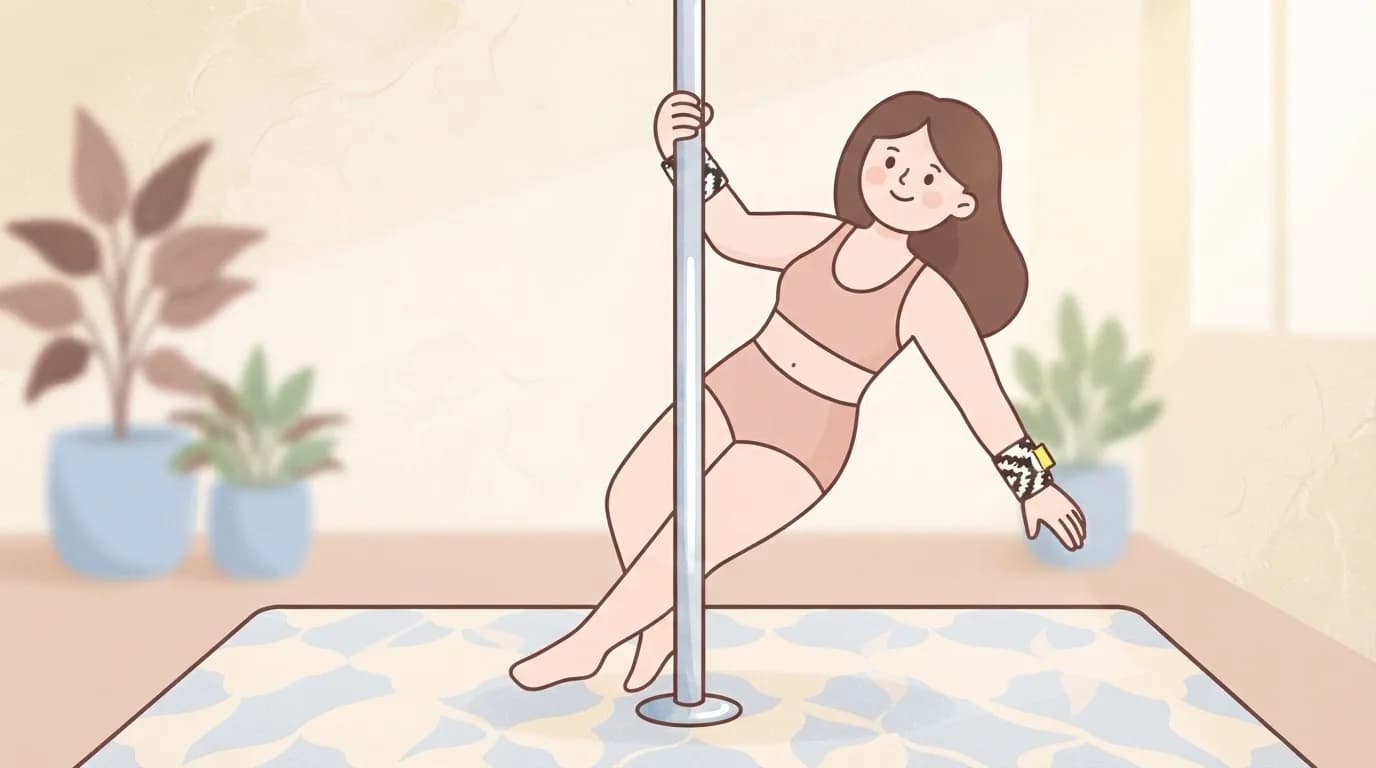
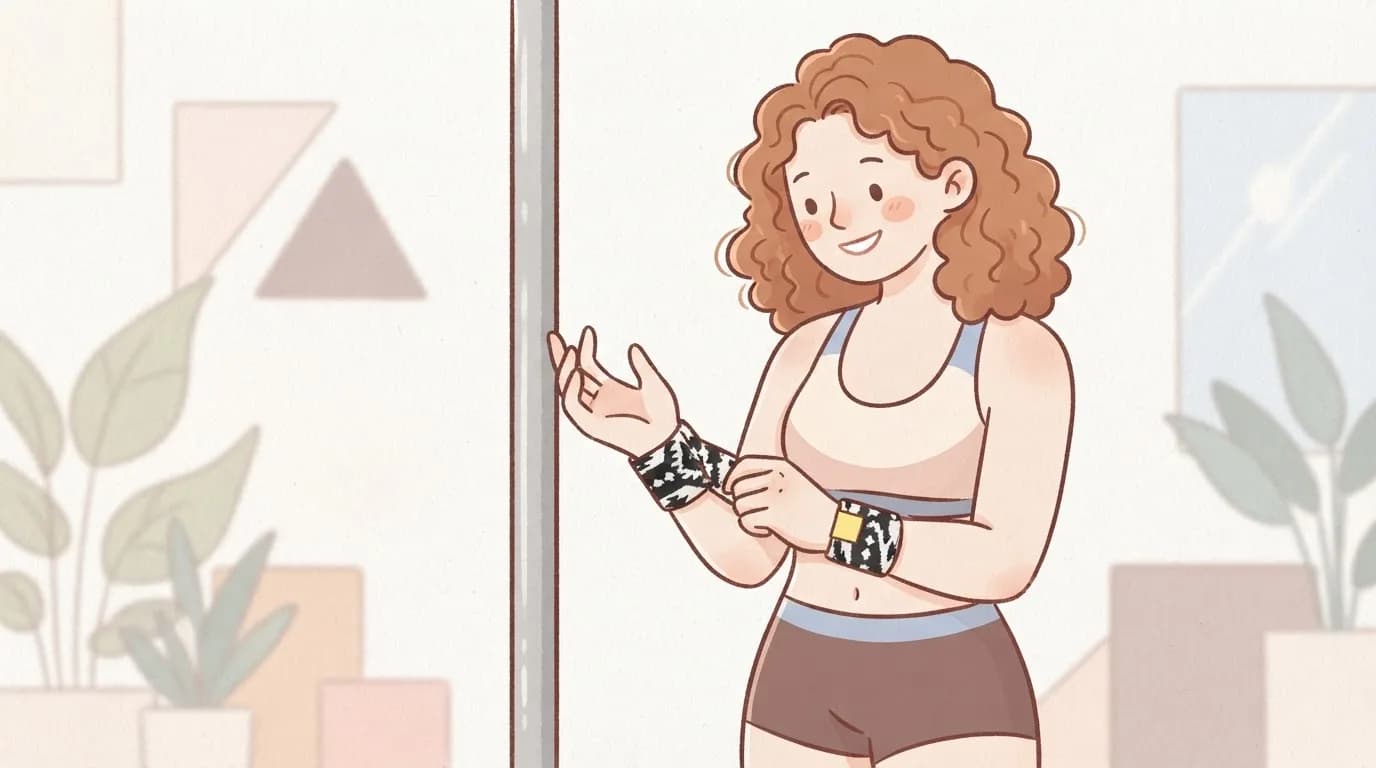
- Pole wrist wraps should sit low on the wrist, on the joint, so they never cover your palm, fingers or the inner forearm you grip with.
- 6 cm wraps are lower profile and 8 cm wraps cover more of the wrist, and each product page shows which widths a design comes in.
- Size by wrist circumference: S is 14.5–15.5 cm and M is 16–17.5 cm, XS and L are made to measure, and between sizes you take the smaller one.
- Wear them firm but never numbing, and loosen them at once if your fingers tingle, go cold or change colour.
- Hand wash and air dry your wraps so the elastic stays firm for longer.
The best wrist wraps for pole sit low on the wrist, right on the joint, so they never touch your palm, your fingers or the inside of your forearm where you grip the pole. Choose a firm elastic wrap that supports the wrist without locking it, in the size that matches your wrist circumference, and fasten it snug enough to feel held but never so tight that your hand tingles. Wear them for grip-heavy and weight-bearing work, and hand wash them so the elastic stays firm.
I design SneakyDeez, so of course I have opinions here, but everything below applies to any wrap you're considering. These are the questions students ask me most often before they buy a pair.
Do wrist wraps affect your grip on the pole?
They shouldn't, as long as they sit in the right place. Pole grip comes from bare skin on metal, so anything covering your palm or fingers changes how you stick, and that includes the edge of a wrap that has slid down over the heel of your hand. A wrap that rides up your forearm can get in the way too, because forearm grips, spins and many holds press the pole into the soft inside of your arm.
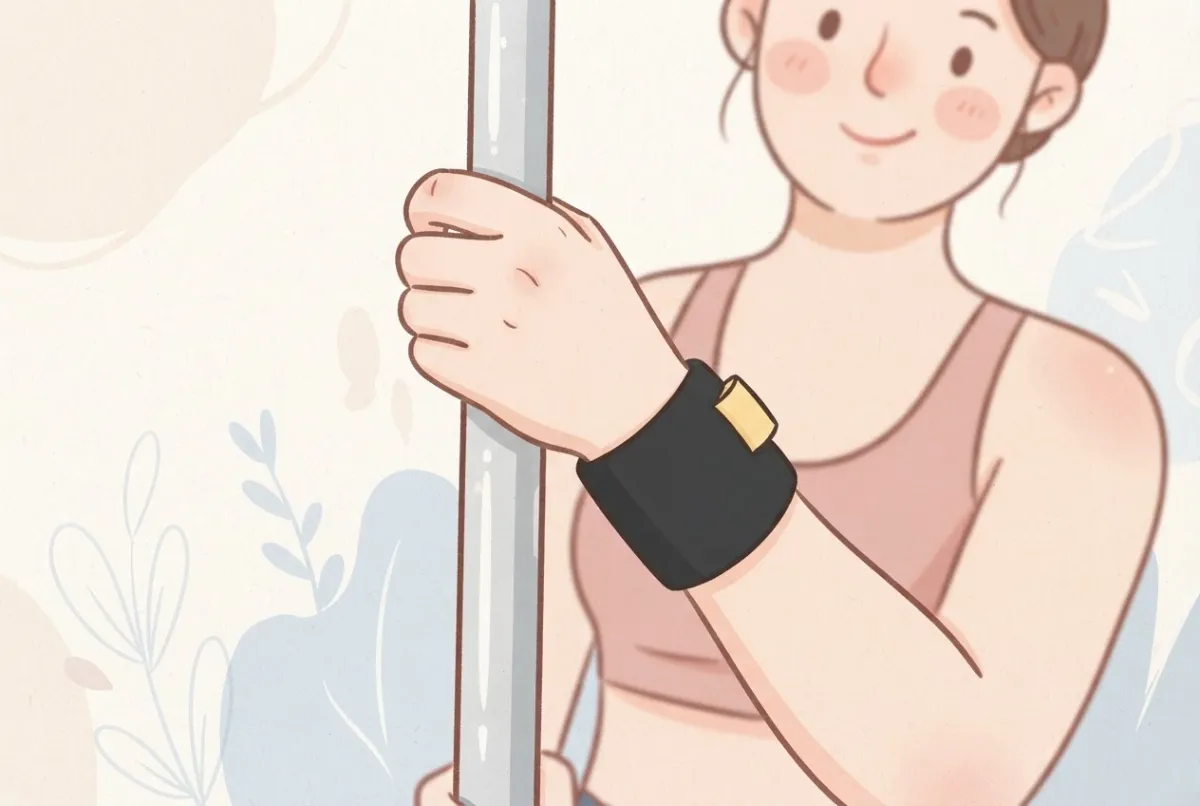
That's why I made ours to sit low on the wrist, on the joint itself, between the heel of your hand and the start of the forearm. Put the wrap on, then make a fist and open your hand a few times. If the edge pokes into your palm, slide it a little higher, and if it sits on the meaty part of your forearm, bring it down.
What do wrist wraps actually do for pole dancers?
A compression wrap does a few simple things. Firm elastic around the joint gives a feeling of stability, which many dancers find reassuring when they're upside down. It keeps the wrist warm through class. And it acts as a reminder, because when you feel the wrap you tend to notice whether your wrist is in a strong line or sagging into the joint.
What a wrap won't do is make a weak wrist strong or heal one that's injured. Pole also needs your wrist to move, which is why rigid braces and stiff lifting wraps don't suit it, since a wrist that can't bend can't do a spin or a handspring safely. If you want to understand the different kinds of support, our guides to types of wrist support bands and what a wrist brace is for explain where each one fits.
Should you choose 6 cm or 8 cm wide wraps?
Both widths do the same job, so this mostly comes down to how much of your wrist you want covered and what feels comfortable when you move.
| 6 cm wide | 8 cm wide | |
|---|---|---|
| Profile | Lower, less fabric on the arm | Covers more of the wrist |
| Feels like | Lighter and less noticeable in spins and floorwork | More wrapped in, with a bigger area of compression |
| Often suits | Smaller wrists, and dancers who want the wrap to disappear | Bigger wrists and hands, and people who like more coverage for weight-bearing work |
| Check | That it covers the part of the wrist that aches | That the top edge stays clear of your forearm grip zone |
Not every design is made in both widths, and each product page shows which widths that design comes in. If you're unsure, 6 cm is the easier place to start for most pole dancers.
How do you find the right size?
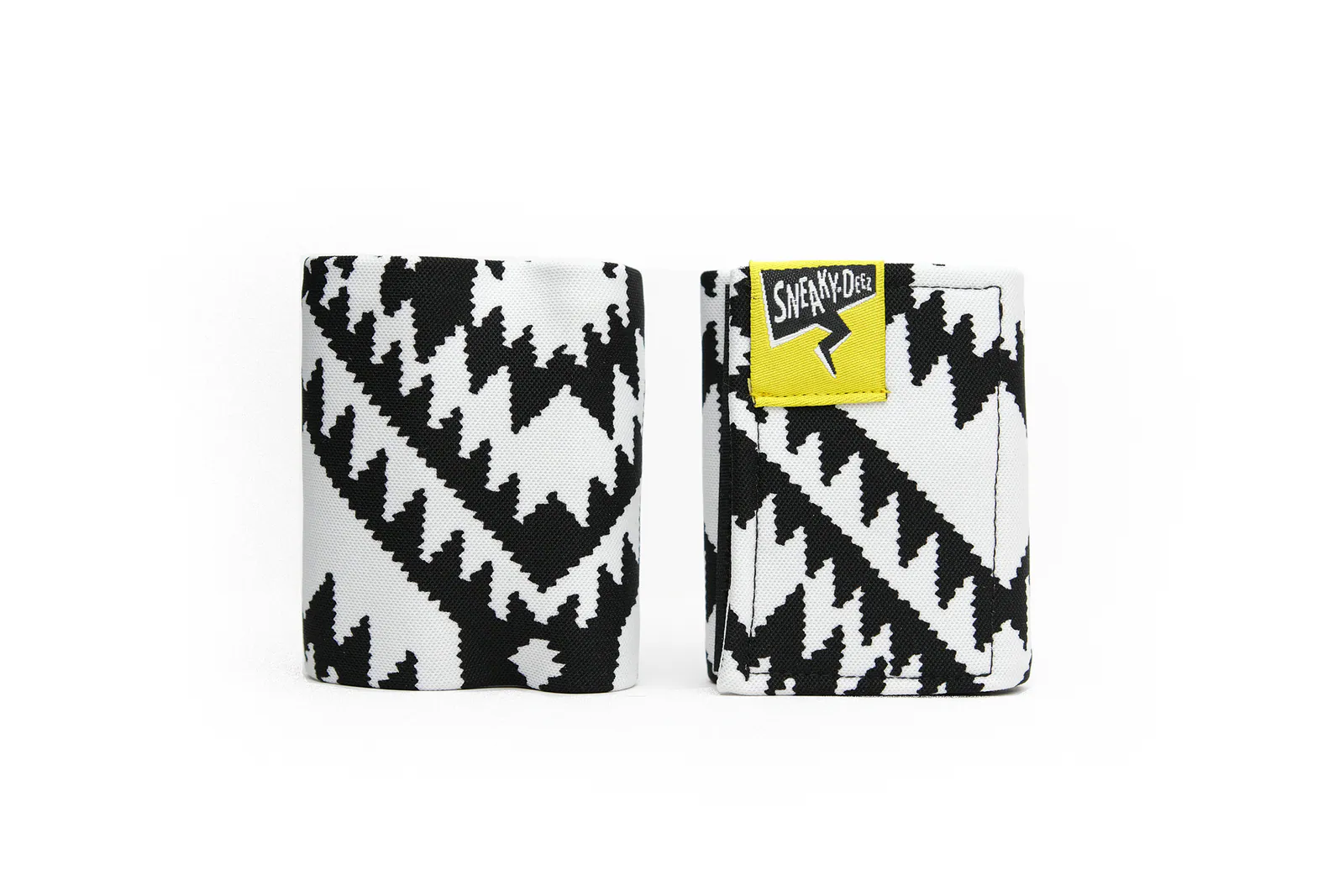
Wraps are sized by the circumference of your wrist, measured around the joint where the wrap will sit. It takes a minute with a soft tape measure or a strip of paper, and our step-by-step guide to measuring your wrist shows you exactly where to measure.
| Size | Wrist circumference | Inches | Availability |
|---|---|---|---|
| XS | under 14.5 cm | under 5.7" | Made to measure |
| S | 14.5–15.5 cm | 5.7"–6.1" | In stock |
| M | 16–17.5 cm | 6.2"–6.8" | In stock |
| L | over 18 cm | over 7" | Made to measure |
If you fall between two sizes, take the smaller one for firmer support. Every pair is handmade, so measurements can vary by a few millimetres from pair to pair. The wraps are unisex, so ignore any idea of men's and women's sizes and just go by the tape.
How tight should wrist wraps be for pole?
Firm, but never numbing. You want to feel a snug, even hug around the joint while you can still bend your wrist through its full range and make a full fist. A good test is to put the wrap on, close it, then circle your wrist and press your palm flat on the floor. If either of those is blocked or painful, it's too tight or sitting in the wrong place.
Take it off and loosen it straight away if your fingers tingle, go cold or numb, or change colour. It's also worth giving your wrists a break from compression between sessions, so wear them for training and take them off afterwards instead of keeping them on all day.
Our wraps close with a Velcro (hook-and-loop) fastening, so you can set the tension yourself. Pull it snug, close it, and check it again after your warm-up, because a warm wrist often wants it a touch firmer than a cold one.
Which fabric is best for pole wrist wraps?
Every SneakyDeez pair is sewn from upcycled designer fabric, mostly Lycra, polyester and jersey samples from Italian fashion houses, so the feel varies by design. The softer Lycra designs are flexible and comfortable and are listed as regular support. The thicker polyester ones, such as Ponte Roma, feel firmer around the wrist and are listed as strong support. Each product page tells you the fabric and the support level of that design.
If you mostly spin, flow and do floorwork, a softer Lycra pair is lovely to move in. If your wrists take a lot of weight in handstands, shoulder mounts and handsprings, many dancers prefer the firmer feel of a strong-support pair.
Can you use grip aids with wrist wraps?
Yes, and they work well together, because the grip aid goes on your hands and the wrap stays on your wrist. Put your wraps on first and then apply the grip aid, so sticky product doesn't end up on the fabric or clogging the fastening. Skip hand cream and body lotion on pole days whatever you use, since moisturiser on your palms or arms makes everything slippier.
If your grip aid does get on the wrap, a quick hand wash after class is all it needs.
When should you wear wrist wraps in pole class?
Most dancers put them on after the warm-up and wear them for the parts of class that load the wrist most, which usually means spins with a lot of hanging, handsprings, shoulder mounts, inverts, handstands and floorwork. Some prefer to wear them for the whole session because they like the warmth, and that's fine too.

Wraps work best alongside a proper wrist warm-up and some conditioning, so have a look at our 10-minute wrist warm-up for pole and aerial and the wrist conditioning plan for pole. If your wrist already hurts, read our guide to wrist pain from pole dancing first, and check with a physio if there's an injury or a diagnosed condition before you rely on any support.
Masha's tip: Bring your wraps on days you plan to drill something new. Those are the sessions where you do the most repetitions of an unfamiliar position, and that's when a bit of support and warmth feels best.
How do you wash wrist wraps?
Hand wash them in cool or lukewarm water with a little mild detergent, rinse well and let them air dry flat, away from radiators. Close the hook-and-loop fastening before you wash them so it doesn't catch on the fabric. Skip the washing machine and tumble dryer, because heat and long spins wear out elastic faster, and firm elastic is the whole point of a good wrap.
With a bit of care a pair lasts a long time, and when you want a second pair to rotate, you can browse the regular designs, which we restock, or the Limited Editions, which are single pairs that are gone once they sell.
More in Pole & aerial training
- Wrist Pain from Pole Dancing: Why It Happens and What Helps
- Exotic Pole Floorwork in Heels: How to Look After Your Wrists and Knees
- A 20-Minute Home Pole Conditioning Session (Most of It Needs No Pole)
- How to Clean a Dance Pole: Chrome, Brass, Stainless, Powder-Coated and Silicone
- Pole Kisses: Why Pole Dancing Bruises You and When a Bruise Needs Checking
- Can You Still Pole Dance With a Sore Wrist? What to Train While It Settles
- Pole Grip Aids Compared: Which Type Suits Dry, Sweaty or Cold Hands?
- Pole vs Aerial Hoop vs Silks: Which Is Hardest on Your Wrists?
Questions people ask
Can you wear wrist wraps for pole competitions or performances?
That depends on the competition rules, so check them before the day. Many dancers perform in wraps because they sit on the wrist and don't change hand contact, and a design that matches your costume can look like part of it.
Are wrist wraps cheating in pole?
No. A compression wrap doesn't hold you on the pole or do the work for you, because your grip still comes from your bare hands and your strength. It simply supports and warms the joint while you train.
Do I need wrist wraps as a pole beginner?
You don't need them to start, but many beginners like them because the first weeks put a lot of new load on the wrists. Learn to warm up and build strength as well, and treat the wraps as support rather than a fix.
Should wrist wraps go on before or after grip aid?
Put the wraps on first and apply grip aid to your hands afterwards. That keeps sticky product off the fabric and the fastening.
How often should I replace my pole wrist wraps?
When the elastic no longer feels firm when you close the wrap, it's time for a new pair. Hand washing and air drying keep them firm for longer, and rotating two pairs helps too.
Shop the fix
Wraps made for exactly this
Handmade in Slovenia by a pole teacher, with firm compression that sits low on the wrist.
Sources we checked
Written by
Masha Pinner
Pole dance teacher at Pandora Art of Pole in Slovenia and former fashion designer. Masha started SneakyDeez in 2017 after years of teaching on sore wrists, and she still designs every pair.
Read Masha’s story