The short version
- Floorwork loads the wrist bent all the way back under your body weight, which is why the pain often sits on the top of the wrist.
- Spread your fingers, press through them, keep your shoulders over or behind your wrists and use fists or forearms on sore days.
- Kneepads protect your knees and your wrists, because you stop throwing your hands down to catch yourself.
- Warm up your wrists, knees and ankles for about eight minutes before floorwork, and learn new combos without heels first.
- Wraps suit weight-bearing floorwork well, but get a persistent wrist pinch or a swollen, warm knee checked.
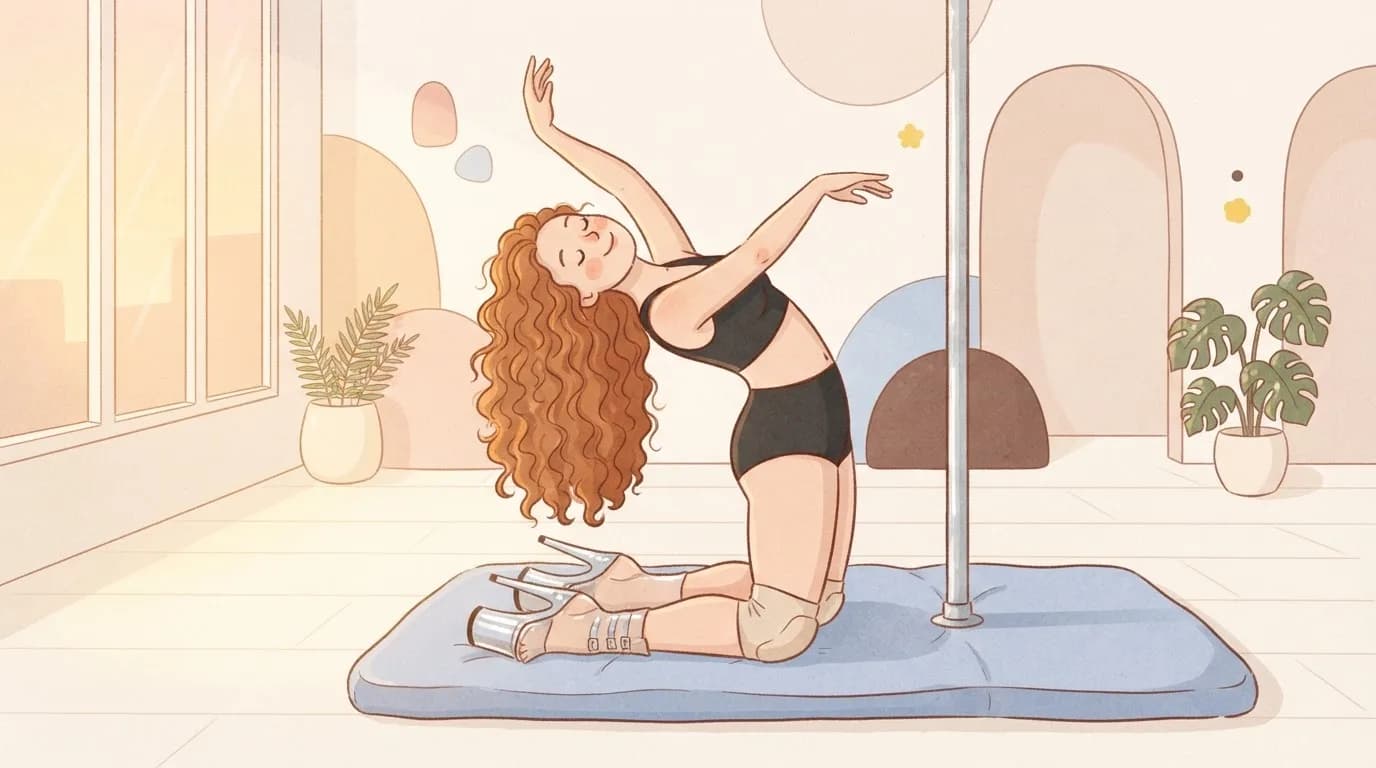
Floorwork in heels is hard on the wrists because so many moves put your body weight through a hand that's bent back, often while the heels make it harder to use your feet and legs. You can make it much kinder by warming the wrists up first, spreading your fingers and pressing through them, shifting weight back towards your knees, using fists or forearms on sore days, and protecting your knees with kneepads so you don't catch yourself on your hands. If the top of your wrist keeps pinching, or a knee swells up, ease off and get it checked.
I love teaching exotic floorwork, and I also see what it does to students' wrists and knees when they jump straight into a long combo on a cold floor. Here's how I set it up so you can roll, slide and spin for years.
Why does floorwork hurt your wrists?
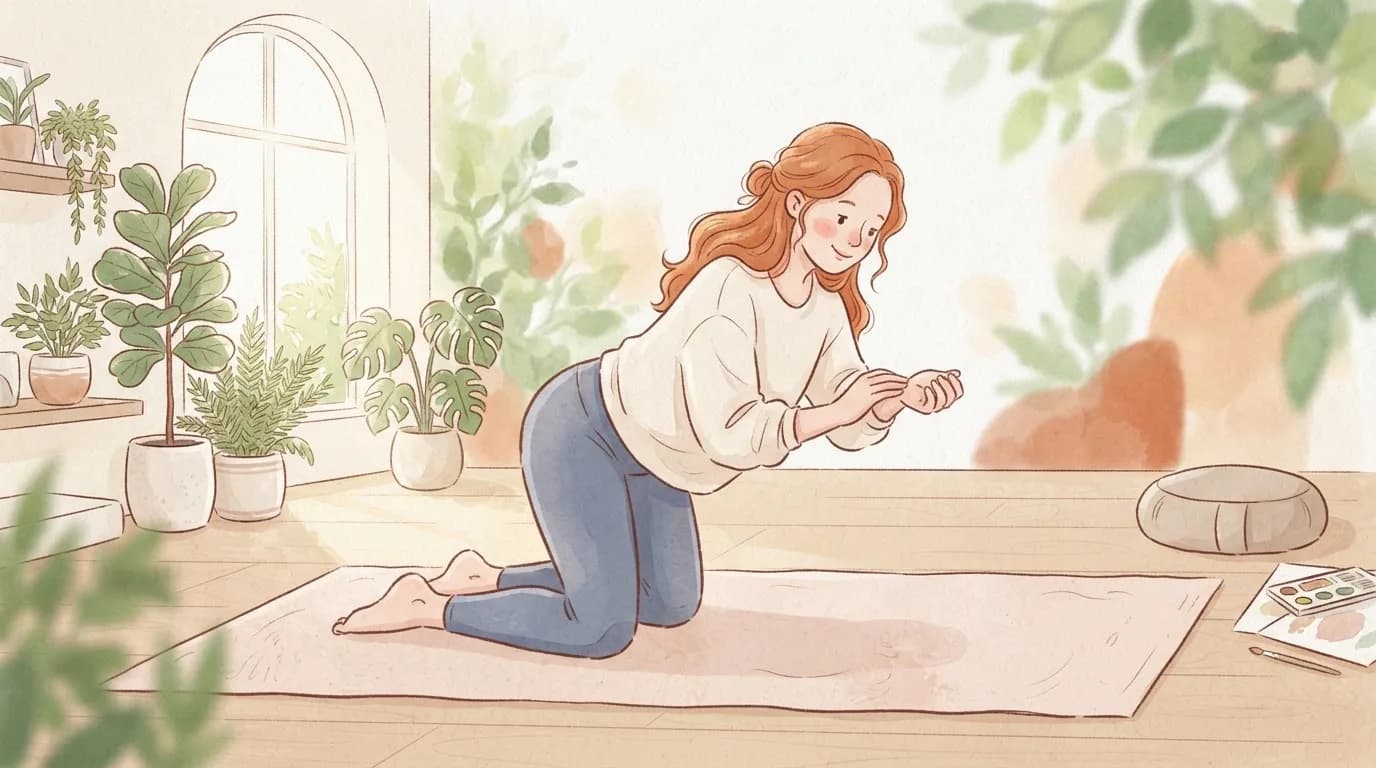
Most floorwork happens on all fours, on one hand, or in a lean where a hand takes part of your weight. In all of those, the wrist is bent back as far as it goes, and the weight pushes it further. The back of the wrist can get squashed in that position, which is why so many dancers feel a pinch on the top of the wrist rather than an ache in the forearm. Our guide to wrist pain when the wrist is bent explains that position in more detail.
Heels add another layer. Tall platforms make it harder to push off with your feet and slower to get up and down, so you end up leaning on your hands more in transitions. They also make you heavier at the ankle, so a leg swing or a slide can pull you further than you planned, and a hand often shoots out to catch you.
Which floorwork moves load the wrists most?
This is a rough guide to what your wrists are doing in the most common floorwork families and how to make each one gentler.
| Move | What your wrist is doing | A kinder way to do it |
|---|---|---|
| Knee slides | Often slapping down to catch you at the end of the slide | Wear kneepads, slide a shorter distance, and finish on your knees with your hands landing softly or not at all |
| Body rolls on all fours | Bent fully back, with weight rolling forward over the hands | Keep your hips heading back towards your heels so the knees take more weight, or roll from your forearms |
| Floor spins | Used as a pivot, so the wrist twists while it's loaded | Let your hip, shin or knee take the turn, and use the hand flat and light for balance |
| Splits on the floor | Holding you up while you lower into the split | Put yoga blocks under your hands, lower slowly, and come out by sliding back rather than pushing up |
| Shoulder rolls and leg swings | Pushing you over or catching you when you come out | Learn them slowly on a mat and keep your chin tucked so your back and shoulder take the roll |
How should you place your hands on the floor?
Small changes in how your hand meets the floor take a lot of load off the joint. Try these in your warm-up so they're automatic by the time you're in your combo.
- Spread your fingers wide and press through the base of your fingers and your fingertips, as if you were gently gripping the floor. That spreads the weight across the whole hand instead of dumping it in the heel of the palm.
- Turn your fingers slightly out if straight ahead pinches. Many people find a small angle much more comfortable.
- Keep your shoulders over or a little behind your wrists in slow movements. The further your shoulders travel past your hands, the more the wrist bends.
- Soften your elbows instead of locking them, so your arms act as springs.
- Raise the heel of your hand on the edge of a folded mat for drilling, which makes the bend smaller.
- Use fists or forearms on sore days. A fist keeps the wrist straight, and many body rolls and crawls look just as good from the forearms.
Do you need kneepads and a mat for floorwork?
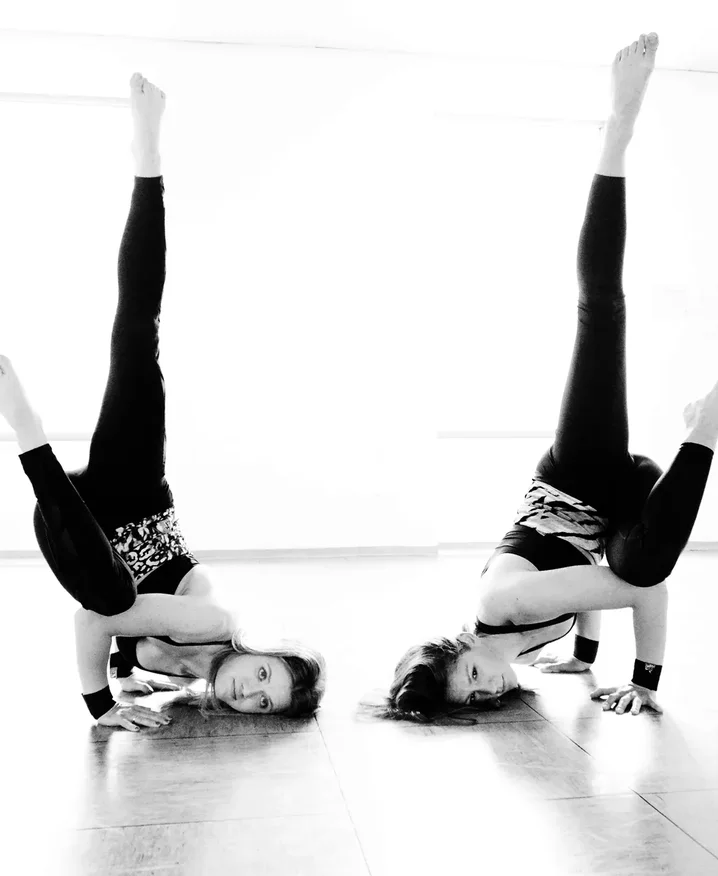
Kneepads are one of the best things you can buy for floorwork, and they protect your wrists as well as your knees. When your knees feel safe, you stop throwing your hands down to save yourself at the end of a slide. Kneeling puts direct pressure on the front of the knee, and the NHS page on bursitis lists repeated kneeling as a common trigger for a swollen, sore knee, with padding as a simple way to lower the risk.

Some kneepads are made to slide on a studio floor and others have a grippy surface, so try them on the floor you'll dance on. A mat is lovely for drilling body rolls, splits and slow transitions, but it stops slides, so most dancers drill on the mat and then take the movement to a clean, dry floor. Long leggings or leg warmers protect your shins and the tops of your feet too, and our guide to what to wear to pole class covers the rest of your kit.
How do you warm up your wrists for floorwork?
Your wrists need their own warm-up before floorwork, and a cold studio makes that even more important. This takes about eight minutes and you can do it in your heels.
- Wrist circles, 1 minute. Slow circles in both directions with your fingers relaxed. It should feel easy and smooth.
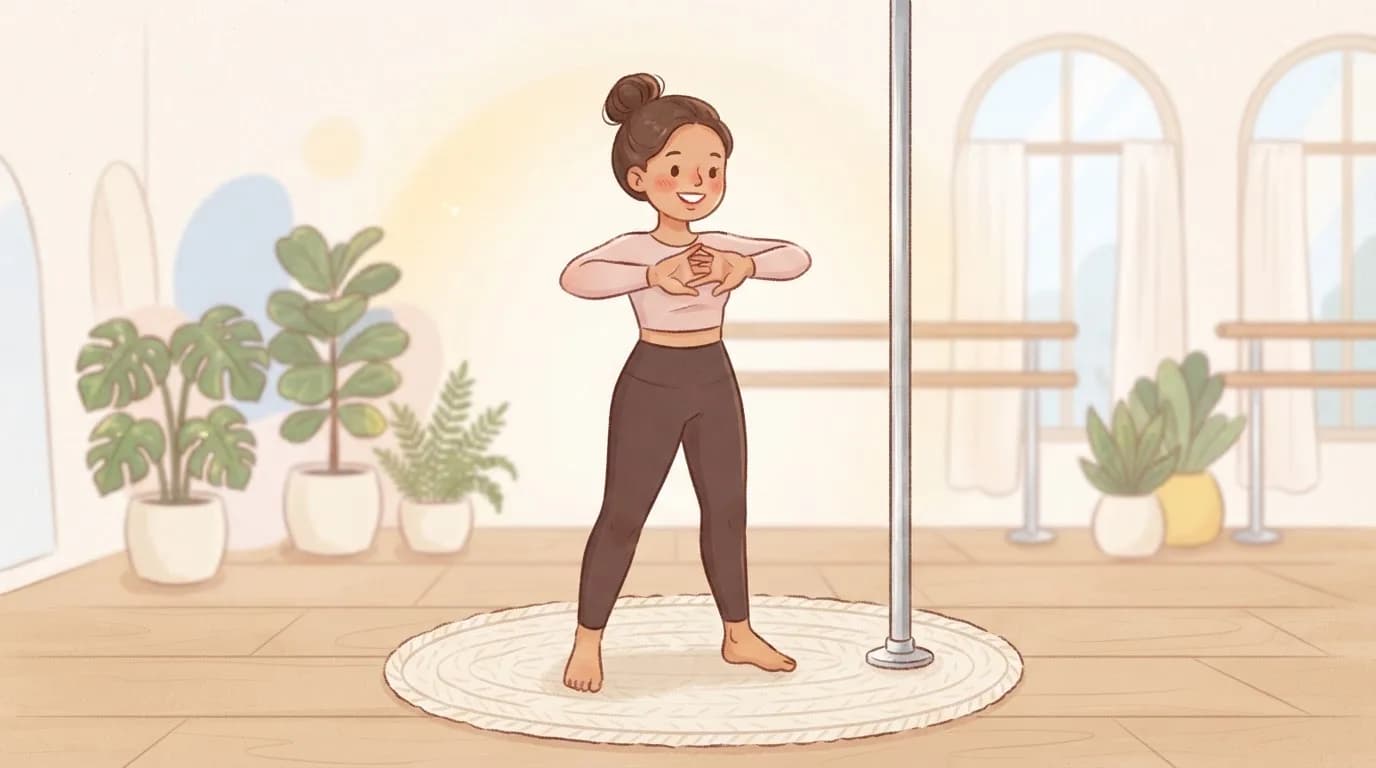
- Prayer and reverse prayer, 1 minute. Palms together in front of your chest, lower them slowly until you feel a gentle stretch, then turn the backs of the hands together. Mild stretch only.
- Fist to spread, 30 seconds. Make a soft fist, then spread your fingers as wide as you can, quickly and repeatedly. Your forearms should feel warm.
- All-fours rocks, 2 minutes. On your hands and knees, rock slowly forward over your hands and back towards your heels, 10 times with fingers forward, 10 with fingers turned out and 10 on fists. It should feel like a mild stretch, never a pinch.
- Palm lifts, 1 minute. Still on all fours, lift the heels of your hands so only fingers and knuckles touch, then lower. Do 10 slow ones.
- Knee and hip circles, 1 minute. Standing, circle each knee gently and then your hips, so your legs are ready to kneel and slide.
- Ankle rolls in your heels, 1 minute. Hold the pole and roll up onto the balls of your feet and down again a few times so your ankles are ready for the shoes.
For a longer version, our 10-minute wrist warm-up for pole and aerial gives you the full routine, and warming up in a cold studio helps on winter evenings.
Masha's tip: Learn every new floor combo barefoot or in trainers first, and only put the heels on once you know where your hands go. Most wrist knocks I see happen when someone is learning the steps and managing the shoes at the same time.
Do wrist wraps help with floorwork?
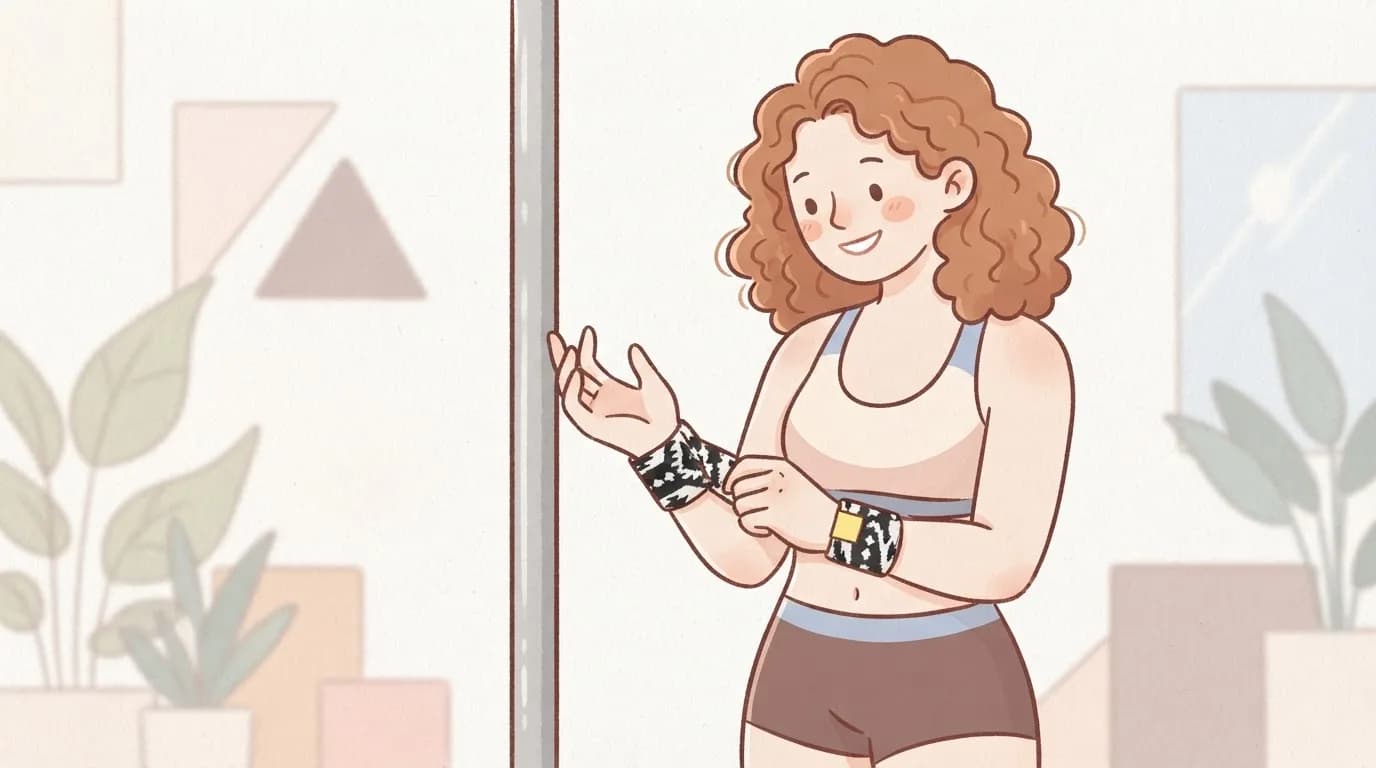
This is one of the places where wraps really earn their keep. In body rolls, crawls, floor spins and anything on all fours, a firm compression wrap gives the joint a supported, held feeling and keeps it warm through a long session. For floorwork the wrap needs to sit low on the joint without bunching into the bend of the wrist, and a lower 6 cm width tends to feel less in the way when the hand is flat on the floor. If you like more coverage for weight-bearing work, the 8 cm width covers more of the wrist.
Wraps don't fix a wrist that's already sore and they don't replace the warm-up or the hand placement above. Floor dust and sweat build up quickly, so give them a hand wash after a floorwork-heavy week, and our guide to washing wrist wraps shows how.
When should you stop and get your wrist or knee checked?
A tired wrist after a long floor session usually settles in a day or two. Please see a doctor or physio if:
- The top of your wrist pinches every time you put weight on it and it isn't getting better after about two weeks.
- You have numbness, tingling or weakness in your hand.
- You fell on your hand and the wrist is swollen, bruised or misshapen.
- A knee becomes swollen, warm or red, or the swelling hasn't settled after a week or two of rest.
- You have a high temperature along with a hot, swollen joint, which the NHS says needs medical advice.
If your wrist is already sore, our guide to training with a sore wrist shows what you can keep doing while it settles, and wrist pain from pole dancing covers the bigger picture.
Questions people ask
Why do my wrists hurt after floorwork?
Most floorwork puts your weight through a wrist that's bent fully back, and the back of the joint can get squashed in that position. Warming up, spreading your fingers, keeping your shoulders over your wrists and using fists or forearms on sore days usually helps.
Do I need kneepads for pole floorwork?
Yes, for knee slides and anything with a lot of kneeling they're well worth it. Repeated kneeling can irritate the front of the knee, and when your knees feel protected you're less likely to slam your hands down to save yourself.
Should I learn floorwork in heels or barefoot?
Learn new combos barefoot or in trainers first, then add heels once you know where your hands and knees go. Managing the shoes and new steps at the same time is when most wrist and ankle knocks happen.
Are wrist wraps good for floorwork?
Many dancers like them for body rolls, crawls and anything on all fours, because firm compression feels supportive and keeps the joint warm. Choose a wrap that sits low on the joint and doesn't bunch in the bend of the wrist, and hand wash it after dusty sessions.
When should I see someone about knee pain from floorwork?
See a GP if a knee becomes swollen, warm or red, if swelling hasn't settled after a week or two of rest, or if you also have a high temperature.
Shop the fix
Wraps made for exactly this
Handmade in Slovenia by a pole teacher, with firm compression that sits low on the wrist.
Sources we checked
Written by
Masha Pinner
Pole dance teacher at Pandora Art of Pole in Slovenia and former fashion designer. Masha started SneakyDeez in 2017 after years of teaching on sore wrists, and she still designs every pair.
Read Masha’s story