The short version
- With a mild training ache you can usually keep pole dancing by cutting out hand-heavy moves and training what doesn't hurt.
- Leg holds with gentle entries, elbow grip, hands-free flexibility and leg and core strength all keep you progressing while the wrist settles.
- A move is fine if it doesn't bring on the pain and the wrist feels the same or better the next morning.
- Skip handsprings, shoulder mounts, split and twisted grip, handstands and floorwork on your hands until the wrist is calm.
- Get checked after a fall, or for swelling, numbness, weakness, night pain or pain that hasn't improved in about two weeks.
You can usually keep pole dancing with a mildly sore wrist, as long as you change what you train so the wrist gets a break while the rest of you keeps working. Leg holds you can get into without pushing through your hands, elbow-grip work, floor flexibility, and strength for your legs and core all keep you progressing, and you only add easy spins back if they feel completely pain-free. Stop and get it checked instead if the pain started with a fall, the wrist is swollen or misshapen, your hand is numb or tingling, or it hasn't improved after about two weeks.
I teach pole in Slovenia, and a sore wrist is one of the most common reasons students tell me they want to skip class. Most of the time I'd rather they came, because there's plenty we can do without the wrist, and staying in the routine makes coming back much easier. This guide is the plan I'd give you for those weeks.
Should you rest a sore wrist completely or keep training?
For most training aches the answer is somewhere in between. Doctors and physios call it relative rest, which simply means you cut out what hurts and keep doing what doesn't. Complete rest can leave the wrist stiff and weaker than before, while training straight through the pain tends to keep it irritated for longer.
The NHS advice on wrist pain backs this up in everyday terms: rest from heavy lifting and tight gripping, use a wrapped ice pack, keep doing gentle hand and wrist movement, and cut back on whatever makes it worse. On the pole, tight gripping and leaning on your hands are exactly the things to cut back on.
| What you notice | What I'd suggest |
|---|---|
| A dull ache after a grippy class that's easing day by day | Keep training, but skip hand-heavy moves for a week or so |
| Pain on one spot only in certain positions, such as bending the wrist back | Train around that position and see a physio if it's still there in two weeks |
| Pain that started with a fall or a sudden twist, with swelling or bruising | Stop and get it checked before you train again |
| Numbness, tingling or a weak grip that doesn't go away | Stop and see a doctor or physio |
| Pain at rest or pain that wakes you at night | Get it checked rather than training around it |
How do you know if a move is OK to do?
A simple rule is that a move is fine if it doesn't bring on the wrist pain while you're doing it and the wrist feels the same or better the next morning. A little awareness of the wrist is OK, but sharp pain, pain that builds with each repetition, or a wrist that's stiffer and sorer the next day all mean that move needs to wait.
An NHS physiotherapy service in Dorset gives a useful guide for hand and wrist exercises, saying some discomfort is normal but if the pain lasts more than two hours afterwards you should do fewer repetitions and build up more slowly (NHS MSK Dorset). I find that two-hour check and the next-morning check together tell students most of what they need to know.
What can you train on the pole without loading your wrists?
More than people expect. Talk to your teacher before class so they can give you alternatives instead of you sitting out half the session, and ask for a spot or a crash mat where it helps.
Leg holds you can get into without pushing through your hands
Many leg holds are mostly about squeezing the pole with your thighs, knees or feet, and once you're in them your hands can rest lightly or come off altogether. The tricky part is the way in, because climbing or inverting usually means pulling and pushing with your hands. Ask your teacher for entries that use your legs and a step-up instead, and practise low down so you never need to hang on your hands to get out. Pole sits, low knee holds and simple seated shapes held close to the floor work well for this.
Elbow grip instead of hand grip
In an elbow grip you hook the pole into the crook of your elbow and hold it against your side, so the hand and wrist barely work. Many basic spins and pole walks can be done with an elbow grip on the top arm, and it's a nice chance to polish your lines and your flow while the wrist settles. Keep your forearm relaxed and let your shoulder and side do the holding. If even the elbow grip makes you clench your fist, leave it for now.
Floor flexibility that keeps your hands free
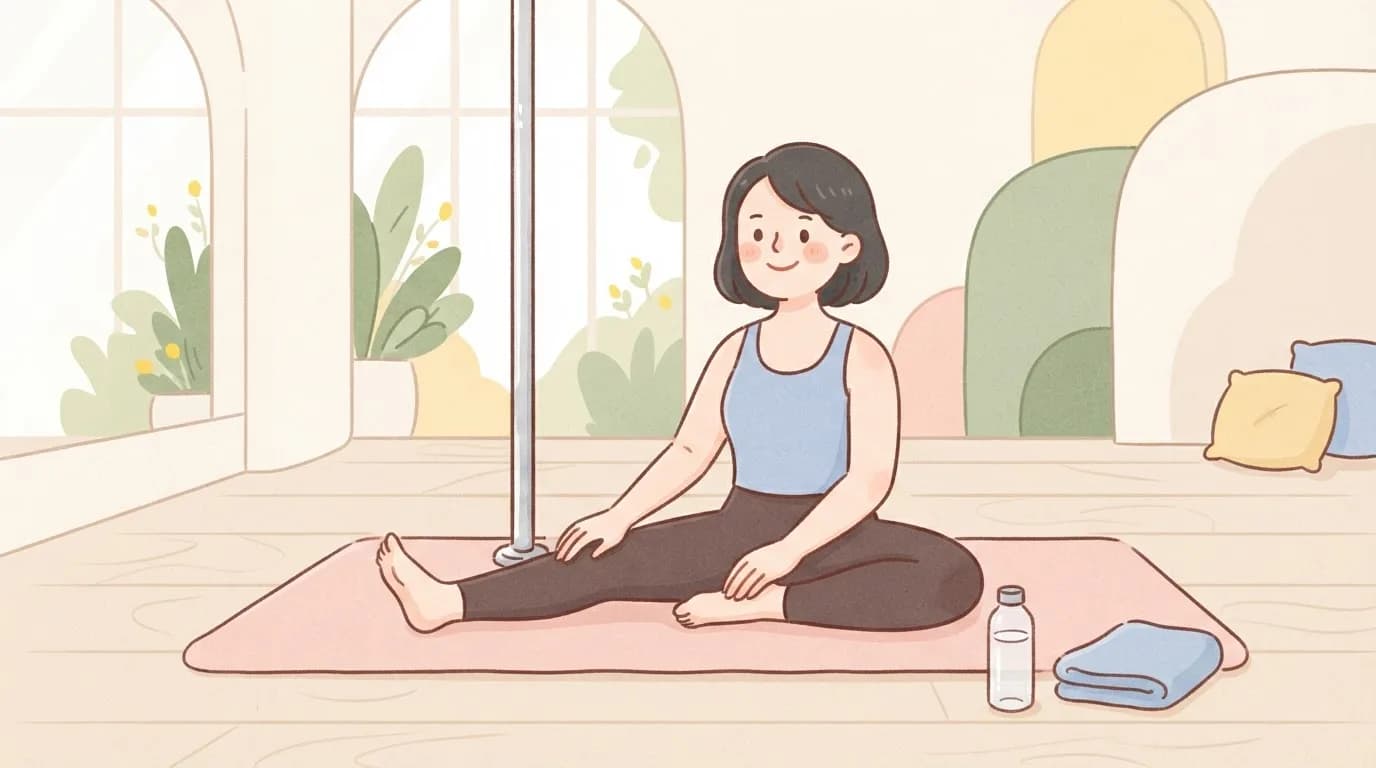
Flexibility work is perfect for a sore-wrist phase as long as you choose positions where your hands aren't holding you up. Lie on your back for hamstring stretches with a strap or a towel, do splits with yoga blocks or cushions under your hips instead of your hands, stretch your hip flexors in a kneeling lunge with your hands on your front thigh, and work on backbends lying over a rolled blanket. If a stretch needs your hands on the floor for balance, use your forearms or a chair instead.
Legs and core
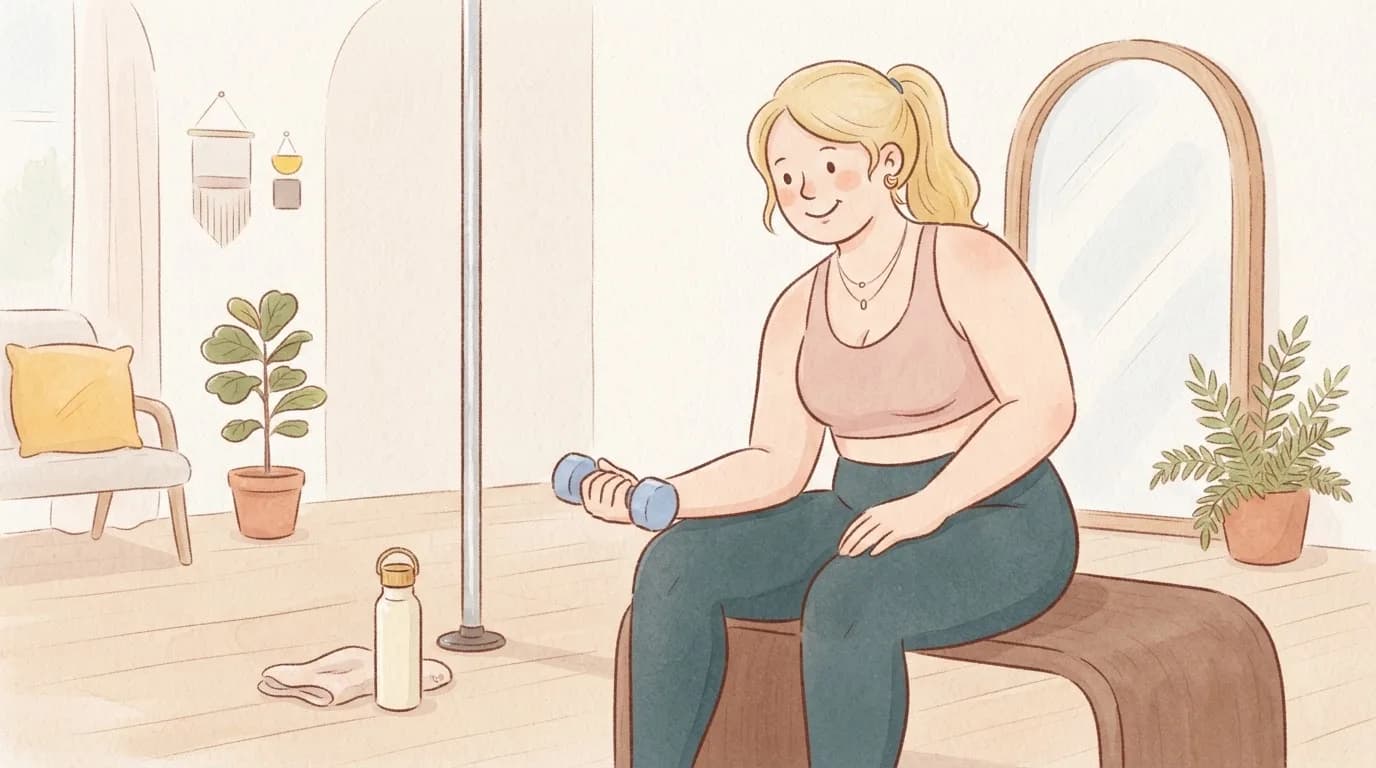
Strong legs and a strong middle make every pole move easier, and you can train both without touching the pole. This is the short routine I give students while their wrists have a break.
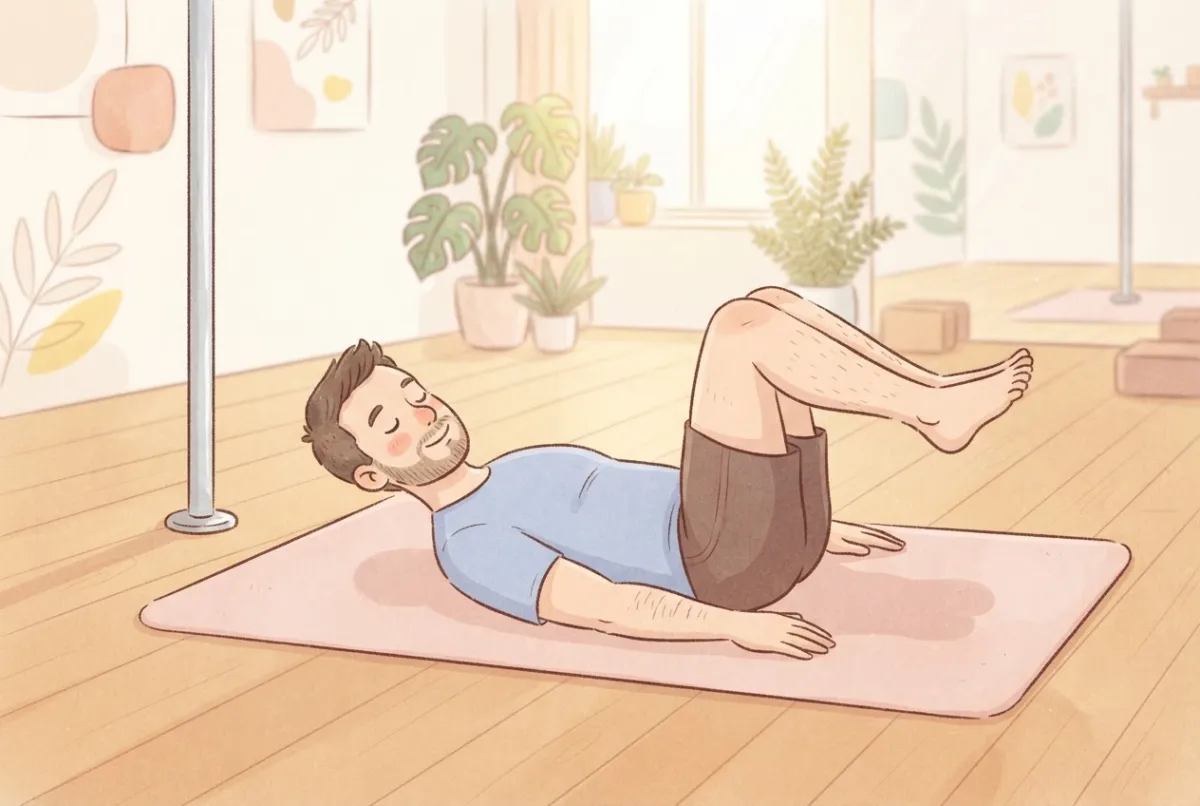
- Dead bug, 3 sets of 8 slow reps per side. Lie on your back with your knees over your hips and arms resting on the floor or reaching up, then lower one heel towards the floor while keeping your lower back gently pressed down. It should feel like steady work in your belly, with no strain in your back.
- Hollow body hold, 3 holds of 15 to 30 seconds. Lift your head, shoulders and legs a little off the floor with your arms by your sides. Bend your knees if your lower back starts to arch. You should feel your whole front working.
- Lying leg raises, 3 sets of 8 to 10. Keep your arms flat by your sides and lower your straight or bent legs slowly. Stop the range where your back starts to lift.
- Glute bridges, 3 sets of 12. Arms on the floor, feet flat, lift your hips and squeeze at the top for two seconds. You want to feel it in your bottom and the backs of your thighs.
- Split squats or lunges, 3 sets of 8 per leg. Hands on your hips, no weights needed at first. They should feel hard in the front thigh by the last few reps.
- Side-lying leg lifts and adductor squeezes, 2 sets of 12 each. Squeeze a cushion between your knees for 5 seconds at a time. It builds the inner-thigh strength you use in every leg hold.
Two or three rounds of this a week, alongside your hands-free pole practice, keeps you strong and gives you something to show for those weeks.
Easy spins, but only if they're truly pain-free
Once the wrist is calm in daily life, you can test a simple spin. Choose one you know well, use a two-handed grip with the wrist in a straight, comfortable line, or an elbow grip on the top arm, and do two or three on each side. If you feel nothing during the spin and the wrist is fine the next morning, you can do a few more next time. If it twinges, it's too early, and that's useful information rather than a failure.
Which pole moves should you skip while it settles?
Leave out anything where your body weight goes through a bent wrist or where the wrist twists under load. That usually means handsprings and other inverts from the floor, split grip, twisted grip, shoulder mounts, one-handed spins, handstands, push-ups, and floorwork where you lean on your hands. A shoulder mount can be particularly sneaky because the bottom hand pushes hard with the wrist bent back, which our guide to shoulder mount wrist pain explains.
If it's mostly floorwork that bothers you, our guide to looking after your wrists in floorwork shows kinder ways to do slides and body rolls once you're ready for them again.
Masha's tip: Write down what you trained in your hands-free weeks. When you're back to full classes, you'll be surprised how much your splits, your lines and your leg holds improved while your wrist was having a holiday.
When is a sore wrist a reason to see a doctor or physio?
Most training aches settle with a lighter week or two, but some signs mean you shouldn't train around the problem at all. Please get checked if:
- You fell or landed on your hand and the wrist is swollen, bruised or changed shape.
- You heard a snap, crack or pop, or you can't move the wrist or hold things.
- You have numbness, tingling or pins and needles in your hand that doesn't go away.
- Your grip feels weak, or the wrist gives way or locks.
- The pain wakes you at night or is there even when you're resting.
- It hasn't improved after about two weeks, or it keeps coming back.
The NHS page on sprains and strains is a good reference if you twisted it, and our guide to wrist pain from pole dancing goes through where pole wrist pain tends to sit and what it can point to. A physio who knows pole, aerial or gymnastics is worth looking for, because they'll plan your return around the exact positions you need.
How do you ease back into full pole training?
Coming back too fast is where a lot of dancers get into trouble. A study of pole dancers in Poland found that returning to training too soon after an injury was linked with getting injured again (Szopa and colleagues, 2022), and tendons take longer than muscles to get used to load (Mersmann and colleagues, 2017). So build back in stages, and only move on when the stage you're in feels easy for a week.
- Everyday use and gentle range. The wrist feels normal for daily tasks, and you can circle it and press your palm flat on a table without pain.
- Hanging and gripping, two hands. Short two-handed holds and easy spins with a straight wrist, a few on each side, alternating sides.
- Light weight-bearing. Hands on a raised surface such as a bench or the edge of a stage, then the floor, with short holds of 10 to 20 seconds. A good wrist warm-up first makes this much easier.
- Twisting and one-handed work. Cup grip before twisted grip, and low reps. Our comparison of twisted grip and cup grip explains why the cup is usually kinder.
- Full classes and new tricks. Add one new hand-heavy move at a time, and keep a little conditioning going, such as our six-week wrist plan for pole.
If you go back a stage once or twice, that's normal. Use the next-morning check every time and you'll find your pace.
Can wrist wraps help when you come back?
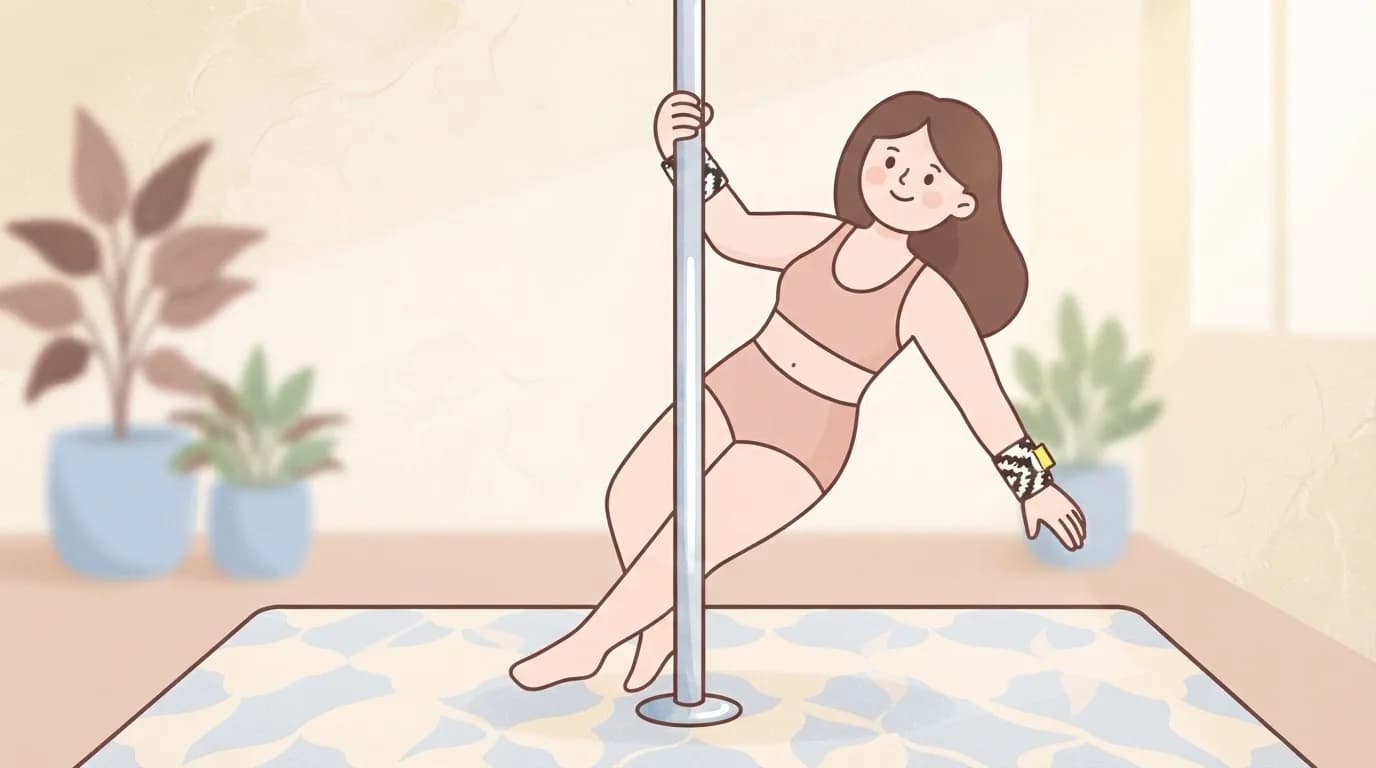
Many dancers like wearing a compression wrap as they return to hand-heavy moves, because the firm elastic feels supportive and keeps the joint warm. A wrap doesn't treat an injury or replace the steps above, so if you've had a diagnosed problem, ask your physio whether compression suits you first. Ours sit low on the wrist and close with Velcro, so your palm stays bare on the pole and you can set the tension yourself.
If you're not sure which size you need, our guide to measuring your wrist takes about a minute.
Questions people ask
Can I go to pole class with a sore wrist?
Usually yes, if it's a mild training ache and there was no fall or swelling. Tell your teacher before class so they can give you hands-free alternatives such as leg holds with gentle entries, elbow-grip spins, flexibility and core work.
Which pole moves don't use the wrists?
Leg holds such as pole sits and low knee holds, once you're in them, use your legs far more than your hands. Elbow-grip spins and walks, floor flexibility and lying core work also keep the wrist out of the job. The way into a hold often needs your hands, so ask your teacher for a gentler entry or a spot.
How long should I rest a sore wrist from pole?
Most mild overload aches settle within a few days to two weeks of lighter training. Build back in stages, starting with two-handed grips and short holds, and only move on when a stage feels easy for about a week. If it hasn't improved after two weeks, see a doctor or physio.
Should I use ice or heat on a sore wrist?
The NHS suggests an ice pack wrapped in a towel for up to 20 minutes every two to three hours, and avoiding heat packs and hot baths for the first two to three days after an injury.
Can I wear a wrist wrap and keep training through the pain?
A compression wrap can feel supportive while you ease back in, but it doesn't treat an injury and it isn't a reason to train through pain. Modify your training first, and ask your physio about compression if you have a diagnosed problem.
Shop the fix
Wraps made for exactly this
Handmade in Slovenia by a pole teacher, with firm compression that sits low on the wrist.
Sources we checked
Written by
Masha Pinner
Pole dance teacher at Pandora Art of Pole in Slovenia and former fashion designer. Masha started SneakyDeez in 2017 after years of teaching on sore wrists, and she still designs every pair.
Read Masha’s story