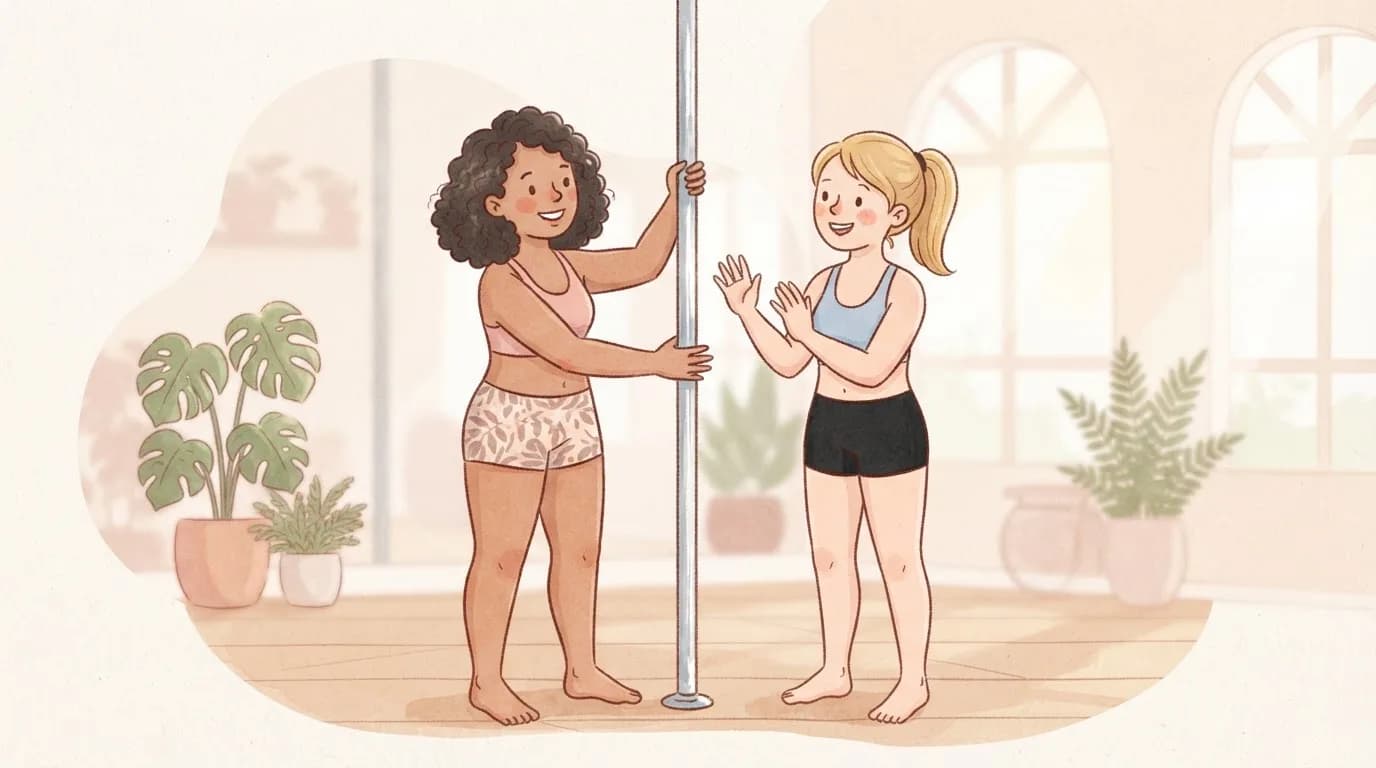
The short version
- Cup grip keeps the wrist close to neutral, so it is often the kinder handspring grip for sensitive wrists.
- Twisted grip bends the wrist towards the little finger and needs a lot of overhead shoulder mobility, but it feels secure for many dancers.
- Cup grip is usually harder to learn because the top arm has to pull and the hips have to drive up.
- If your wrist hurts in every grip, cut back handspring volume and build strength rather than switching grips.
- Ask your teacher to watch both grips, and see a physio if pain lasts more than a couple of weeks.
Cup grip is usually the kinder handspring grip for your wrist, because it keeps the wrist close to neutral, while twisted grip bends the wrist hard towards the little finger and needs a lot of overhead shoulder mobility. Twisted grip is still a perfectly good grip that many dancers use for years, and cup grip is often harder to learn because it asks for more pulling strength. The best choice depends on your shoulders, your wrists and what your teacher sees when you try both.
I get asked this one a lot, usually by someone holding their wrist after class, so I want to lay out both grips fairly. Neither of them is the right grip for everyone, and the strength and control behind the grip matter more than its name.
What are twisted grip and cup grip?
Both are ways of placing your hands on the pole for a handspring, the move where you go upside down with your hands on the pole and your body held away from it. In both grips your top hand holds the pole above your head and your bottom hand does most of the pushing, and the difference is in how you turn your hands and arms.
Twisted grip
In twisted grip your top arm is turned so the inside of the elbow faces away from you and the hand wraps around the pole with the thumb pointing down. That turns the whole arm inwards at the shoulder and bends the wrist sideways towards the little finger. Your bottom hand presses into the pole lower down. Many dancers find twisted grip feels locked in and secure once they have the shoulder range for it, which is why it's so popular.
Cup grip
In cup grip your bottom hand cups the pole with the fingers pointing down and the thumb on the same side as the fingers, and the elbow bends with the arm turned slightly outwards. The wrist stays much closer to a straight line with your forearm. The top arm has to pull actively, and you need a firm drive from your hips and knees to get up, so cup grip often feels heavier and harder in the beginning.
How does each grip load your wrist and shoulder?
A pole physiotherapist who has broken the two grips down describes cup grip as keeping the wrist in neutral, which cuts down the twisting force through the joint, and twisted grip as combining a lot of sideways wrist bend with a fully turned-in forearm and shoulder (The Pole Physio). That's the main reason cup grip has a reputation for being easier on wrists. The same source is clear that you can get hurt in any grip if you aren't engaging properly, so a cup grip with a floppy shoulder isn't automatically safe.
| Twisted grip | Cup grip | |
|---|---|---|
| Wrist position | Bent strongly towards the little finger | Close to neutral |
| Forearm | Fully turned palm-down | Mostly neutral |
| Shoulder | Arm overhead and turned fully inwards | Arm lower, elbow bent and turned slightly outwards |
| What it asks of you | Good overhead shoulder mobility and control at the end of that range | Strong pulling with the top arm, firm hip and knee drive, a strong push from the bottom hand |
| How it often feels at first | Secure and locked in once the shoulder allows it | Heavy and awkward until the strength is there |
| Who it often suits | Dancers with naturally mobile shoulders and happy wrists | Dancers with sensitive wrists, especially on the little-finger side, or stiffer shoulders |
| Common complaints | Little-finger side of the wrist, front of the shoulder | Tired biceps and forearms while learning |
Some studios also teach a true or straight grip, with the palm of the top hand turned up. It gets the biceps working nicely but puts more load through the wrist and forearm, so it needs careful control too.
Which grip is better if your wrists hurt?
If the pain is on the little-finger side of your wrist and it shows up in twisted grip, it's worth asking your teacher to help you try cup grip, because that side is exactly where twisted grip puts its bend. Pain on the little-finger side when you twist or lean on the hand is common enough that we have a separate guide on pinky-side wrist pain.
If the pain is on the top of the wrist and comes from pushing with the bottom hand, the grip of the top hand may not be the main problem. That pattern usually has more to do with how much load the bottom wrist takes when it's bent back, which is the same thing that makes shoulder mounts hurt the wrist, and conditioning helps more than switching grips.
And if your wrist hurts in every grip, the answer is usually less handspring volume for a while rather than a different grip. Our main guide to wrist pain on the pole goes through the different pain patterns.
Which grip suits your shoulders?
Twisted grip asks your shoulder to go fully overhead and turn fully inwards at the same time. If you can't comfortably get your arm straight up next to your ear without arching your back, you'll probably find twisted grip strains the front of your shoulder, and your body may borrow the missing range from your wrist and elbow instead. Cup grip keeps the arm lower and turns it outwards, which many people with stiffer shoulders find easier to control.
That doesn't mean someone with stiff shoulders can never use twisted grip. Shoulder mobility can be trained, and plenty of dancers build up to it over months.
How do you prepare for each grip?
For both grips
- Warm up your wrists every time, with circles, gentle rocking on your hands on the floor and some easy holds on the pole. Our 10-minute wrist warm-up for pole covers it.
- Build your bottom-hand push with wrist push-ups on the floor and plank holds on your hands, 2 to 3 sets of 20 to 30 seconds, stopping well before your wrist feels sharp.
- Train the grip itself on the floor. Practise the hand placement standing at the pole and lean away a little, so your hands and shoulders learn the shape before you go upside down.
- Get your hips up with your legs. Hip and knee drive drills take a huge amount of work away from your hands.
Extra for twisted grip
Work on overhead shoulder mobility, for example gentle hanging and arms-overhead stretches against a wall, and practise holding the twisted-grip shape with your feet on the floor so your shoulder learns to stay active at the end of its range.
Extra for cup grip
Build pulling strength with the top arm, for example bicep curls or pole pull-ups with bent elbows, and drill the cup with the bottom hand while you lean back, because that push is what holds you up. Our six-week pole conditioning plan includes most of these.
Masha's tip: Whatever grip you pick, try it on both sides. Most of us have one side that's stiffer or weaker, and it's often the wrist on that side that starts complaining because it's covering for the shoulder.
When should you ask a coach to look at your grip?
Handsprings are an intermediate move, and your teacher can see things you can't feel from upside down. Ask for help if your wrist or shoulder hurts during or after handsprings, if one side feels very different from the other, if you're thinking about switching grips, or if you've been stuck on the same step for a long time. A good teacher will usually let you try both grips with a spot and tell you honestly which one your body is ready for.
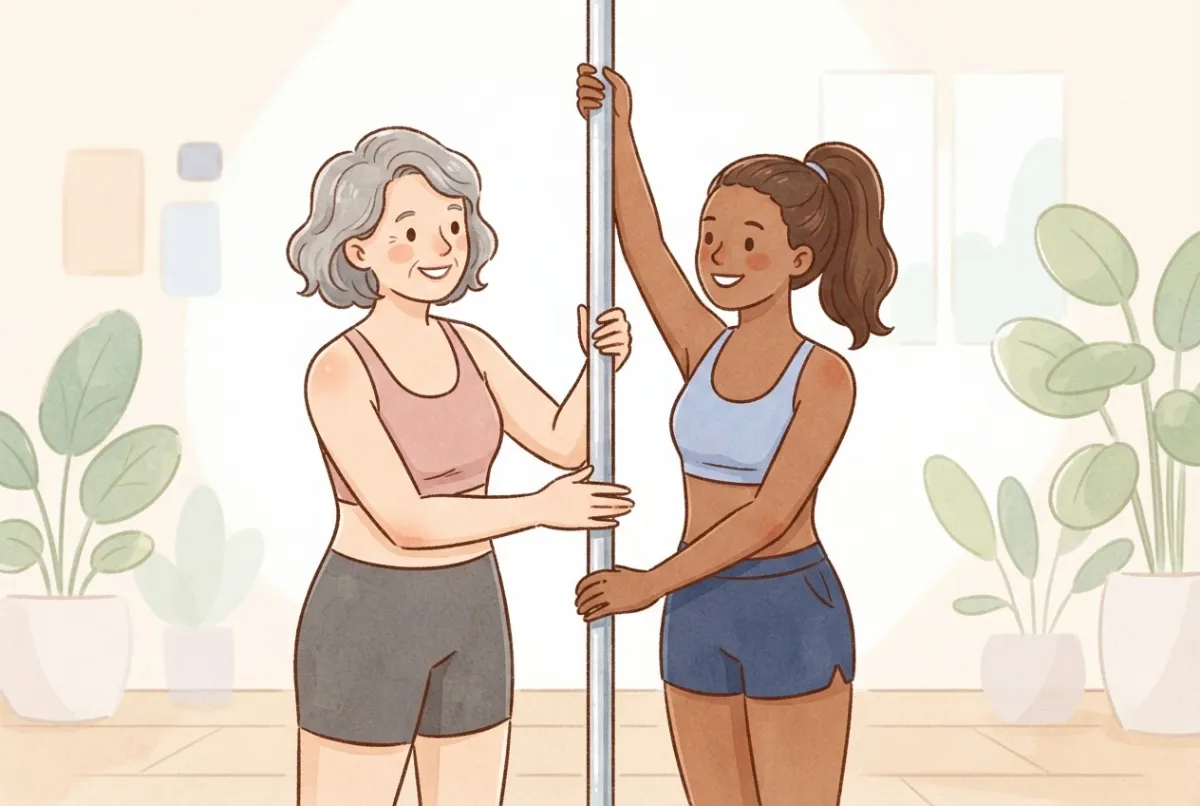
If pain lasts more than a couple of weeks, keeps coming back, or comes with swelling, clicking, weakness or numbness, see a physio or doctor, ideally one who knows pole or other upside-down sports. The NHS guidance on wrist pain explains when to get help.
Can wrist wraps help with handsprings?
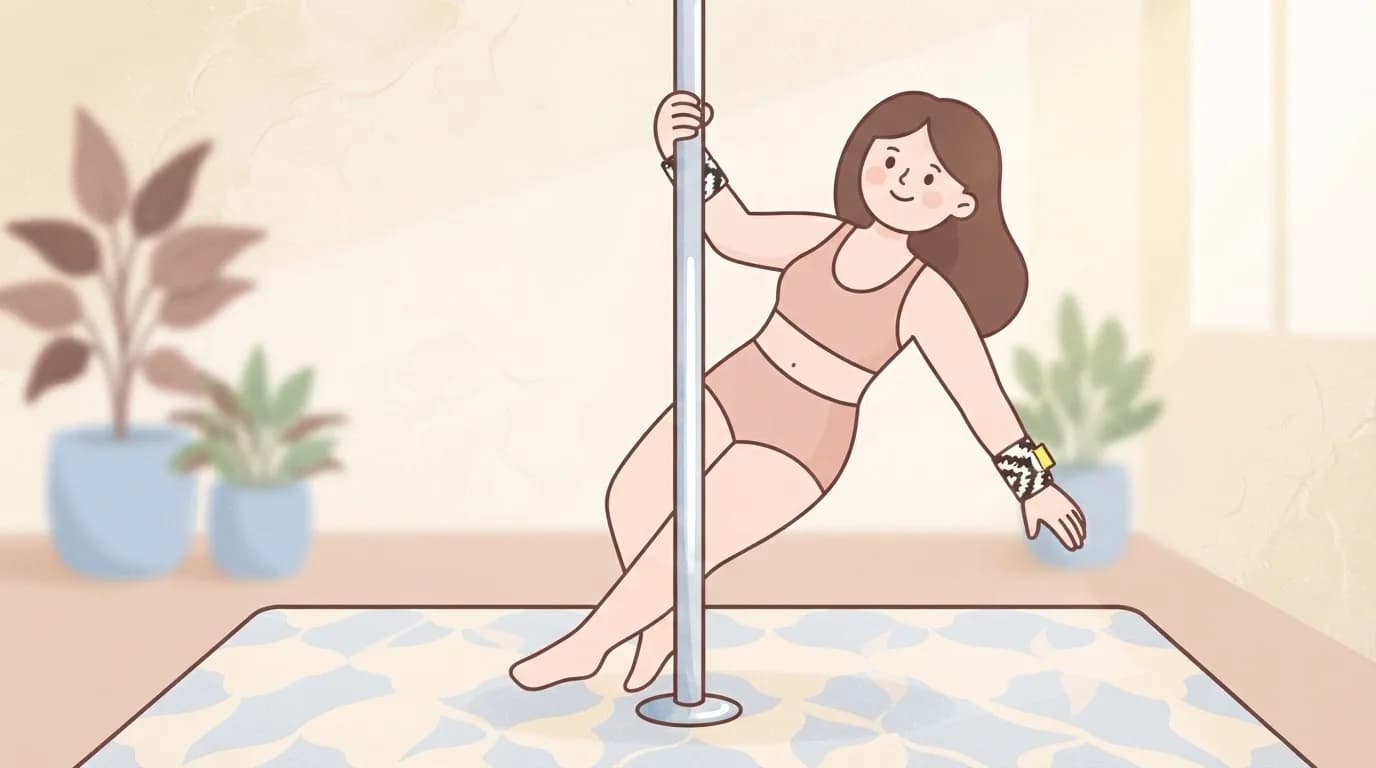
Some dancers like wearing wraps for handspring practice, because firm compression low on the wrist can make the joint feel more stable and keeps it warm between attempts, while your hand stays free to grip. Wraps won't fix a grip that doesn't suit you, and they don't replace strength, but they can make conditioning and drilling feel more comfortable. Our guide to wrist wraps for pole explains how to choose and wear them so they don't get in the way of your grip.

Both grips are valid, and lots of dancers end up using both depending on the combo. If you start with the one that keeps your wrist happiest, and keep building the strength and mobility for the other, you'll have both options in the end.
More in Pole & aerial training
- Wrist Pain from Pole Dancing: Why It Happens and What Helps
- Exotic Pole Floorwork in Heels: How to Look After Your Wrists and Knees
- A 20-Minute Home Pole Conditioning Session (Most of It Needs No Pole)
- How to Clean a Dance Pole: Chrome, Brass, Stainless, Powder-Coated and Silicone
- Pole Kisses: Why Pole Dancing Bruises You and When a Bruise Needs Checking
- Can You Still Pole Dance With a Sore Wrist? What to Train While It Settles
- Pole Grip Aids Compared: Which Type Suits Dry, Sweaty or Cold Hands?
- Pole vs Aerial Hoop vs Silks: Which Is Hardest on Your Wrists?
Questions people ask
Is cup grip safer than twisted grip?
Cup grip keeps the wrist in a more neutral position, so it is often described as gentler on the wrist. Any grip can cause problems if your shoulders and core aren't engaged, so good technique and strength matter as much as the grip itself.
Why does twisted grip hurt my wrist?
Twisted grip bends the wrist strongly towards the little finger while the forearm is fully turned, which loads the little-finger side of the wrist. If your shoulder lacks overhead range, the wrist can also end up taking more of the strain.
Why is cup grip so hard?
Cup grip relies on an active pull from the top arm and a strong push from the bottom hand, with your hips driving up. Until that strength is there it feels heavy, which is why many people find twisted grip easier at first.
Should beginners learn twisted grip or cup grip?
Handsprings are an intermediate move, so the best person to answer is your teacher once you have solid inverts. Many teachers let you try both with a spot and then pick the one that suits your shoulders and wrists.
Can I switch from twisted grip to cup grip?
Yes, many dancers do, especially if their wrist complains in twisted grip. Expect it to feel harder for a while and build the pulling strength and hip drive with drills before you go back to full handsprings.
Shop the fix
Wraps made for exactly this
Handmade in Slovenia by a pole teacher, with firm compression that sits low on the wrist.
Sources we checked
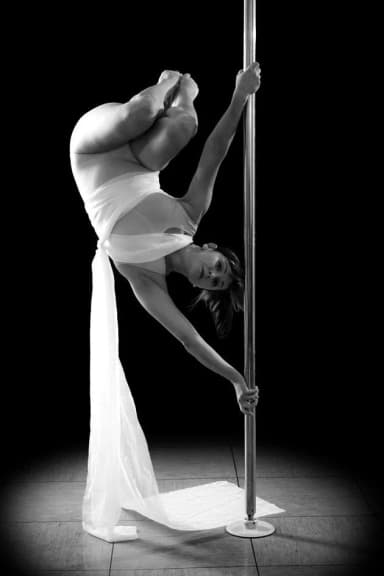
Written by
Masha Pinner
Pole dance teacher at Pandora Art of Pole in Slovenia and former fashion designer. Masha started SneakyDeez in 2017 after years of teaching on sore wrists, and she still designs every pair.
Read Masha’s story