The short version
- Sweaty hands usually do best with a liquid grip aid or a drying powder, while dry hands often need a tacky aid or a product made for dry skin.
- Cold hands need warming up, because no grip aid fixes cold skin.
- Many studios restrict tacky aids and loose powder, so ask first and wipe the pole after your turn.
- Your pole's finish changes how much grip you need, so follow the pole maker's guidance on products and cleaners.
- Put your wrist wraps on before you apply grip aid, and try one new product at a time.
The right pole grip aid depends on why you're slipping. Sweaty hands usually do best with a liquid grip aid or a drying powder, dry hands often need a tacky aid or a product made for dry skin, and cold hands mostly need warming up, because no grip aid fixes cold skin. Check your studio's rules and your pole's finish before you try anything, put your wrist wraps on before you apply grip, and test one product at a time with a small amount.
Students ask me about grip aids more than almost anything else, usually halfway through a class when their hands have started to slide. I won't recommend brands here, because what works brilliantly for one dancer does nothing for the next, but I can help you understand the types so you choose sensibly.
Why do your hands slip on the pole?
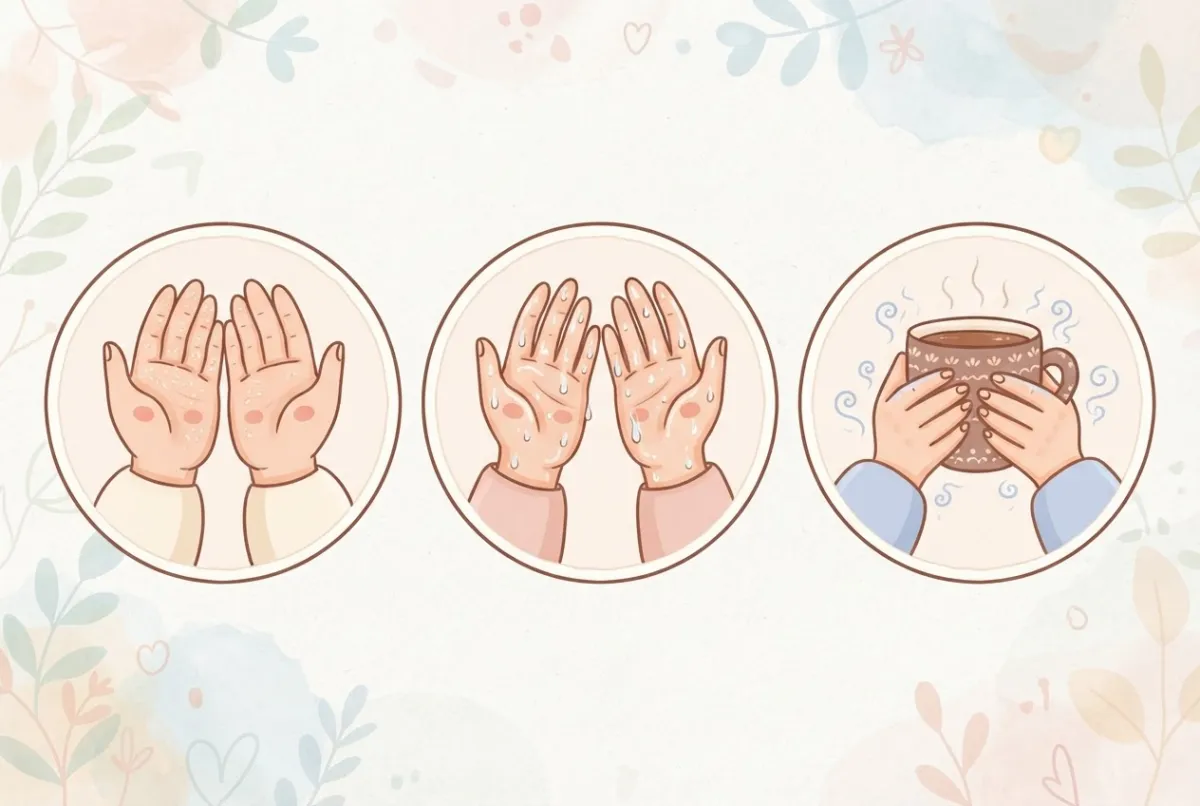
Pole grip comes from bare skin on metal, and skin grips best when it's slightly tacky and neither wet nor bone dry. Sweat turns into a slippery film between your palm and the pole, so sweaty hands slide. Very dry skin has the opposite problem, because it's smooth and stiff and doesn't mould to the pole, so it skates over the surface.
Cold matters too. Cold fingers feel numb, they don't squeeze as well, and cold skin tends to be drier. A cold studio, a fan blowing on you, or a pole that hasn't warmed up yet can all make you slip even when you're doing everything right. Hand cream, body lotion, fake tan and oily sun cream make everything worse, so leave them off on pole days.
What types of pole grip aid are there?
There are hundreds of products, but most fall into a few families. This table compares the types rather than any particular brand.
| Type | How it works | Often suits | Watch out for |
|---|---|---|---|
| Liquid grip aids | Usually alcohol-based, so they dry the skin quickly and often leave a thin grippy layer | Sweaty hands, and dancers who want something that doesn't feel sticky | Can dry out hands that are already dry, and may sting on cracked skin |
| Powder or chalk-style aids | Absorb moisture from the skin's surface | Mildly sweaty hands and quick touch-ups between runs | Can make dry hands slide more, and many studios limit loose powder because it marks poles and floors |
| Tacky aids | A sticky layer that adds friction between skin and pole | Dry hands, older or very smooth skin, and static holds | Can build up on the pole, feel gluey, and are often not allowed in shared studios or competitions |
| Anti-sweat hand products | Applied ahead of time, sometimes the night before, to reduce how much your palms sweat | Dancers whose hands sweat heavily every session | They take time to work and they're not for broken or irritated skin |
| Products for dry skin | Add a little moisture or tack so the skin moulds to the pole | Hands that feel papery or squeaky on the pole | Use only the amount the label says, because too much turns slippery |
Which grip aid suits sweaty, dry or cold hands?
Sweaty hands
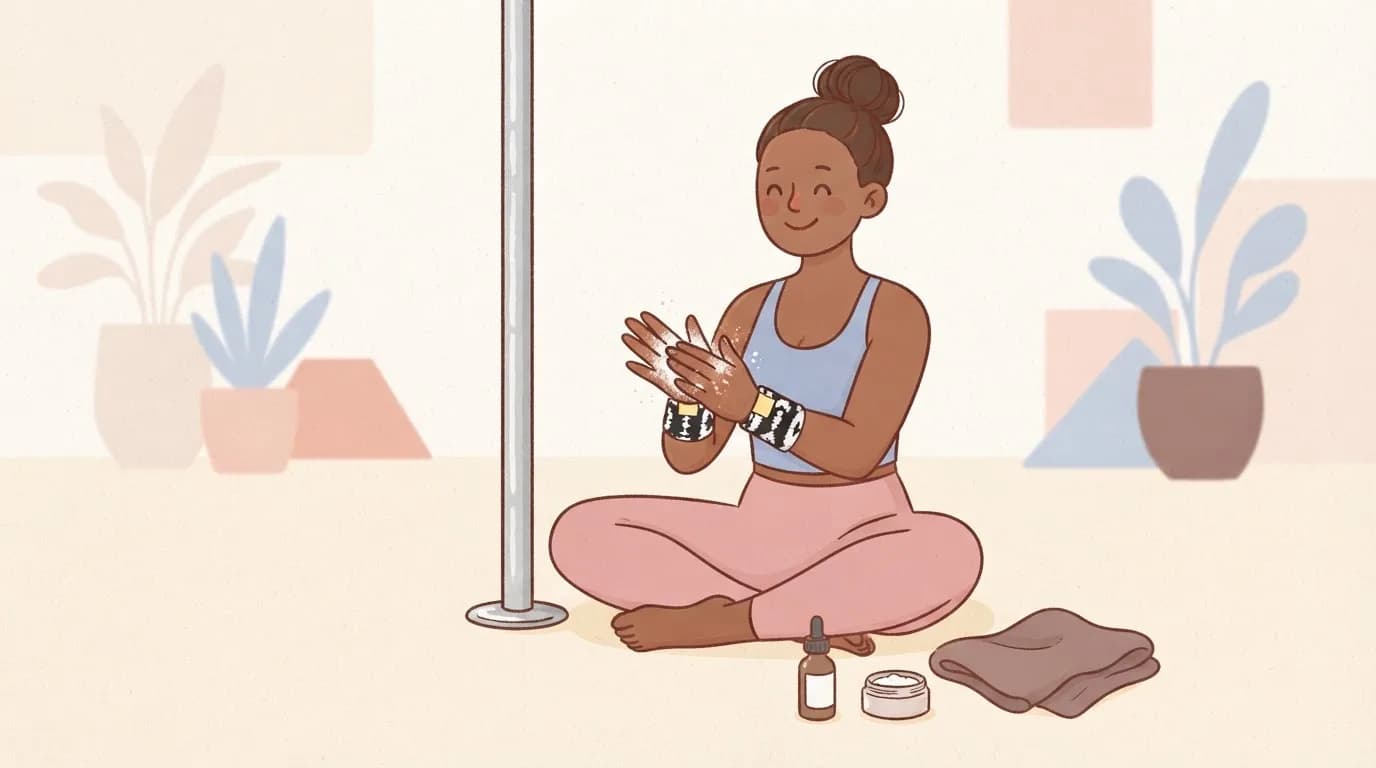
Start with a liquid grip aid or a light drying powder, applied to clean, dry hands. Wipe your hands on a towel between runs and reapply sparingly rather than piling more on. If your palms sweat heavily all the time, in daily life as well as in class, the NHS page on excessive sweating suggests asking a pharmacist about stronger antiperspirants and seeing a GP if it affects your daily life.
Dry hands
Dry hands often get worse with drying products, which surprises a lot of people. Try a tacky aid or a product made for dry skin, and look after your hands in the evenings with a good hand cream so the skin is supple by the next class. Just keep the cream away from your hands for several hours before you train.
Cold hands
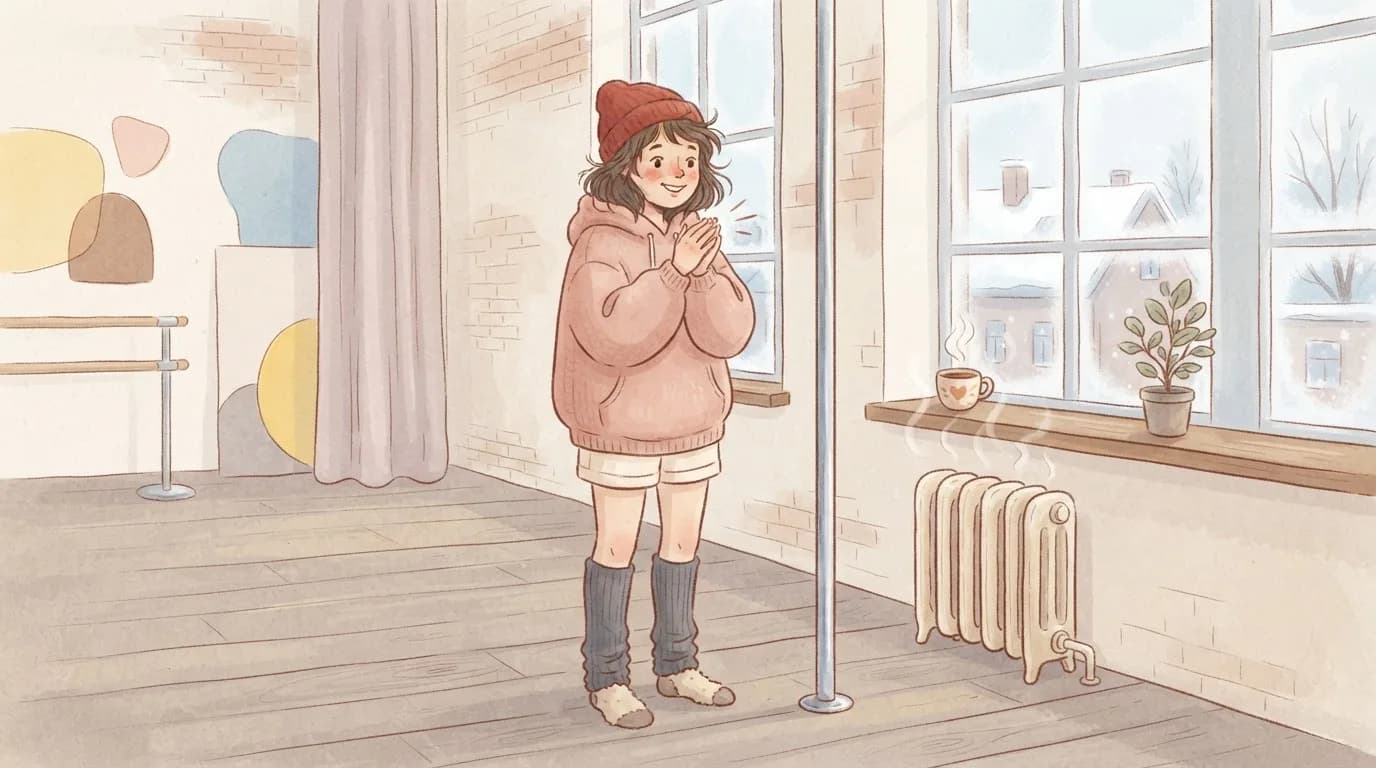
Warm up properly, keep moving between runs, and wear a warm layer and maybe gloves until your turn on the pole. Grip aids won't do much for cold skin, so heat is the real fix, and our guide to warming up in a cold studio has a routine for chilly evenings. If your fingers turn white or blue in the cold and then red as they warm up, it's worth reading the NHS page on Raynaud's and mentioning it to your GP.
Can you use grip aids in every studio?
Not always, so ask before you open a bottle. Many studios have rules about grip aids because the poles are shared and the next person has to dance on whatever you leave behind. Tacky aids and loose powder are the ones most often restricted, and some studios provide their own grip aid or ask you to clean the pole after you use yours. Competitions usually have their own rules too, so read them well before the day so you can train with whatever is allowed.
Good manners help everyone. Bring your own cloth, wipe the pole down after your turn, and never share an open product that goes on your skin.
Does your pole finish change which grip aid works?
Yes, quite a lot. Every finish grips differently, and the same grip aid can feel perfect on one pole and too sticky or too slippery on another.
| Pole finish | How it tends to grip | Things to check |
|---|---|---|
| Chrome | Smooth, and the finish many dancers learn on | Most grip aid types are used on it, but follow the studio's rules |
| Stainless steel | Smooth, often a little less grippy than other metals | Often chosen by dancers whose skin reacts to other metals |
| Brass | Warmer and grippier, often preferred by experienced dancers | Polishing it can change the grip |
| Powder-coated | Very grippy, even without a grip aid | Check the pole maker's guidance on grip aids and cleaners |
| Silicone | The grippiest of all, so skin can stick hard and spins slow down | Check the pole maker's guidance, as some cleaners and products can damage it |
On a coated or silicone pole you may find you need far less grip aid, or none at all. On any finish, cleaning off sweat, skin oils and old grip aid regularly makes a big difference, and the pole maker's care instructions tell you what's safe to use.
Should you put wrist wraps on before or after grip aid?
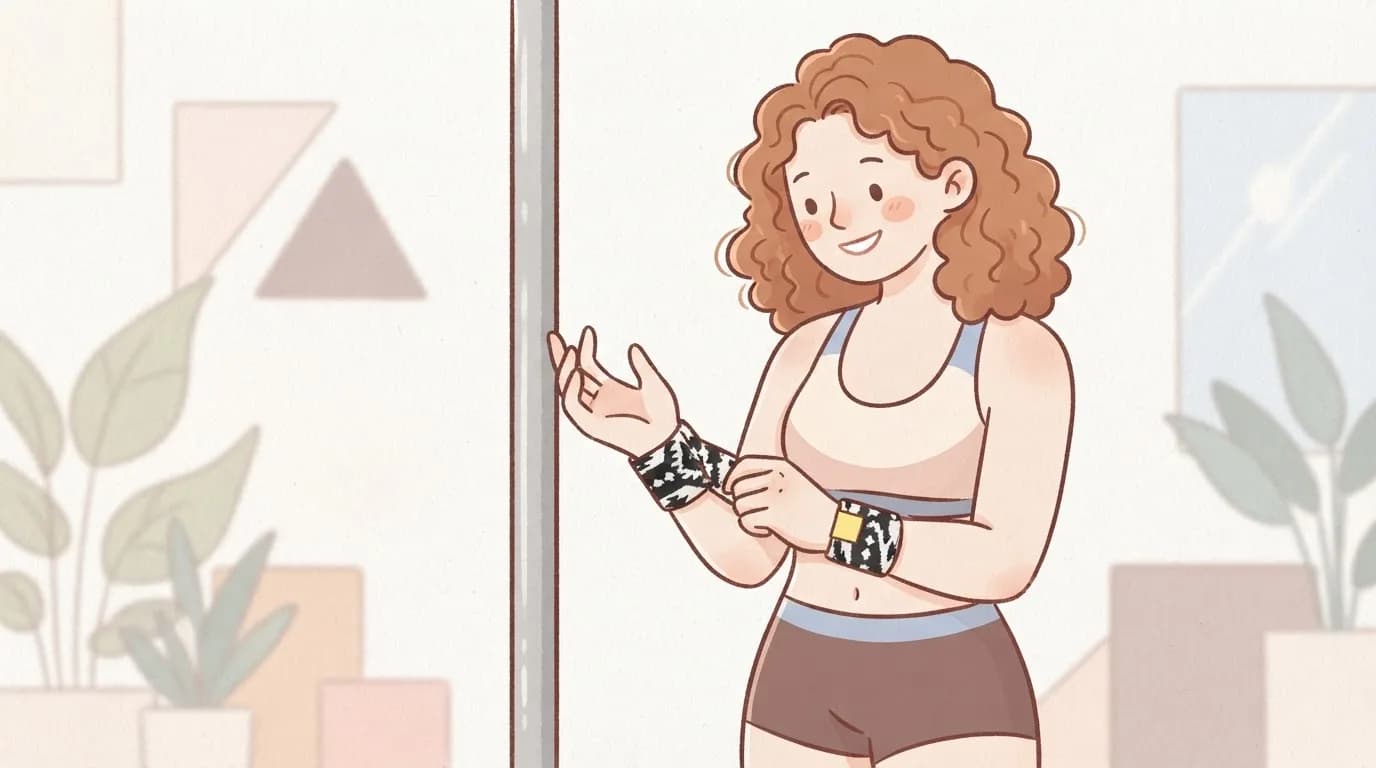
Put your wrist wraps on first and apply grip aid afterwards. That way your hands go on clean, the product stays off the fabric and the Velcro fastening, and you don't smear grip aid over your wrists while you're adjusting the wraps. Good wraps for pole sit low on the wrist, on the joint, so they never cover the palm where the grip aid is doing its job.

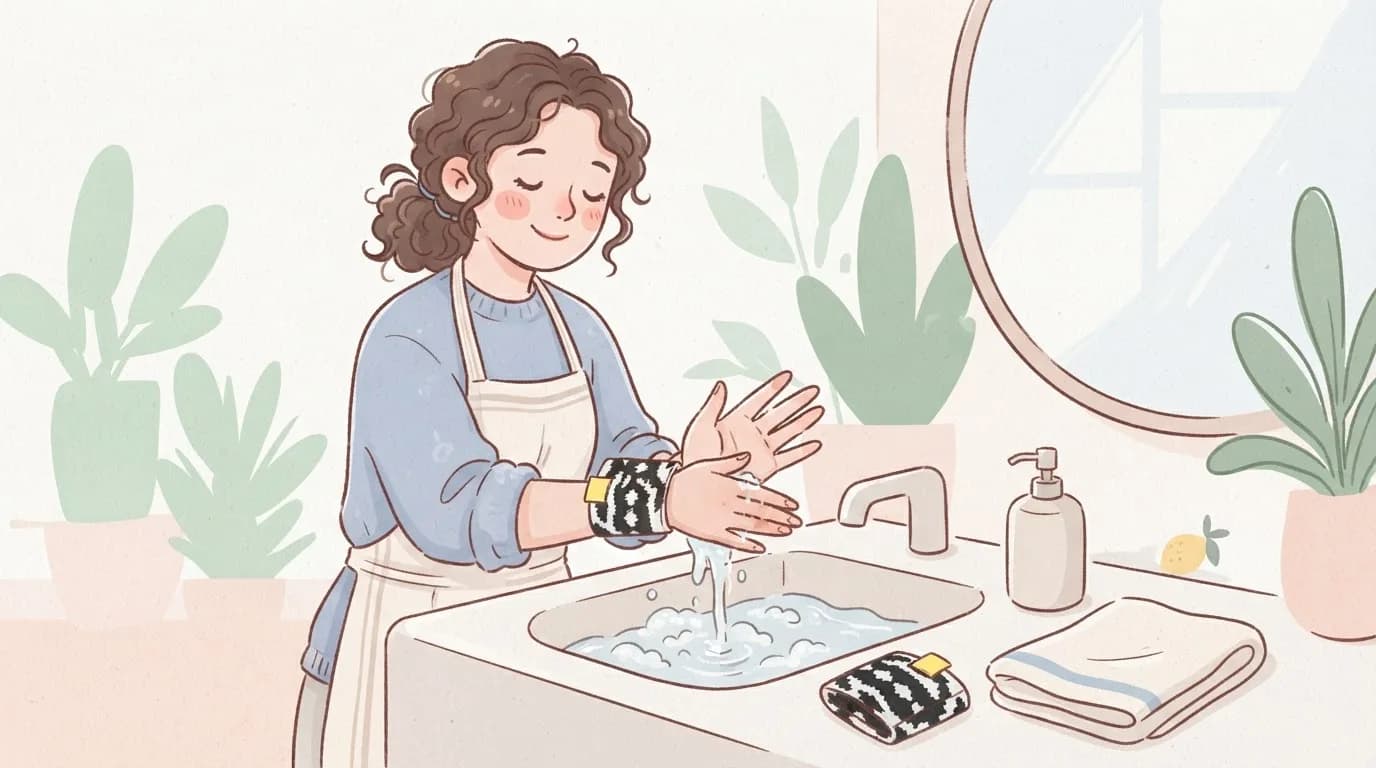
If some grip aid does end up on your wraps, a hand wash after class sorts it out, and our guide to washing wrist wraps explains how to keep the elastic firm. You'll find more about where wraps should sit in our guide to wrist wraps for pole.
How do you apply grip aid properly?
- Wash and dry your hands with plain soap, so you start without cream, oil or old product.
- Put your wraps on and set the tension before anything goes on your hands.
- Apply a small amount, about what the label suggests, to your palms and the inside of your fingers. Add it to other contact points such as the inner arms only if you grip there.
- Let it dry for the time on the label, usually a minute or so. Liquid aids often feel slippery while still wet.
- Test it with a simple hold before trying anything big, because a new product can grip more or less than you expect.
- Reapply sparingly between runs. Wipe first if your hands are sweaty, rather than adding layer after layer.
Masha's tip: Only try one new grip aid at a time, and never on the day you're attempting a new trick. Give it two or three normal classes so you know how it behaves before you trust it upside down.
Can grip aids hurt your skin or your wrists?
Alcohol-heavy products dry the skin, so if you use one often, your hands may crack or peel. Look after them on rest days and stop using any product that makes your skin red, itchy or sore. It's a good idea to test a new product on a small patch of skin first.
Good grip also helps your wrists in a quieter way. When your hands slide, you squeeze harder, and that extra squeezing loads the tendons that cross the wrist. Sorting out your grip is one of the habits we talk about in our guide to wrist pain from pole dancing, and less sliding also means fewer friction burns and bruises, which our guide to pole kisses and bruises covers.
Questions people ask
What is the best grip aid for sweaty hands in pole?
Most dancers with sweaty hands start with a liquid, usually alcohol-based, grip aid or a light drying powder on clean, dry hands. Wipe your hands between runs and reapply sparingly. If your palms sweat heavily all the time, ask a pharmacist or GP.
What grip aid should I use for dry hands?
Dry hands often slide more with drying products. A tacky aid or a product made for dry skin usually works better, along with hand cream in the evenings, kept well away from your hands in the hours before class.
Can I use grip aid on a powder-coated or silicone pole?
These finishes are already very grippy, so you may need little or none. Check the pole maker's guidance on which grip aids and cleaners are safe, because some products can damage coated or silicone surfaces.
Do I put grip aid on before or after wrist wraps?
Put your wraps on first, then apply grip aid. That keeps product off the fabric and the Velcro, and the wraps sit low on the wrist so your palm stays bare for grip.
Is chalk OK for pole dancing?
Chalk-style powders absorb sweat and some dancers like them for quick touch-ups, but they can make dry hands slide more and many studios limit loose powder because it marks poles and floors. Ask your studio first.
Shop the fix
Wraps made for exactly this
Handmade in Slovenia by a pole teacher, with firm compression that sits low on the wrist.
Sources we checked
Written by
Masha Pinner
Pole dance teacher at Pandora Art of Pole in Slovenia and former fashion designer. Masha started SneakyDeez in 2017 after years of teaching on sore wrists, and she still designs every pair.
Read Masha’s story