The short version
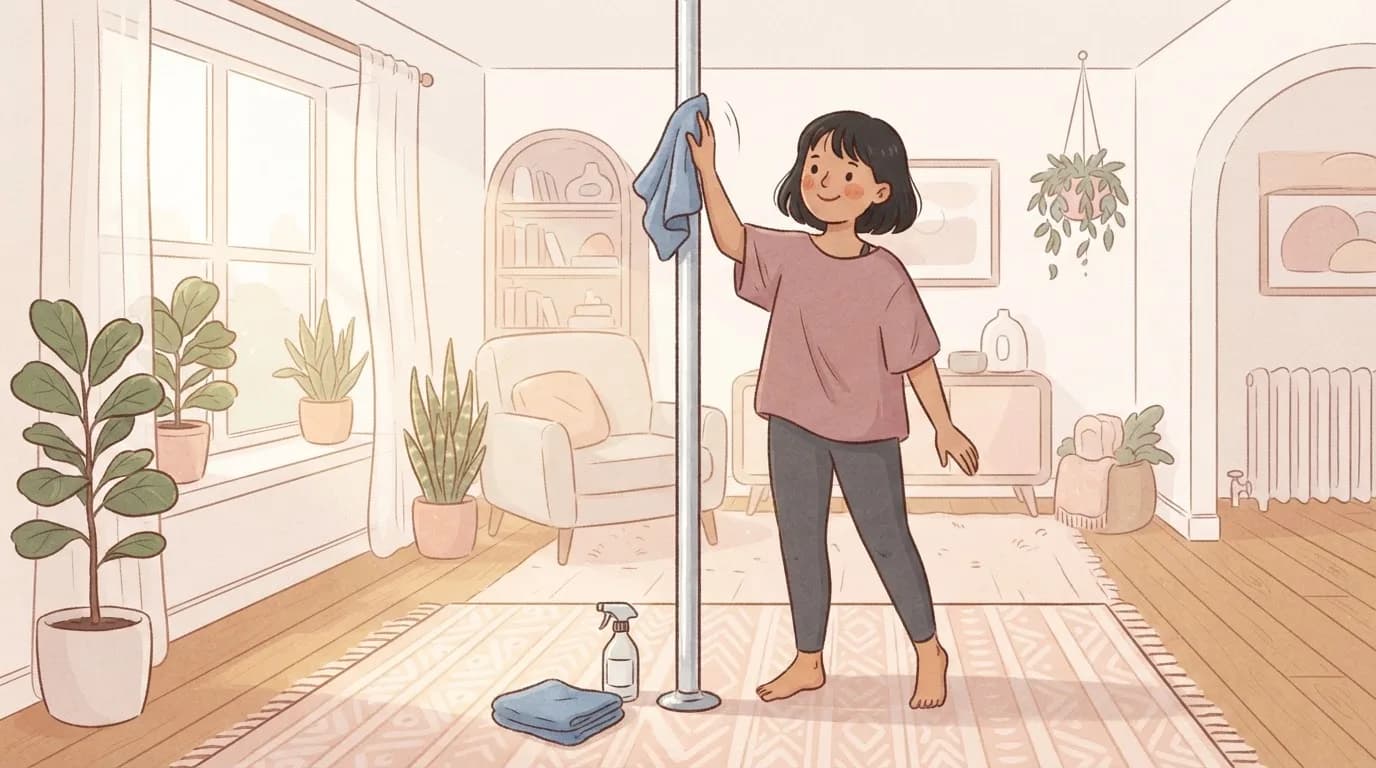
- Wipe your pole from top to bottom with a microfibre cloth and a cleaner that suits the finish, then buff it dry with a second cloth.
- Chrome, stainless steel and brass are usually cleaned with isopropyl alcohol, while powder-coated and silicone poles usually get mild soap and warm water.
- Never use abrasive pads, bleach, acetone, furniture polish or oily sprays on a pole, and keep water from running into the joints and base.
- Give the pole a quick wipe before and after every session, and a slower clean when it starts to feel patchy.
- A clean, completely dry pole gives a consistent grip, and your pole maker's care instructions always come first.
To clean a dance pole, wipe it from top to bottom with a microfibre cloth and a cleaner that suits its finish, then buff it dry with a second clean cloth. Chrome, stainless steel and brass are usually cleaned with isopropyl (rubbing) alcohol, while powder-coated and silicone poles are usually washed with a little mild soap in warm water, because alcohol can be hard on coatings. Give the pole a quick wipe before and after every session, never use abrasive pads, bleach or polish meant for furniture, and always check your pole maker's care instructions first.
I teach pole, so I've wiped down more poles than I could ever count, and a clean pole is honestly one of the easiest ways to make your grip feel better. Everything below is widely shared care advice from the pole world, but finishes and coatings differ from maker to maker, so your pole's own manual always wins if it says something different.
What do you need to clean a dance pole?
You don't need anything fancy, and most of it is probably in your cupboard already.
- Two microfibre cloths. One to clean with and one to dry and buff. Microfibre picks up skin oil and grip aid much better than paper towels and doesn't leave fluff behind.
- The right cleaner for your finish. Isopropyl alcohol or a cleaner your pole maker recommends for metal poles, and a bowl of warm water with a drop of mild washing-up liquid for coated poles.
- A small spray bottle, if you like to mist the cloth rather than dip it.
- A sturdy step stool for the top of the pole, if you can't reach it from the floor.
- Gloves, if you're going to use a brass polish, because some polishes irritate skin.
How do you clean a dance pole, step by step?
This takes about five minutes, and it's the same routine whatever the finish, only the cleaner changes.
- Check the finish and the manual. Make sure you know whether your pole is chrome, stainless steel, brass, powder-coated or silicone, and read what your pole maker says about cleaning it.
- Spray the cloth, not the pole. Dampening the cloth keeps liquid from running down into the base, the joints and the floor, and it means you use much less product.
- Start at the top. Grip aid and sweat get everywhere, and starting high means you're always wiping the dirt downwards instead of spreading it back up.
- Wipe in sections. Wrap the cloth around the pole and slide it down a section at a time, turning it to a clean side as it gets grubby. Pay extra attention to the height where you grip most, which is usually chest to head height and the area just above the floor.
- Buff it dry. Go over the whole pole again with your dry cloth so there's no damp film or streaks left.
- Let it dry completely before you dance. Alcohol evaporates quickly, but soapy water on a coated pole needs a proper dry wipe and a few minutes of air.
- Wash your cloths. A cloth full of old grip aid just moves it back onto the pole next time.
If you notice anything that worries you while you're cleaning, such as a pole that moves when it shouldn't or a fixing that looks loose, stop and follow your pole maker's instructions before anyone dances on it.
What should you use on each type of pole?
This is where people get caught out, because a cleaner that's perfect for chrome can spoil a coated pole. The table is a general guide based on common care advice, so check it against your own pole's instructions.
| Finish | Everyday clean | Avoid | Grip notes |
|---|---|---|---|
| Chrome | Isopropyl alcohol on a microfibre cloth, then buff dry | Abrasive pads and creams, harsh household cleaners | Shows grease and fingerprints quickly, so a quick wipe makes a big difference |
| Stainless steel | Isopropyl alcohol on a microfibre cloth, then buff dry | Abrasive pads, steel wool, bleach | Many dancers find it grips well when it's clean and completely dry |
| Brass | Isopropyl alcohol for everyday cleaning, and a brass polish only now and then if you want the shine back | Acetone, abrasives, leaving polish residue on the pole | Polish can leave a slippery film, so wipe it off thoroughly and test your grip before you climb |
| Powder-coated | A little mild soap in warm water, a well wrung cloth, then dry it | Alcohol unless your maker says it's fine, acetone, glass cleaner, abrasives | Coated poles are made to grip skin, so oil and lotion show up as slippy patches |
| Silicone | Mild soap and warm water, or the cleaner your pole maker sells for it, then dry it | Alcohol, solvents, anything sharp or scratchy | Very grippy when clean, and quick to pick up dust and fluff |

Chrome and stainless steel poles
These are the easiest to look after. A cloth dampened with isopropyl alcohol cuts through sweat, skin oil and most grip aids, and it dries fast, so the pole is ready almost straight away. Some dancers dilute the alcohol with water for everyday wipes and use it neat when there's a lot of build-up, so go with whatever your pole maker suggests.
Brass poles
Brass naturally darkens over time as it reacts with the air and with the oils from your skin. That doesn't harm the pole, and for everyday cleaning the same alcohol wipe works well. If you'd like the shine back, a brass polish will do it, but polishes can leave a film that makes the pole slippery, so wear gloves, follow the product instructions and then go over the pole with alcohol and a clean cloth until no residue is left.
Powder-coated poles
Powder coating is a layer of paint baked onto the metal, so what your hands actually touch is the coating on top. Many care guides suggest mild soapy water rather than alcohol for these, because strong solvents can dull or wear the coating. Wring the cloth out well so it's damp rather than wet, wipe, and then dry the pole properly.
Silicone poles
Silicone-coated poles are soft and very grippy, which is exactly why they need a gentle hand. Use mild soap and warm water or the specific cleaner your pole maker recommends, avoid alcohol and solvents, and keep sharp jewellery and rough cloths away from them.
What should you never put on a dance pole?
- Abrasive pads, scouring creams and steel wool, because they scratch metal and can strip a coating.
- Bleach and strong household cleaners, which can damage finishes and leave residue that you'll then touch with bare skin.
- Furniture polish, oils and silicone sprays on the climbing surface, since anything that makes the pole shiny and slick makes it dangerous to grip.
- Acetone, which is often mentioned as a deep cleaner but is hard on brass and on coated poles.
- Lots of water dripping down the pole, because it can get into joints and the base, where metal parts may rust.
How often should you clean your pole?
Give it a quick wipe before you dance and another one after, every single time. The wipe before removes dust and anything left from the last session, and the wipe after gets rid of your sweat, skin oil and grip aid before they dry into a tacky layer.
On top of that, a slower, more thorough clean every week or two is a good habit if you train a lot. You'll know it's due when the pole feels patchy, when you can see smudgy rings at the heights you grip most, or when your cloth comes away grey even after a normal wipe. A home pole that hasn't been used for a while needs a wipe before you start too, because dust settles on it like on any other surface.
In a studio, wiping each pole between classes is basic hygiene as well as good for grip, because lots of people's bare skin touches the same surface. The CDC's advice for gyms and sports settings is to clean surfaces that touch bare skin, such as equipment and benches (CDC), and a pole is about as bare-skin as equipment gets. If you run a studio, our guide to wrist wraps for pole studios covers the same kind of hygiene thinking for shared kit.
Does cleaning a pole help your grip?
Yes, and often more than people expect. Pole grip comes from bare skin against the pole, and anything sitting in between, like sweat, skin oil, body lotion or old grip aid, makes that contact less reliable. A layer of residue can also make the pole feel grippy in one spot and slippery a few centimetres away, which is unsettling when you're upside down.
A freshly cleaned pole that is completely dry gives you a consistent surface, so you can actually tell how your own grip is doing that day. Give alcohol a moment to evaporate fully and give soapy water a proper dry wipe, because a damp pole is slippery. Your skin matters just as much, so skip hand cream and body lotion on pole days, a tip we also give in what to wear to your first pole class. Temperature plays a part too, and a cold pole in a chilly room behaves differently from a warm one, which we cover in training in a cold studio.
Masha's tip: Keep a cloth and a small bottle of whatever your pole likes right next to it, and make wiping the pole the very first and very last thing you do. Once it's a habit you won't even think about it, and your grip will thank you.
If you use a grip aid, put it on after the pole is clean and dry, and use as little as you need, because heavy layers build up quickly and mean more cleaning later. If you wear wrist wraps, put them on before the grip aid so it doesn't end up on the fabric, as we explain in the guide to wrist wraps for pole.
What about the rest of your pole kit?
Your pole isn't the only thing that collects sweat and grip aid. Wraps, knee pads and leg warmers all sit against warm skin, so give them a regular hand wash and let them dry fully before they go back in your bag. Our guide to washing wrist wraps takes you through it step by step, and the same gentle routine works for most stretchy dance kit.
More in Pole & aerial
- Aerial Hoop for Beginners: Your Hands and Wrists in the First Month
- Exotic Pole Floorwork in Heels: How to Look After Your Wrists and Knees
- A 20-Minute Home Pole Conditioning Session (Most of It Needs No Pole)
- How to Choose a Pole Studio: What to Look For Before You Book
- Pole Kisses: Why Pole Dancing Bruises You and When a Bruise Needs Checking
- Can You Still Pole Dance With a Sore Wrist? What to Train While It Settles
- Pole Grip Aids Compared: Which Type Suits Dry, Sweaty or Cold Hands?
- Pole vs Aerial Hoop vs Silks: Which Is Hardest on Your Wrists?
Questions people ask
Can I use hand sanitiser to clean my pole?
Many hand sanitisers contain alcohol but also moisturisers and gels that can leave a slippery film on the pole. A plain isopropyl alcohol wipe on a metal pole, or mild soapy water on a coated one, is a better choice, as long as your pole maker's instructions agree.
Can I use glass cleaner on a dance pole?
Some dancers use it on chrome and stainless steel, but it isn't suitable for every finish and can be hard on coated poles. Check your pole maker's care instructions before using it, and stick to alcohol or mild soap if you're unsure.
Why is my pole slippery even after I cleaned it?
It may still be damp, the cleaner may have left a film, or there may be lotion or old grip aid on your hands. Buff the pole fully dry, wash your hands with plain soap and avoid hand cream on pole days.
Should I clean a brand-new pole before using it?
Yes, new poles can have a light film from manufacturing or packaging on them. Give it a clean with the method your pole maker recommends before your first session.
How do I get built-up grip aid off my pole?
Use a more thorough clean with the cleaner that suits your finish, working in small sections and turning your cloth often so you lift the residue instead of spreading it. Using less grip aid in future means less build-up.
Shop the fix
Wraps made for exactly this
Handmade in Slovenia by a pole teacher, with firm compression that sits low on the wrist.
Sources we checked
Written by
Masha Pinner
Pole dance teacher at Pandora Art of Pole in Slovenia and former fashion designer. Masha started SneakyDeez in 2017 after years of teaching on sore wrists, and she still designs every pair.
Read Masha’s story