The short version
- The bottom hand in a shoulder mount pushes a lot of your weight into the pole, often with the wrist bent back or sideways.
- Keep the bottom wrist as straight as you can, bend the elbow under the hand, pull with the top arm and lift from your hips.
- Floor wrist rocks, planks, wrist curls, push-ups and tuck holds build the strength the move needs.
- Regressions like feet-on-the-floor set-ups, tucked mounts and fewer reps keep you progressing while the wrist settles.
- Sharp pain, swelling, numbness or pain lasting more than a couple of weeks means rest from mounts and get it checked.
Your wrist usually hurts in a shoulder mount because the bottom hand is pushing a big part of your body weight into the pole while the wrist is bent back or twisted to the side. The fix is mostly about set-up and strength: a bottom wrist kept as straight as you can, a bent elbow with the forearm underneath the hand, a top arm that pulls, and hips and core that lift you so the wrist doesn't have to. If the pain is sharp, lasts more than a couple of weeks, or comes with swelling or numbness, rest from mounts and get it checked.
Shoulder mounts are one of those moves where everyone talks about the shoulder and nobody warns you about the wrist. I've seen plenty of dancers who are strong enough for the move come out of class holding their bottom hand, so let's look at why it happens and what you can change.
Why does your wrist hurt in a shoulder mount?
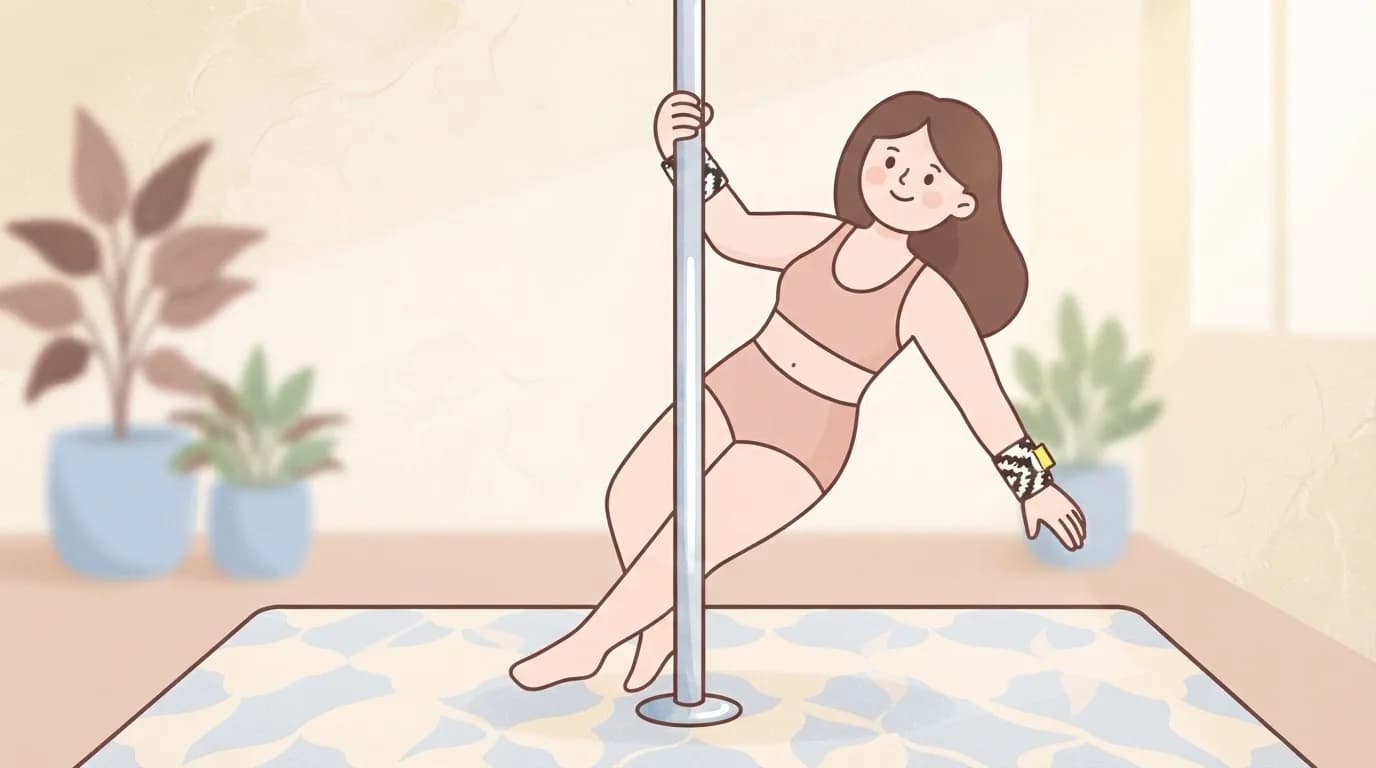
In a shoulder mount you rest the top of your shoulder against the pole, hold it with both hands and lift your legs and hips up and over. Your top hand pulls the pole towards you and your bottom hand pushes against the pole to stop you from sliding down and to help lift your hips. That push is what loads the bottom wrist.
The wrist is happiest taking weight when it's fairly straight and the force travels in a line through the hand and forearm. In a shoulder mount it often ends up bent back hard, bent sideways towards the little finger, or both, while you push with everything you have. That's a lot of load on a small joint in an awkward position, and the soft tissues around it can get irritated, especially if you repeat the mount many times in one class.
Common reasons the bottom wrist takes too much
- The elbow flares out, so the forearm isn't underneath the hand and the wrist bends sideways to make up for it.
- The hand is too high or too low on the pole, which forces the wrist into a deep bend.
- The top arm isn't pulling, so the bottom hand ends up holding all of you.
- The lift comes from the arms instead of your hips and core, so you muscle up with your hands.
- Princess grip, a variation where the bottom hand reaches round the pole, asks for a lot of wrist bend and puts pressure on the forearm just below the wrist. A pole physio describes this contact point as one that can create uncomfortable pressure (The Pole Physio).
- Too many reps when you're learning, because every failed attempt still loads the wrist.
Where does it hurt, and what does that tell you?
Pain on the top of the wrist when you push with the hand bent back is the most common pattern in shoulder mounts, and it's the same one people get in handstands and push-ups. Our guide to wrist pain when the wrist is bent goes into it. Pain on the little-finger side often shows up when the wrist is twisted sideways under load, and pain on the thumb side tends to come from squeezing hard with the thumb. These are only clues, because the same spot can hurt for different reasons, and our pole dancing wrist pain guide explains the patterns in more detail.
How should you set up your bottom hand?
Every teacher has their own cues and your teacher's set-up for your body comes first, but most shoulder mount set-ups share a few ideas.
- Keep the bottom wrist as close to straight as you can, so you're pushing through the heel of the hand without the wrist folding right back or bending hard to the side.
- Bend the elbow to roughly a right angle and keep it under the hand, so the forearm sits behind the push like a strut.
- Use a cup grip on the bottom hand if your teacher teaches it, with the thumb on the same side as the fingers. It's a common choice for shoulder mounts because it lets the hand push without twisting the wrist.
- Pull with the top hand so the pole is held between a pull and a push. When both arms work, neither wrist has to do everything.
- Lift from the hips. Think of drawing your knees towards your chest and your hips towards the pole, and let your arms keep you stable rather than throw you up.
A small change in hand height can make a big difference, so ask your teacher to watch you from the side and try moving the bottom hand a few centimetres up or down.
How do you build the strength for shoulder mounts?
Most wrist trouble in shoulder mounts comes from doing the full move before the wrist, shoulder and core are ready to share the load. Tendons adapt more slowly than muscles do (Mersmann and colleagues, 2017), so you can feel strong enough for a move weeks before your wrist is ready for lots of repetitions.
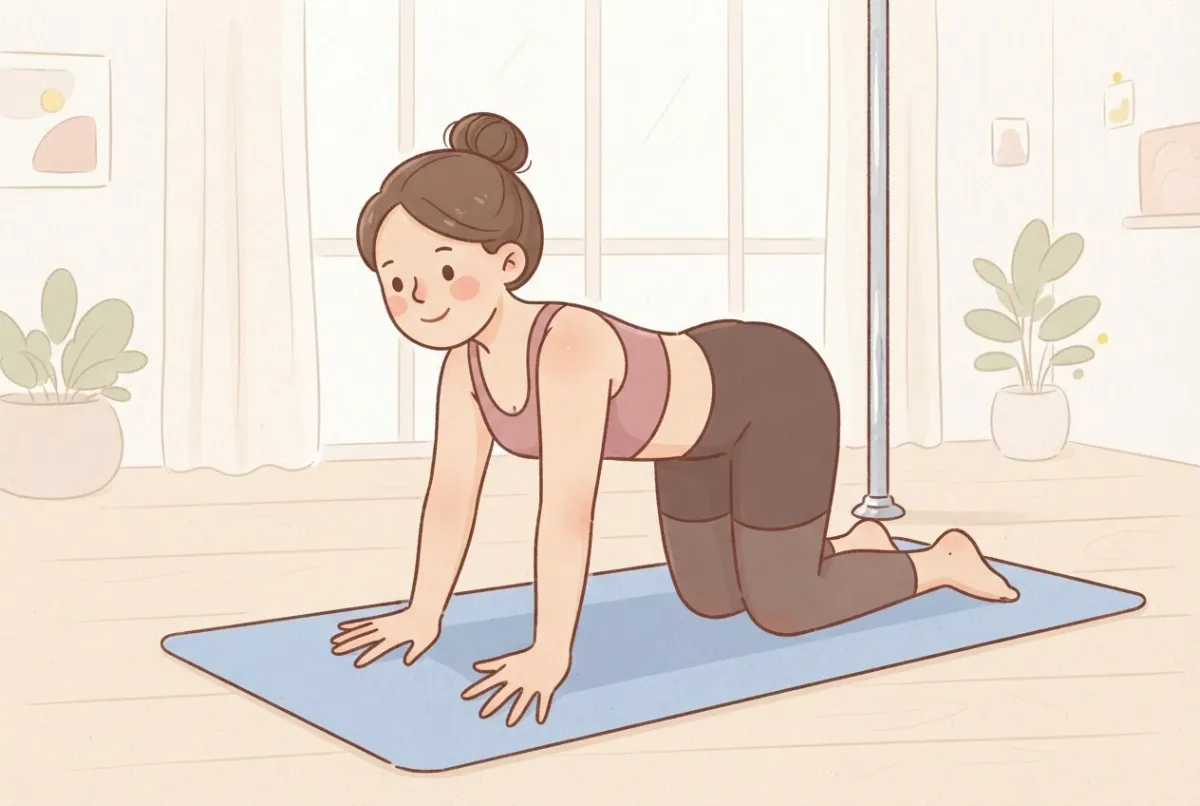
- Wrist rocks on the floor. On hands and knees with your hands under your shoulders and fingers spread, rock your weight gently forwards and back for 30 seconds, 2 to 3 rounds. It should feel like a stretch and some effort, never sharp.
- Plank holds on your hands. 2 to 3 sets of 20 to 30 seconds with your shoulders pushing the floor away.
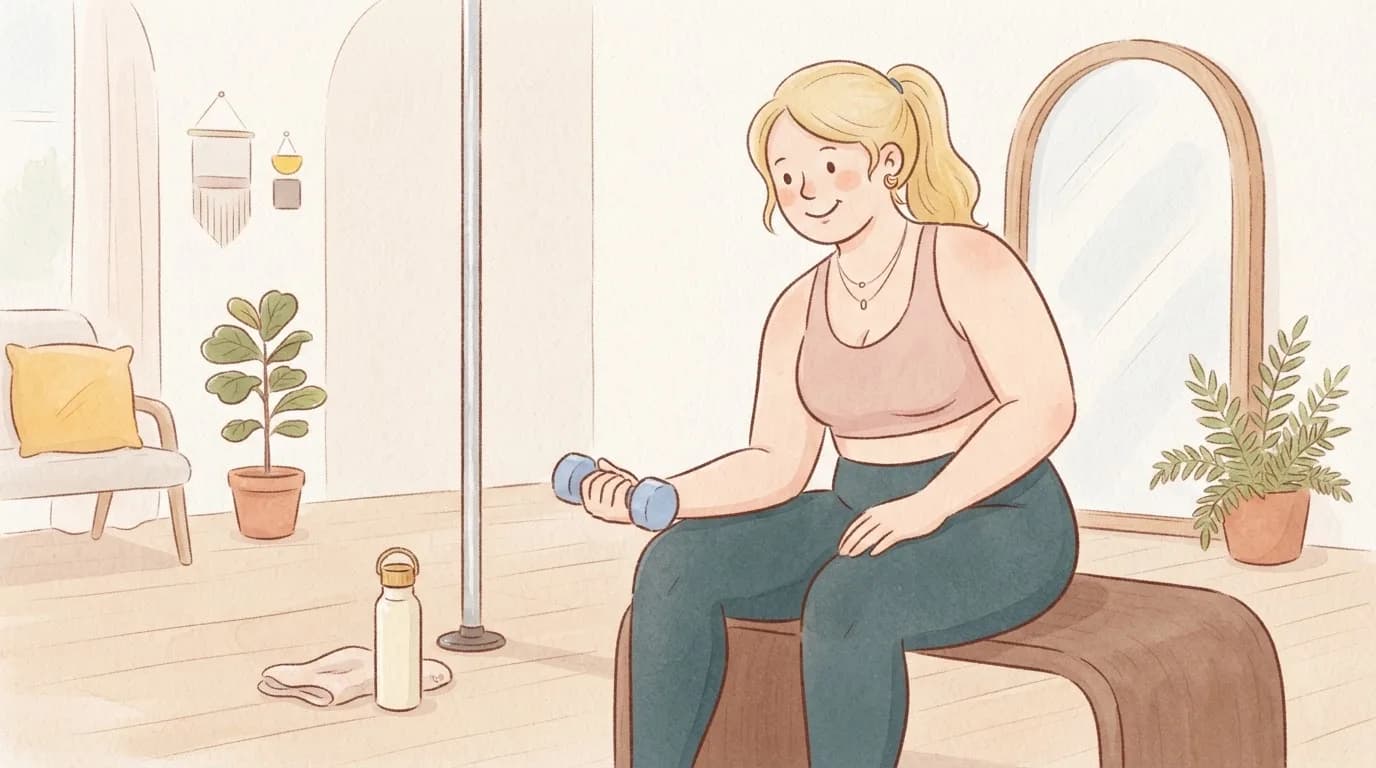
- Wrist curls and reverse wrist curls with a light dumbbell or water bottle, 2 to 3 sets of 12 to 15, slow on the way down.
- Push-ups, on your knees or against a raised surface if you need to, to strengthen the pushing arm and the shoulder.
- Tuck holds and leg raises to build the core and hip lift that does the real work in a mount.
Two or three sessions a week of this is plenty. Our six-week pole conditioning plan puts these exercises into a full programme, and the 10-minute wrist warm-up for pole is worth doing before every class where you'll mount.
What can you do instead while your wrist settles?
Regressions let you keep training the movement with less load on the wrist, so you don't lose your progress.
- Feet-on-the-floor set-ups. Place your shoulder and hands, then practise the pull and push with your toes on the floor, so you learn the position without your full weight.
- Tuck before straddle. A tucked mount keeps your weight closer to the pole and is usually easier on the wrists than a straddle or straight legs.
- Fewer reps, more rest. Three good attempts with a proper rest between them is better for your wrist than ten tired ones.
- A spot. A teacher who takes some of your weight lets you feel the right position without your wrist holding all of you.
- Moves that don't load the bottom hand. Spins, climbs, sits and leg holds keep you training while the wrist calms down.
Masha's tip: Count your shoulder mount attempts in a class, failed ones included. If your wrist is grumpy the next day, cut that number in half next time and see how it feels before you build it back up.
When should you stop and rest?
Stop mounting for the day if the pain is sharp, if it gets worse with each attempt, or if your grip suddenly feels weak. Give it a few days off loaded wrist moves and keep up the gentle movement. A dull ache that fades within a day or two after class is usually your body adapting, but pain that keeps coming back every week is telling you the load is too high.
See a physio or doctor if the pain lasts more than a couple of weeks, if there's swelling, if you fell or slipped onto the hand, if you have numbness, tingling or pins and needles that don't go away, if your grip is weak, or if the wrist hurts at night. The NHS guidance on wrist pain and the Mayo Clinic overview of wrist pain are good references, and a physio who knows pole can also look at your technique.
Do wrist wraps help with shoulder mounts?
Many dancers like wearing wraps for shoulder mount practice and conditioning, because firm compression low on the wrist gives a feeling of support and keeps the joint warm between attempts. A wrap that sits low leaves your hand free to grip the pole and doesn't get in the way of the push. Wraps won't replace a better set-up or the strength work, but they can make practising feel more comfortable. Our guide to wrist wraps for pole explains how to choose a width and how tight to wear them.

If your handsprings bother you as well, have a look at our comparison of twisted grip and cup grip, because the bottom hand does a very similar job in both moves.
More in Pole & aerial training
- Wrist Pain from Pole Dancing: Why It Happens and What Helps
- Exotic Pole Floorwork in Heels: How to Look After Your Wrists and Knees
- A 20-Minute Home Pole Conditioning Session (Most of It Needs No Pole)
- How to Clean a Dance Pole: Chrome, Brass, Stainless, Powder-Coated and Silicone
- Pole Kisses: Why Pole Dancing Bruises You and When a Bruise Needs Checking
- Can You Still Pole Dance With a Sore Wrist? What to Train While It Settles
- Pole Grip Aids Compared: Which Type Suits Dry, Sweaty or Cold Hands?
- Pole vs Aerial Hoop vs Silks: Which Is Hardest on Your Wrists?
Questions people ask
Why does my bottom hand hurt in a shoulder mount?
The bottom hand pushes against the pole to hold you up and help lift your hips, often with the wrist bent back or twisted to the side. If the elbow flares, the top arm doesn't pull or you lift with your arms instead of your hips, the wrist takes even more of the load.
Which grip is best for the bottom hand in a shoulder mount?
Many teachers use a cup grip for the bottom hand, with the thumb on the same side as the fingers, because it lets you push without twisting the wrist. Princess grip needs more wrist bend and can press on the forearm, so it may not suit a sensitive wrist.
Should I keep doing shoulder mounts if my wrist hurts?
Not if the pain is sharp or gets worse with each attempt. Switch to regressions or other moves for a few days, and see a physio if the pain lasts more than a couple of weeks or comes with swelling or numbness.
How long does it take to get strong enough for shoulder mounts?
It varies a lot from person to person. Muscles get stronger within weeks, but tendons adapt more slowly, so give your wrists a few months of steady conditioning and keep the number of attempts per class modest.
Can I wear wrist wraps for shoulder mounts?
Yes, as long as they sit low on the wrist and leave your hand free to grip. Wraps give compression and warmth and many dancers find they feel more stable, but they don't replace good set-up and strength.
Shop the fix
Wraps made for exactly this
Handmade in Slovenia by a pole teacher, with firm compression that sits low on the wrist.
Sources we checked
Written by
Masha Pinner
Pole dance teacher at Pandora Art of Pole in Slovenia and former fashion designer. Masha started SneakyDeez in 2017 after years of teaching on sore wrists, and she still designs every pair.
Read Masha’s story