Wrist Care for Aerial Hoop and Silks: Grip, Hangs and Conditioning
Hoop and silks are mostly hanging and pulling, so your forearms and grip do long shifts. This guide shows you how to hold on smarter, build grip endurance and look after your wrists.
✓Hoop and silks mostly load the wrists through long stretches of gripping and hanging, so grip endurance matters more than in pole.
✓Common complaints are pumped forearms, an ache at the inside of the elbow, thumb-side tendon pain and sore skin from friction.
✓Grip as firmly as the move needs, keep the wrist in a fairly straight line, and stop beats and climbs while your grip is still fresh.
✓Build grip with active hangs, towel hangs, wrist curls and finger extensions two or three times a week, adding load gradually.
✓See a physio for swelling, a pop, numbness or tingling, night pain, or pain that hasn't eased after about two weeks.
Aerial hoop and silks are mostly a grip and shoulder sport, so the wrists and forearms work hard even when nothing is bent back under your weight. The main things to look after are grip endurance, the position your wrist holds while you hang and pull, and how quickly you add new hangs, beats and climbs. Warm up your forearms, build grip strength gradually, rest between heavy sessions, and see a physio for pain that sits in one spot or doesn't settle within a couple of weeks.
I'm a pole teacher first, but a lot of our customers are aerialists and plenty of pole dancers cross over into hoop and silks, so this is a look at how the air treats your wrists differently from the pole. If you're still choosing between them, my comparison of pole, aerial hoop and silks for your wrists puts all three side by side.
How do hoop and silks load the wrists differently from pole?
On the pole you do a lot of pushing as well as pulling, and floorwork and handstands bend the wrist back under your weight. In the air you mostly hang and pull. That means the muscles that close your hand, which sit in your forearm and pull on tendons running across the wrist, do long stretches of work with very little rest.
The research on aerial arts is still thin, and physiotherapists who work with circus artists point out that very little has been published on injury rates in hoop and silks (Sports Care Physical Therapy). What aerial coaches and physios describe most often is what you'd expect from a hanging sport: tired, sore forearms, an ache at the inside of the elbow, irritated tendons on the thumb side of the wrist, and shoulders that get overloaded when the grip gives up first.
Aerial hoop
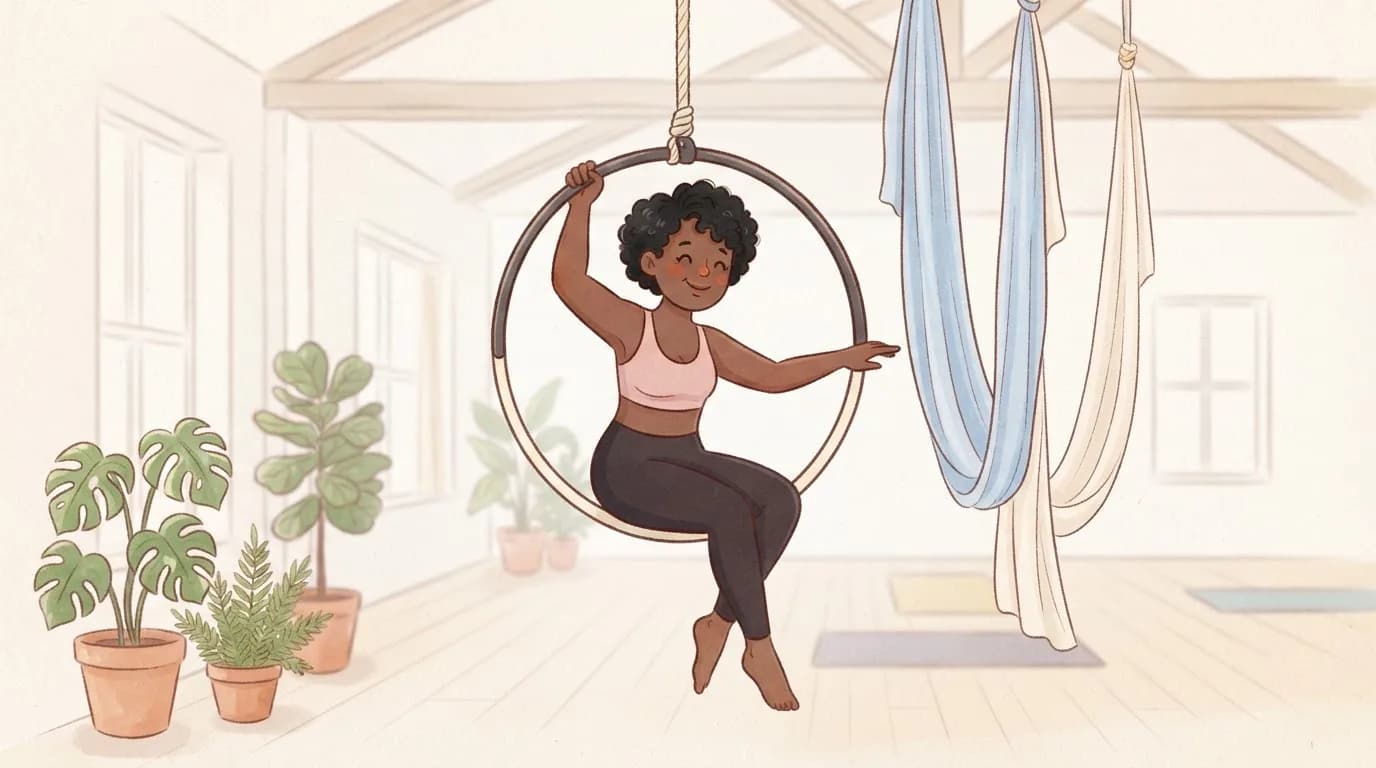
On a hoop you hold a bar or the curve of the hoop, often with your wrist bent forwards or to the side as you hang. Mounts from a hang need a strong pull, and beats, where you swing your body to build momentum, add a jolt to your grip at the end of every swing. Sitting and balancing moves rest the hands, but getting into them usually means a few seconds of heavy gripping first.
Aerial silks
Silks ask for grip endurance more than anything. Climbs are long sets of pulling with the fabric squeezed tightly in your fists, and it's common to finish a climb with forearms so pumped you can barely open your hands. Some moves also wrap the fabric around the wrist itself, which takes weight on the wrist in a different way and can rub the skin.
Which wrist and forearm problems are common in aerial?
None of these is a diagnosis, and a physio is the right person to tell you what's going on, but these are the patterns aerialists describe most.
What you notice
What it can be linked with
What tends to help
Forearms burning and hands won't open after climbs
Normal grip fatigue
Rest between climbs, shorter sets, building grip endurance
Ache on the inside of the elbow when you grip or carry things
Overloaded forearm flexors, sometimes golfer's elbow
Fewer long hangs for a while, gradual strength work, see a physio if it lingers
Pain on the thumb side of the wrist, worse when you squeeze
Irritated thumb tendons, sometimes De Quervain's
Changing how hard you wrap your thumb, less squeezing volume
Pinky-side pain when you hang and turn
Soft tissue on the ulnar side under rotation
Fewer rotating hangs, get it checked if it clicks or feels weak
Sore, red skin around the wrist
Friction from fabric or the hoop
Building up time in wraps and locks gradually, covering skin where the coach allows
Mayo Clinic has a clear explainer on golfer's elbow, which often shows up in grip-heavy sports, and Cleveland Clinic covers wrist tendonitis, which gymnasts and others who use their wrists hard are prone to. For more on specific spots, see our guides to thumb-side wrist pain and pinky-side wrist pain.
How do you hold on without wrecking your wrists?
Grip firmly, but don't strangle it
A death grip burns through your forearms fast. Hold as tightly as the move needs, use your legs and your body position to take load wherever you can, and let your shoulders do their share by staying engaged instead of hanging off the joint.
Keep the wrist in a strong line
In most hangs a wrist that sits fairly straight, in line with your forearm, handles load better than one sagging into a deep bend. If you notice your wrist collapsing towards the end of a set, that's usually fatigue, and it's a good point to come down.
Be thoughtful with beats
Beats are fun and they feel productive, but every swing ends with a pull on your grip and shoulders. Keep them controlled, stop while your grip still feels fresh, and add more slowly than your enthusiasm wants to.
Rest between climbs and hangs
Forearms recover quickly within a session if you let them. Take a proper break after a climb or a long sequence, shake out your hands, and don't go straight back up while they're still pumped.
Masha's tip: If you can't open your hand fully after a climb, you're done climbing for a few minutes. Use that time to stretch your forearms gently and watch someone else's run, and you'll go back up with a much better grip.
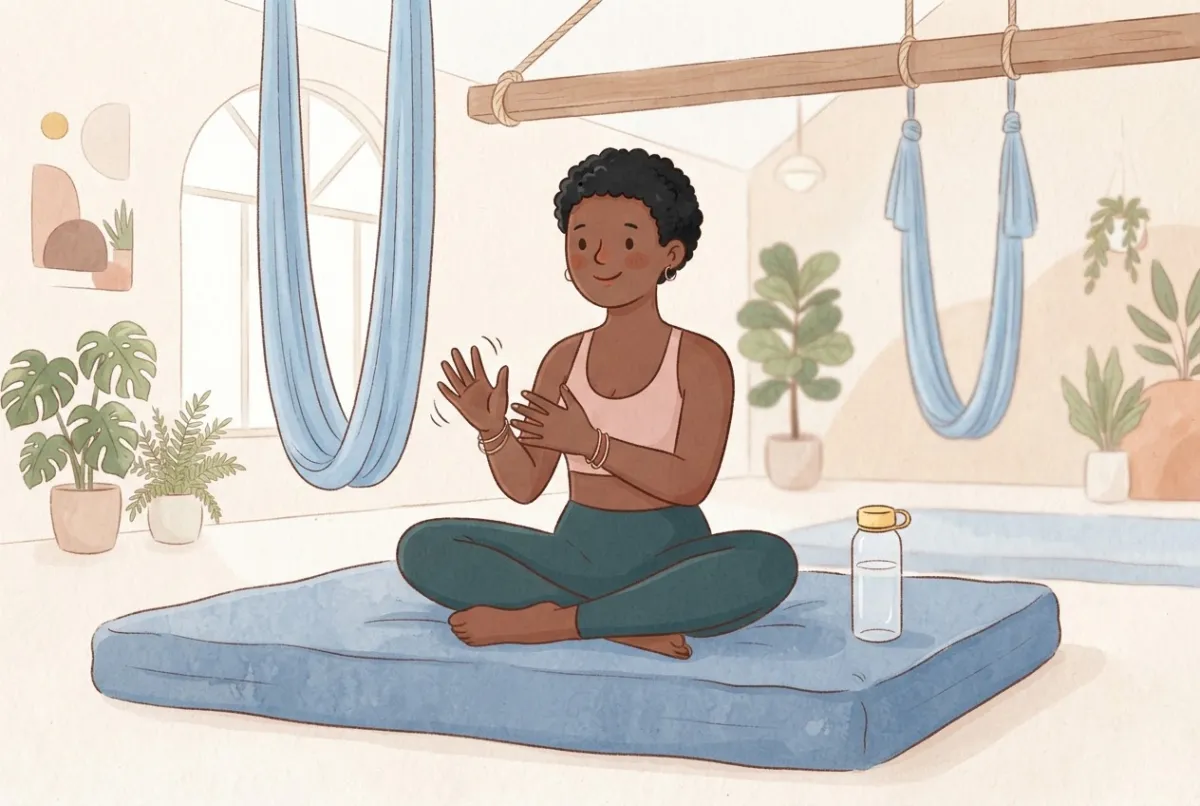
A few minutes on the mat between climbs lets your forearms recover.
What conditioning helps aerialists' wrists and forearms?
Grip work is the obvious one, but balanced forearms and strong shoulders matter just as much. Two or three short sessions a week, on days you're not doing a heavy aerial class, is plenty to start with.
Active hangs: hang from a bar or the hoop with your shoulders gently drawn down, 3 sets of 10–20 seconds, building the time slowly.
Towel or fabric hangs: the closest thing to silks grip at home. Start with feet on the floor and lean back, then progress to short hangs.
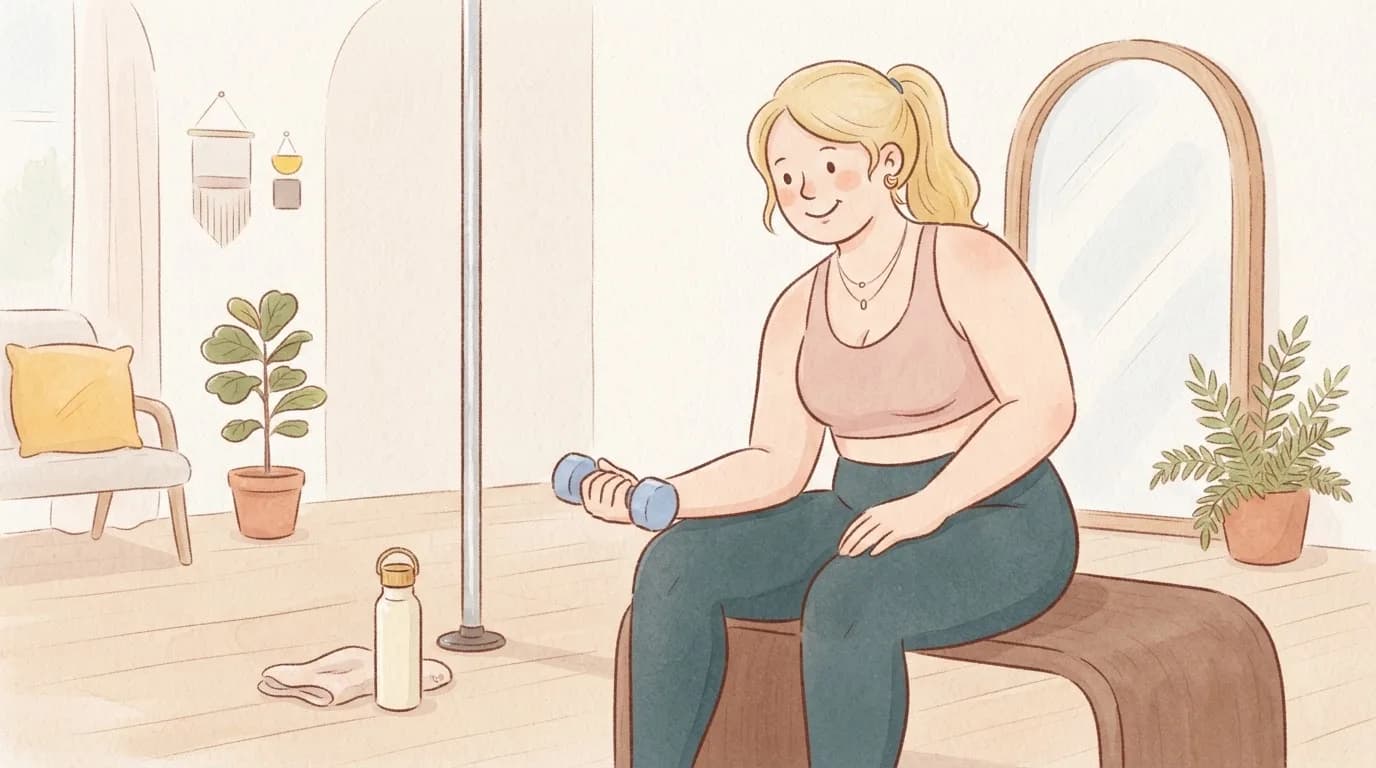
Wrist curls and reverse curls: with a light dumbbell or water bottle, 2–3 sets of 12–15 slow reps.
Finger extensions with a rubber band: open your fingers against a band around them, 2 sets of 20. This balances all the squeezing aerial does.
Forearm rotations: hold a hammer or a dumbbell by one end and slowly turn your palm up and down, 2 sets of 10 each way.
Shoulder work: scapular pull-ups and slow lowers from a bar, so your grip isn't the only thing holding you up.
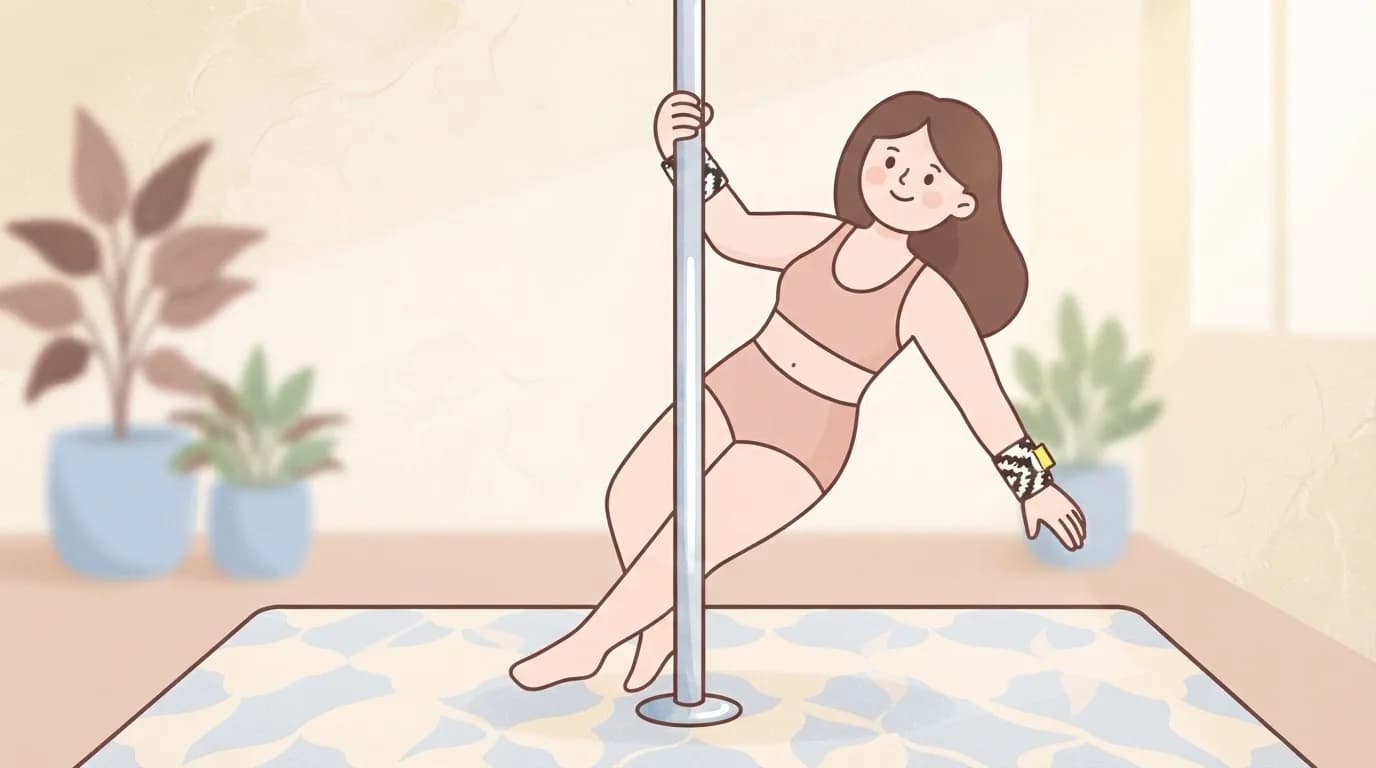
Lots of aerialists like a compression wrap for conditioning and for hoop, where the wrap sits low on the wrist and stays clear of the bar in your hand. It gives a feeling of support and keeps the joint warm, and because it doesn't lock the wrist it still lets you move freely. On silks, it depends on what you're training. For climbs and conditioning many people keep them on, but for moves where the fabric wraps around the wrist itself, check with your coach, because the wrap changes the feel and the fit of the lock.
Whatever you wear should sit firmly without numbness, and you should take it off and loosen it if your hand tingles or goes cold. Our guide to choosing and wearing wrist wraps covers width, sizing and fit.
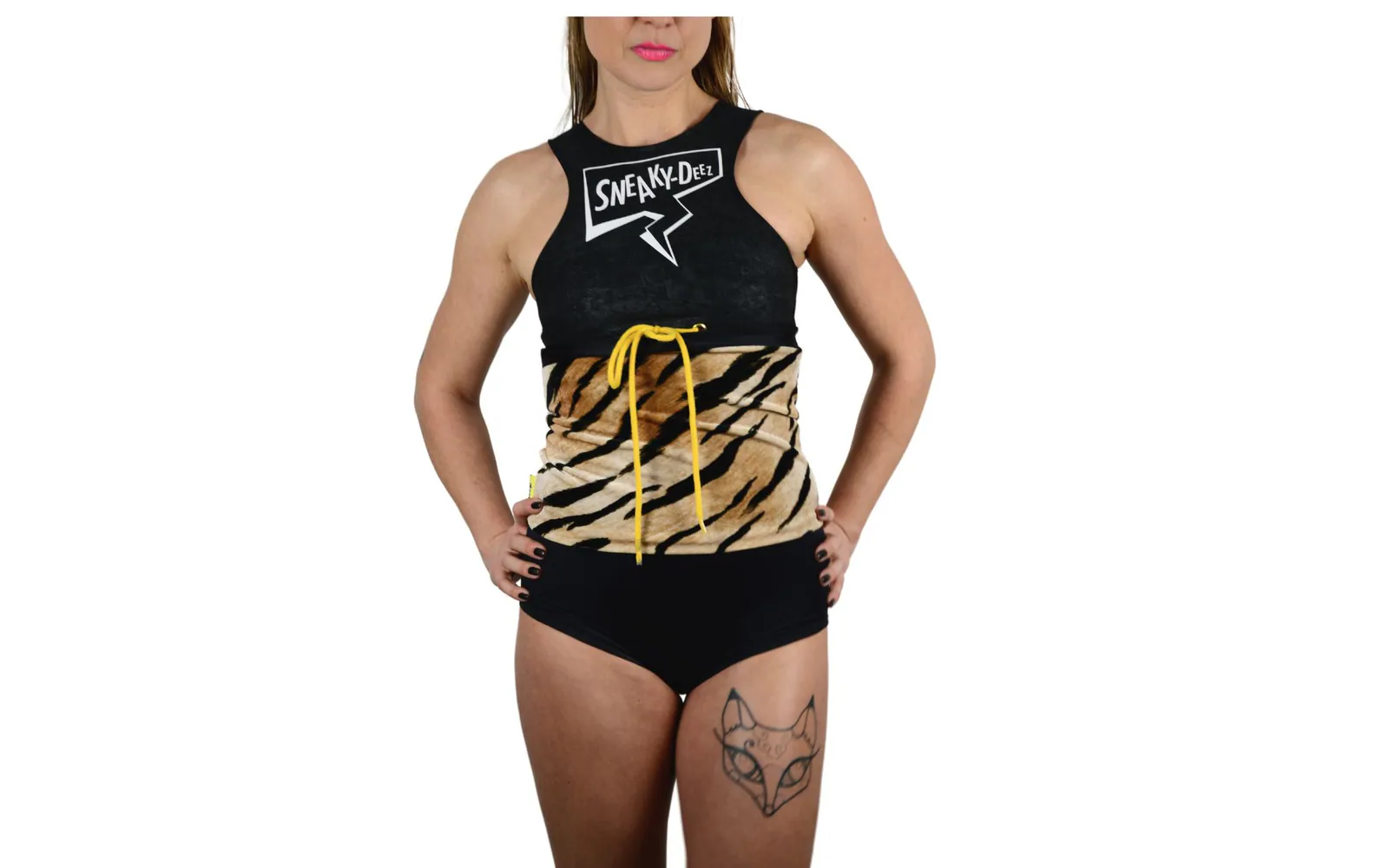
Hoop people also often ask about our waist warmers. They keep your lower back warm through the warm-up and between runs, and they add a soft layer between your back and the hoop for the moves where it presses there. Our guide to training in a cold studio explains how to use them.
A waist warmer like this tiger one keeps your lower back warm between runs.
How do you warm up your wrists for hoop and silks?
Do the floor part of our 10-minute wrist warm-up, then finish on the apparatus with your feet on the floor: lean back holding the bar or fabric, do a few short hangs with your toes touching the mat, and squeeze and relax the fabric a few times. Only then go for your first full hang or climb.
When should an aerialist see a physio?
See a doctor or physio if you fell or landed on your hand, if there's swelling, a pop or a loss of strength, if you have numbness or tingling in your hand that doesn't go away, if the pain wakes you at night, or if it hasn't improved after about two weeks of lighter training, which matches the NHS advice on wrist pain. A physio who knows circus or climbing will understand what you need to get back to. If you train pole too, our guide to wrist pain from pole dancing covers the pushing side of things.
Why do my forearms hurt so much after aerial silks?+
Silks climbs keep the muscles that close your hand working for long stretches, so a burning pump and next-day soreness are common, especially early on. Rest between climbs and build up gradually. Pain that sits in one spot at the wrist or elbow and doesn't fade is worth getting checked.
How do I improve my grip strength for aerial hoop?+
Active hangs, towel hangs, slow wrist curls and finger extensions with a rubber band, done two or three times a week on non-aerial days, build grip steadily. Increase the hang times slowly, because tendons take longer to adapt than muscles.
Can you wear wrist wraps on aerial silks?+
Many aerialists wear them for climbs and conditioning. For moves where the fabric wraps around your wrist, ask your coach, because a wrap changes how the lock feels and fits.
Is aerial hoop bad for your wrists?+
Not if you build up sensibly. Hoop asks for a lot of hanging and pulling, so the wrists and forearms need time and conditioning to adapt, but with a good warm-up, rest between hard sessions and gradual progression most people's wrists get stronger.
What is the inner elbow pain I get from aerial?+
Pain on the inside of the elbow in grip sports is often linked with overloaded forearm flexor muscles, sometimes called golfer's elbow. A physio can confirm it and give you a loading plan, which usually works better than stopping completely.
Shop the fix
Wraps made for exactly this
Handmade in Slovenia by a pole teacher, with firm compression that sits low on the wrist.
Pole dance teacher at Pandora Art of Pole in Slovenia and former fashion designer. Masha started SneakyDeez in 2017 after years of teaching on sore wrists, and she still designs every pair.