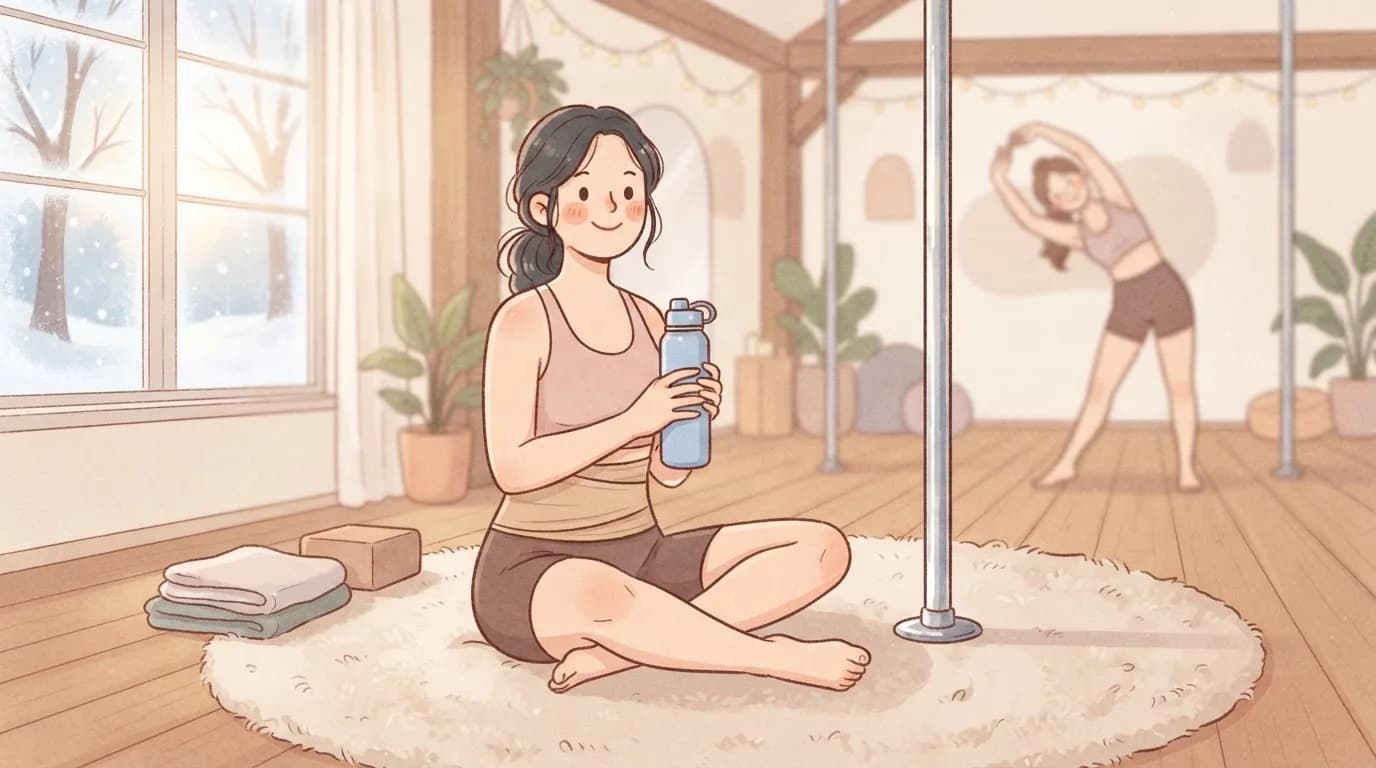
The short version
- A waist warmer is a stretchy band worn around the waist and lower back over your training clothes, covering the gap between your top and shorts.
- Warm muscles feel less stiff, and you cool down quickly while you wait between turns, so keeping your middle covered helps you hold on to your warm-up.
- Wear it for the warm-up, stretching, conditioning and between turns, and take it off only for moves where your waist needs to grip the pole.
- SneakyDeez waist warmers are sized by waist measurement: S 62 to 72 cm, M 70 to 80 cm and L 74 to 86 cm.
- A waist warmer keeps in the warmth you make yourself, while a heat pack adds warmth from outside and should never go on a fresh injury.
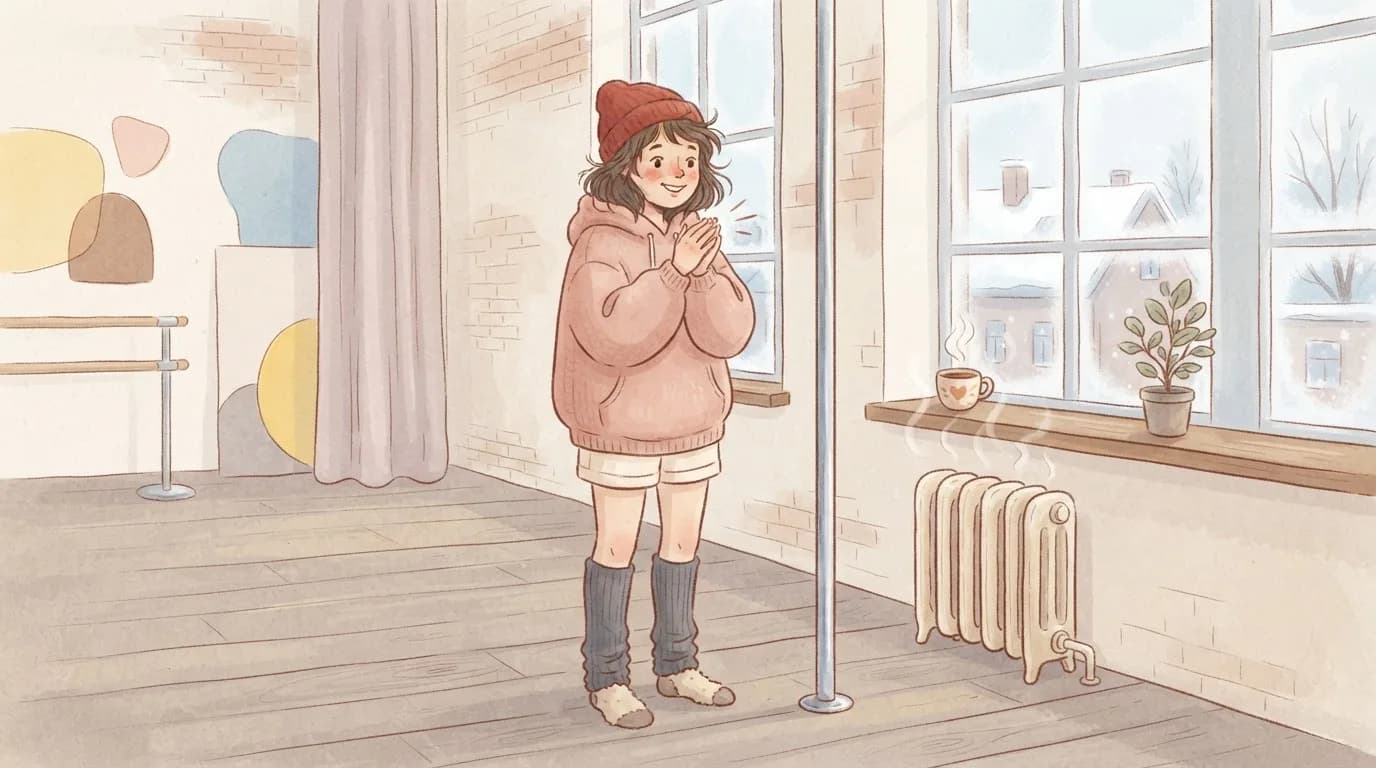
A waist warmer is a soft, stretchy band that you wear around your waist and lower back over your training clothes, so the middle of your body stays warm while your arms and legs stay free for the pole or the hoop. Dancers and aerialists wear them for the warm-up, for stretching and between turns, because warm muscles feel less stiff and you cool down surprisingly fast while you wait. You take it off only for moves where your waist needs to touch the apparatus.
This guide covers why the lower back and core are worth keeping warm, how to wear a waist warmer in class, how it fits into your layers, and how to pick the right size.
What is a waist warmer for dancers?
Think of it as a leg warmer for your middle. It's a wide band of stretchy fabric that sits around your waist, covering your lower back, your tummy and the gap that always opens up between your top and your shorts when you bend or reach. Dancers have worn warm-up layers like leg warmers and knitted shorts for a long time, and a waist warmer does the same job for the part of the body that pole and aerial ask the most of.
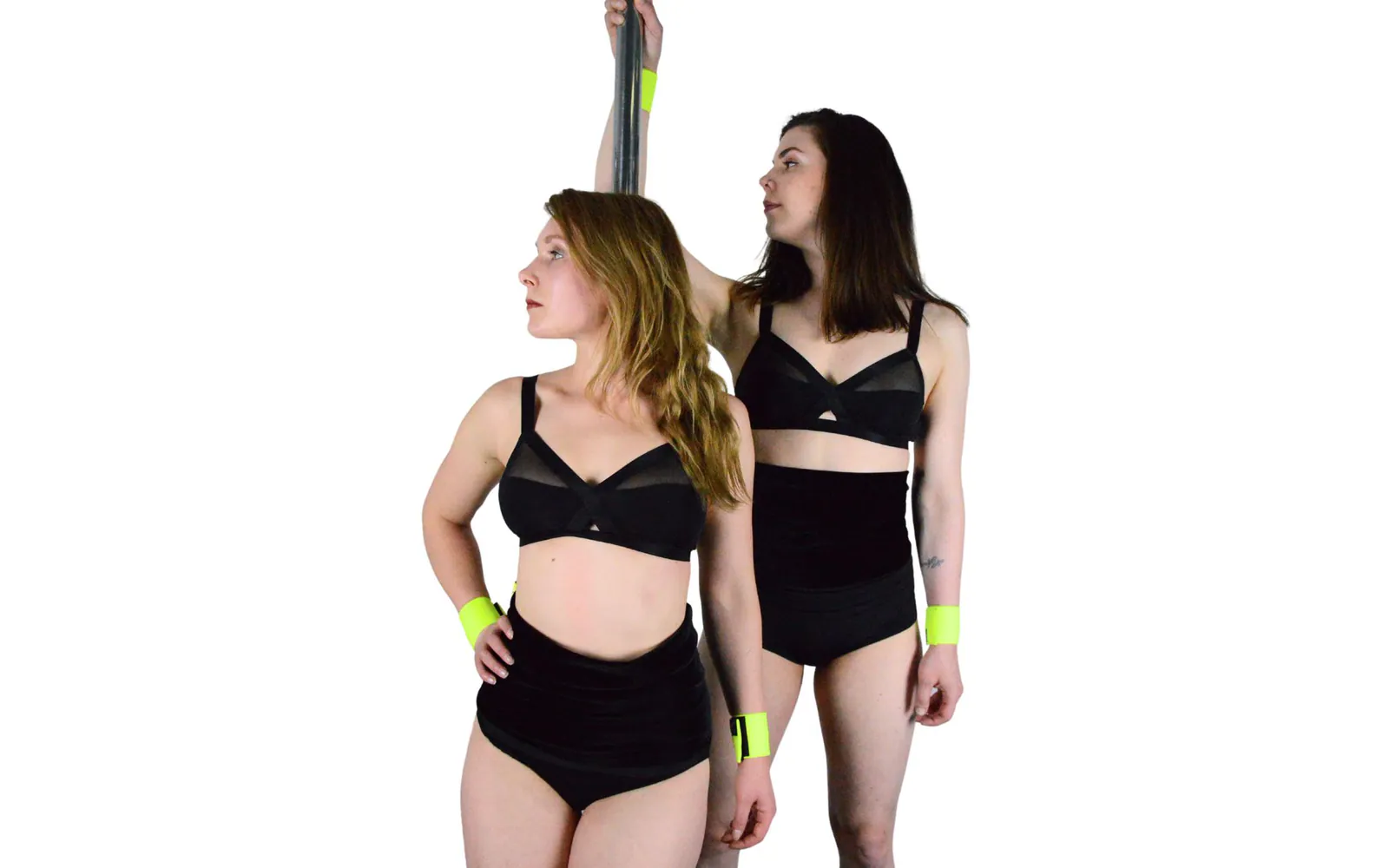
Some people call them back warmers or kidney warmers, which is why our own are listed as Back Warmers in the shop. They are all the same idea.
Why do dancers and aerialists keep their lower back and core warm?
A big part of what a warm-up does comes from raising the temperature of your muscles. Warmer muscles contract and relax faster and feel less stiff, which is why a body that's properly warm moves so much more easily than a cold one (Bishop, 2003). The same goes for your forearms, and cold or tired forearms are behind a lot of pole dancing wrist pain, which is one more reason to stay warm through class.
The catch is that you lose that warmth quickly once you stop moving. In a pole or aerial class you stop a lot, because you wait for your turn on the pole, watch the teacher demonstrate a combo and talk it through with your partner. Researchers looking at this gap between a warm-up and the effort itself found that keeping heat in with extra insulation helped people keep more of their power (Cowper and colleagues, 2022). A layer around your middle is one of the easiest ways to do that, because it's the part you can keep covered for the longest.
The lower back and core also do a huge amount of work in our sports. Inverts, layouts, backbends, shoulder mounts and every hold where you keep your body away from the pole all load that area, and in hoop and silks you're folding, arching and hanging from it constantly. A cold lower back tends to feel tight and slow to loosen, so keeping it warm makes the deep stretching and the backbends feel a lot kinder.
None of this replaces a proper warm-up, because moving is what warms your muscles from the inside. A waist warmer just helps you hold on to the warmth you've already built, especially in a chilly studio. If your studio never quite heats up in winter, my guide to training in a cold studio has a full cold-day warm-up for your wrists and lower back.
When should you wear a waist warmer in class?
For most of it, honestly. Very few pole moves need skin contact around your waist, so you can usually keep it on far longer than your hoodie or leg warmers. These are the moments when it helps most:
- The warm-up. Put it on before you start so your lower back warms up along with everything else.
- Flexibility and stretching. Backbends, bridges, splits and hip openers feel better when your back isn't cold, and stretching blocks are often slow and still.
- Between turns. Waiting for the pole, watching a demo or spotting a friend is exactly when you cool down.
- Conditioning. Core work on the floor is far more pleasant without a cold strip of skin on the mat.
- After class. Keep it on for the cool-down and the trip home, especially on cold evenings.
Take it off for any move where your waist or side needs to grip the pole, and slide it up or down if it gets in the way of a particular hold. In aerial hoop, a lot of people like a waist warmer for a different reason as well, because it adds a soft layer between the hoop and your back in seated positions and back balances. My guide to wrist care for aerial hoop and silks covers the rest of an aerialist's kit.
How do you wear a waist warmer?
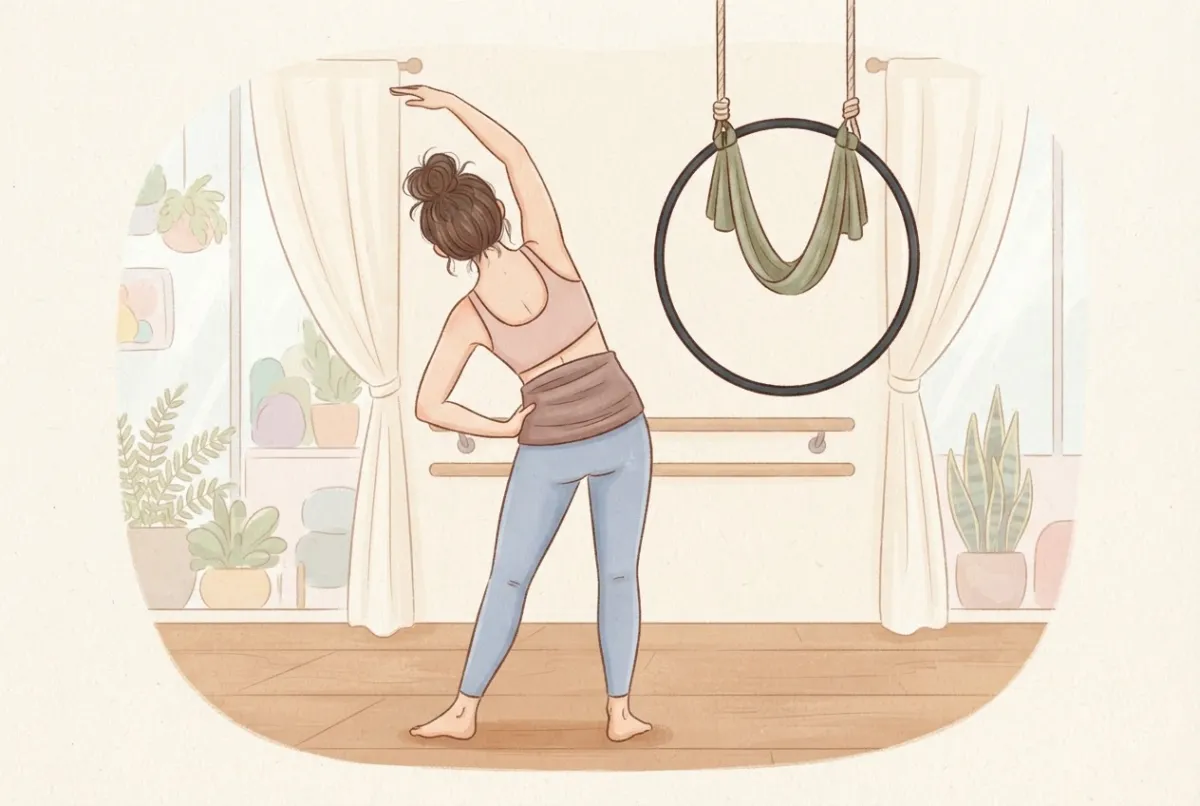
Put it on so the band sits around your waist and covers your lower back, overlapping the top of your shorts or leggings and the bottom of your top. That way the gap stays covered when you bend forward, arch back or lift your arms. It should feel snug enough to stay in place when you move and bend, and soft enough that you can breathe deeply and fold forward without it digging in.
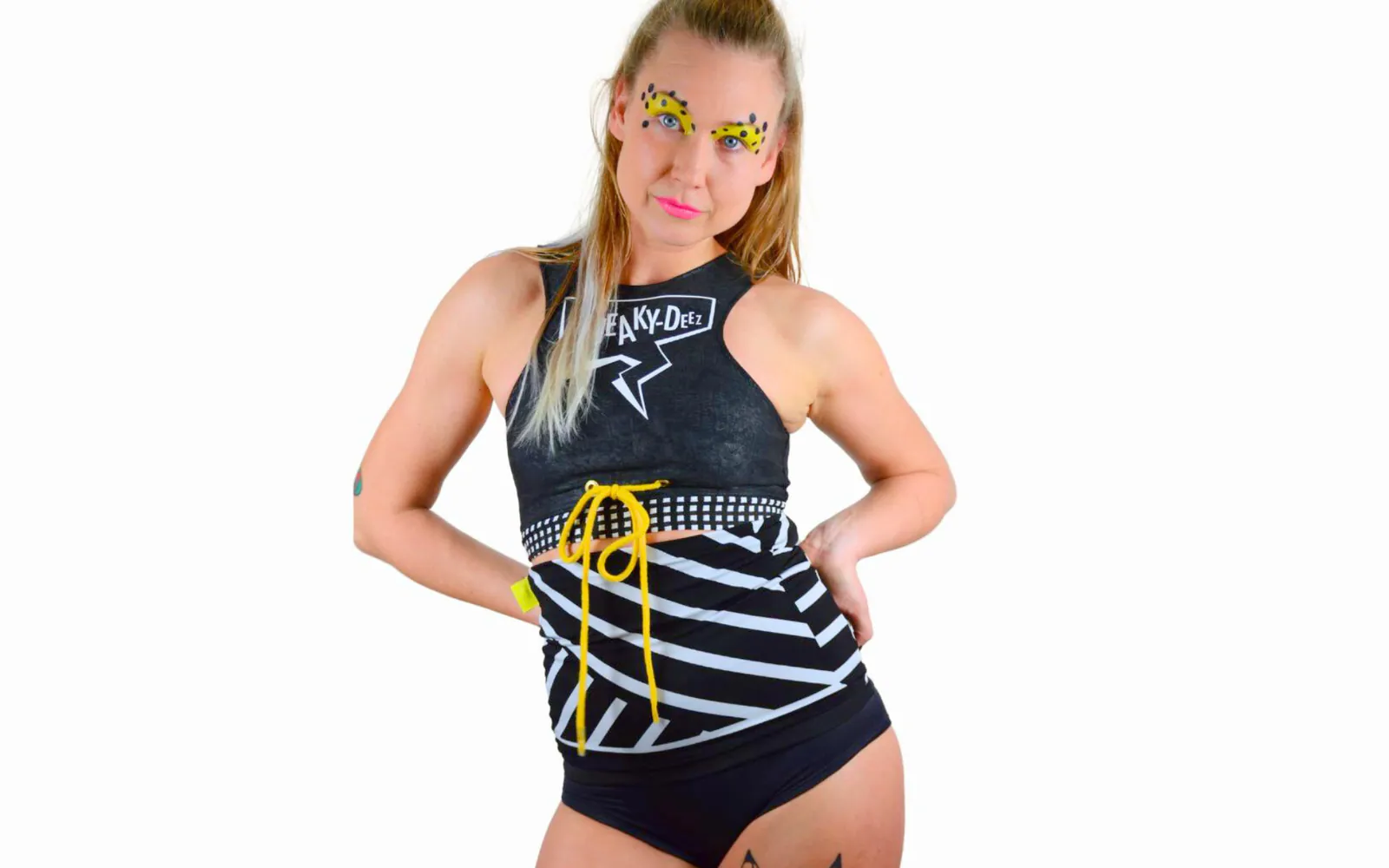
If it keeps rolling up, try it slightly lower so more of it sits over your hips, and if it slides down, wear it a little higher on your waist. Over a long class it's normal to give it a tug back into place now and then.
Masha's tip: On cold days I'd put your waist warmer on before you even leave the house. Wear it under your coat, keep it on through the warm-up and only take it off when you need your sides for a trick, so your back never gets the chance to go cold.
How do you layer for pole and aerial with a waist warmer?
Pole needs bare skin to grip, so the idea is to build layers you can peel off in the order the moves need them and put back on as soon as you're waiting again. A simple order that works for most classes looks like this:
- Your usual pole shorts and top as the base layer.
- The waist warmer over the top, around your middle, which usually stays on the longest.
- Leg warmers or loose joggers, which come off when you start moves that need leg grip.
- A loose hoodie or zip top, which comes off when you need your arms and shoulders on the pole.
Wrist wraps fit into this too if you wear them, because they keep the wrist joint warm while your hands stay bare for the pole. Our 10-minute wrist warm-up for pole and aerial goes well with all of this before you start inverting.
What size waist warmer do you need?
Our waist warmers are sized by waist measurement. Wrap a soft tape measure around your waist where you'll actually wear it, keeping the tape level and snug without pulling it in, and then compare the number with the sizes below.
| Size | Waist |
|---|---|
| S | 62 to 72 cm |
| M | 70 to 80 cm |
| L | 74 to 86 cm |
The sizes overlap a little, so if your waist falls in a range that two sizes share, email me at support@sneakydeez.com with your measurement and the design you like and I'll tell you which one I'd pick. Not every design is made in every size, and each product page shows the sizes that design comes in.
How do you look after a waist warmer?
Our product pages say hand wash only and air dry, which is the kindest way to treat anything stretchy. Use cool water and a little mild detergent, squeeze it out gently instead of wringing, and let it dry away from the radiator so the fabric keeps its stretch. The same routine works for wrist wraps, and my guide on how to wash wrist wraps goes through it step by step.
Waist warmer or heat pack, which do you need?
They do different jobs. A waist warmer holds on to the warmth your body makes while you train, so it's something you wear through class. A heat pack adds warmth from the outside, which is lovely on the way to class, while you change or when you're curled up on the sofa afterwards, but you can't dance in it.
If you use a heat pack, follow its heating instructions, test the temperature on the inside of your wrist first and don't fall asleep on it. And don't put heat on a fresh injury, because the NHS advice on sprains and strains is to avoid heat for the first couple of days. If your back hurts after a fall, or the pain is sharp, getting worse or spreading down your leg, see a doctor or physio rather than warming it up and carrying on.
If you're new to all this, my guide to your first month of pole covers the other small habits that make classes more comfortable.
More in Pole & aerial training
- Wrist Pain from Pole Dancing: Why It Happens and What Helps
- Exotic Pole Floorwork in Heels: How to Look After Your Wrists and Knees
- A 20-Minute Home Pole Conditioning Session (Most of It Needs No Pole)
- How to Clean a Dance Pole: Chrome, Brass, Stainless, Powder-Coated and Silicone
- Pole Kisses: Why Pole Dancing Bruises You and When a Bruise Needs Checking
- Can You Still Pole Dance With a Sore Wrist? What to Train While It Settles
- Pole Grip Aids Compared: Which Type Suits Dry, Sweaty or Cold Hands?
- Pole vs Aerial Hoop vs Silks: Which Is Hardest on Your Wrists?
Questions people ask
Can you wear a waist warmer while pole dancing?
Yes, for most of class. Very few pole moves need skin contact around the waist, so you can usually keep it on through the warm-up, stretching and most of your spins and climbs, and take it off only when a move needs your waist or side on the pole.
What's the difference between a waist warmer and a back warmer?
Nothing much, they are two names for the same thing. Both are a stretchy band that covers your lower back and tummy, and some people also call them kidney warmers.
Should a waist warmer be tight?
It should be snug enough to stay in place when you bend and reach, but you should still be able to breathe deeply and fold forward comfortably. If it digs in or leaves deep marks, try the next size up.
Is a waist warmer useful for aerial hoop?
Many hoop people like one, partly for warmth between turns and partly because it adds a soft layer between the hoop and your back in seated positions and back balances. Take it off for anything that needs skin grip on your waist.
How do I measure my waist for a waist warmer?
Wrap a soft tape measure around your waist where you'll wear the warmer, keeping it level and snug without pulling it in. Compare the number with the size chart, and if you're in a range two sizes share, ask us which one fits better.
Shop the fix
Wraps made for exactly this
Handmade in Slovenia by a pole teacher, with firm compression that sits low on the wrist.
Sources we checked
Written by
Masha Pinner
Pole dance teacher at Pandora Art of Pole in Slovenia and former fashion designer. Masha started SneakyDeez in 2017 after years of teaching on sore wrists, and she still designs every pair.
Read Masha’s story