The short version
- Wrist wraps support the joint under load, lifting straps help your grip on heavy pulls, and braces hold an injured wrist still while it recovers.
- Pole dancers almost always want wraps, because the wrist must move and the hand must stay free to grip and let go.
- Lifters often use wraps for pressing and straps for deadlifts and rows.
- A brace belongs to recovery, ideally on a doctor's or physio's advice, and many people move to a flexible wrap once they're cleared to train.
- Swelling after a fall, numbness or tingling that keeps coming back, night pain or pain lasting more than a couple of weeks needs a professional before any product.
Wrist wraps support the wrist joint while it works, so they suit pole, handstands, push-ups and pressing. Lifting straps tie your hand to a bar so your grip doesn't give out on heavy pulls, and they do nothing for the joint itself. A wrist brace holds a sore or injured wrist still while it recovers, usually on a doctor's or physio's advice. The quickest way to choose is to ask what needs help: the joint under load, your grip, or a wrist that needs rest.
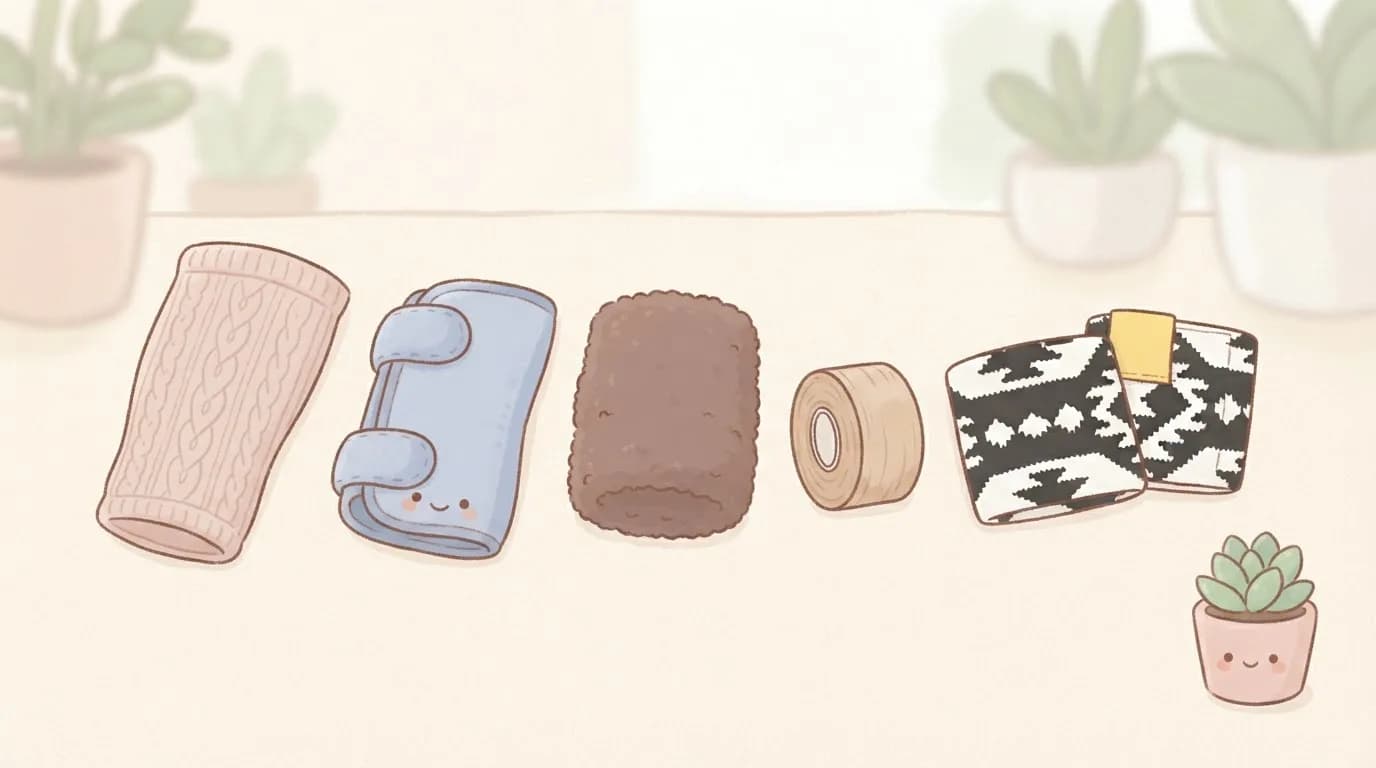
People mix these three up all the time, partly because shops use the names loosely. This is a short decision guide, and if you want the whole family of supports, including sleeves, tape and splints, our guide to types of wrist support covers them all in detail.
What's the difference between wrist wraps, straps and braces?
| Wrist wraps | Lifting straps | Wrist braces | |
|---|---|---|---|
| What it does | Firm compression and some resistance to the wrist bending back | Loops around your wrist and the bar so the bar can't roll out of your hand | Holds the wrist in one position, often with a stiff stay or splint |
| Where it sits | Around the wrist joint, with the hand and fingers free | Around the wrist, with a tail that wraps the bar | From the palm up the forearm, sometimes around the thumb |
| Wrist movement | Mostly kept, depending on how stiff the wrap is | Kept, because it doesn't support the joint at all | Limited on purpose |
| Best for | Pole, handstands, push-ups, pressing, calisthenics, classes | Deadlifts, rows, shrugs and other heavy pulls | Recovery from an injury or a diagnosed condition when a professional suggests it |
| Not for | Treating an injury or holding a damaged wrist still | Pole, pressing or anything where you need to let go quickly | Everyday training on healthy wrists |
| When you wear it | During the hard parts of a session, then off | For the heavy sets only | As long as your doctor or physio advises, which may include night time |
One naming trap is worth knowing about. Some shops call short elastic wraps "wrist straps", and some call soft elastic supports "braces", so always look at what the product actually does instead of what it's called.
Which one should you choose?
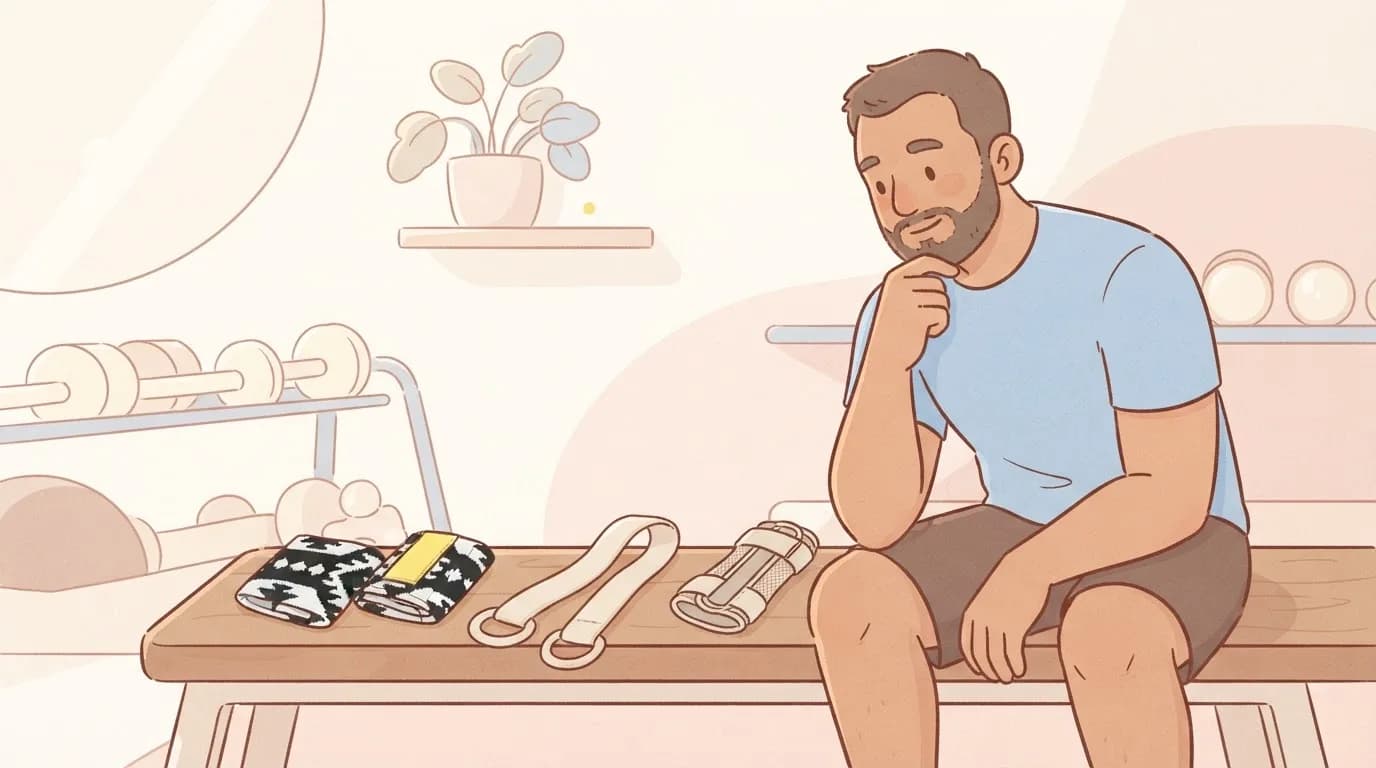
Go through these three questions in order, and the first one you answer yes to usually points you in the right direction.
Is your wrist injured, swollen or numb?
If you've had a fall and the wrist is swollen or misshapen, if numbness or tingling in your fingers keeps coming back, if pain wakes you at night or if a pain hasn't improved after a couple of weeks, see a doctor or physio before you buy anything. They may suggest a brace or splint, and for some conditions it's part of standard care. The NHS, for example, lists wearing a wrist splint at night among the first treatments for carpal tunnel syndrome (NHS). Our article on what a wrist brace is for explains the different kinds and how long people usually wear them.
Does your grip give out before the muscles you're training?
If your back and legs could keep going on deadlifts or rows but your fingers open, that's a grip problem, and lifting straps are the tool for it. They take some of the load off your hands so you can finish the set. They won't support your wrist joint, so they're no help for pressing or bodyweight work, and it's still worth training your grip on lighter sets without them.
Does your wrist ache when it takes weight bent back?
That's the classic situation for a wrap. Push-ups, handstands, floorwork, shoulder mounts and heavy presses all load the wrist while it's bent back, and a firm wrap gives the joint compression, warmth and a bit of resistance to that bend while still letting you move. If your wrist feels tired and achy after those sessions but isn't injured, a wrap plus some strength work is a sensible place to start.
Which is best for pole dancers?
For pole, wraps are the right choice in almost every case, because pole needs your wrist to move through spins, handsprings and floorwork, and your grip has to stay completely your own, so the support has to sit low on the joint and leave your palm and fingers bare. A stiff brace stops the wrist moving the way pole needs it to, and lifting straps have no place on a pole at all, because they're designed to stop your hand letting go.
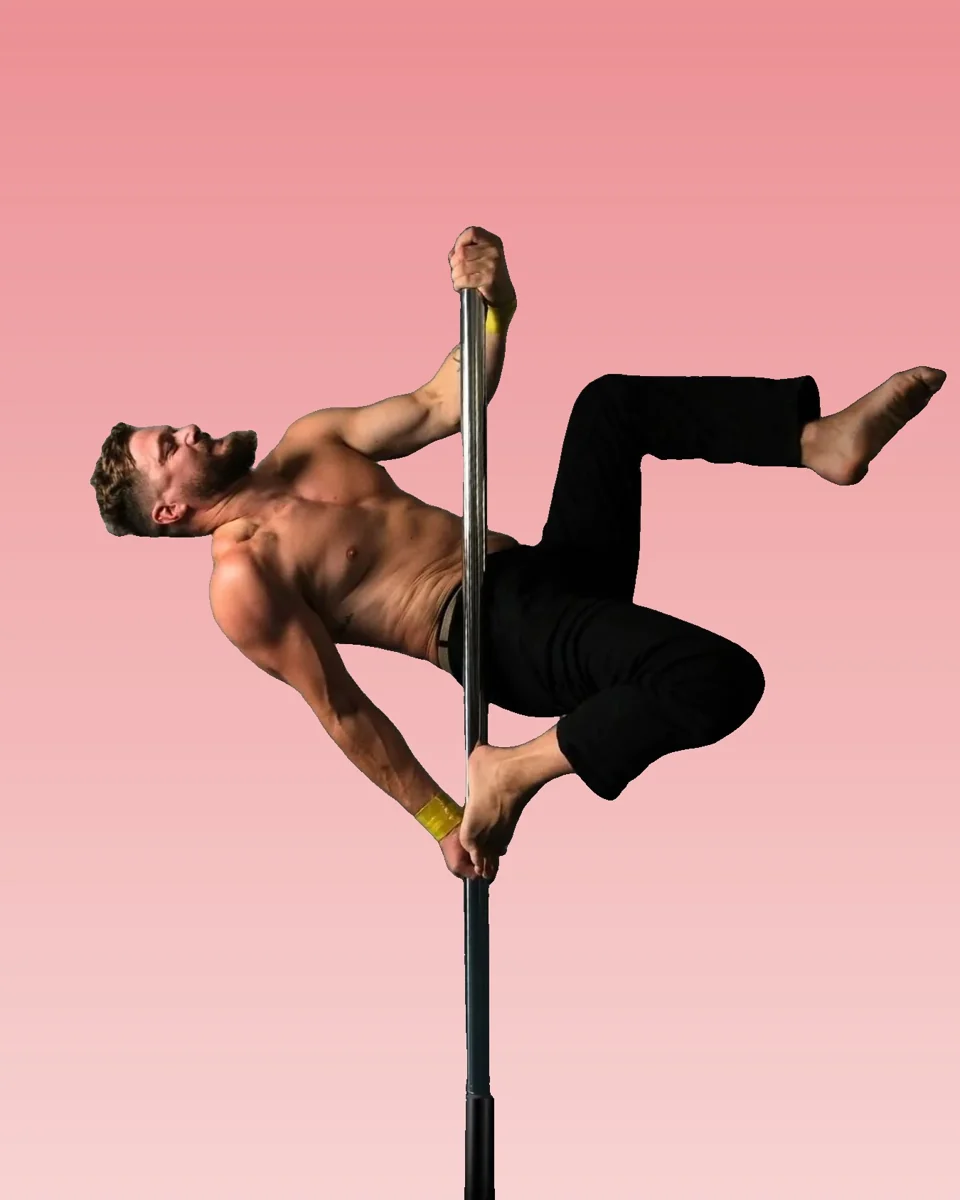
That's the gap I wanted to fill when I started making SneakyDeez, with firm elastic compression where the load is and nothing in the way of your grip. Our guide to wrist wraps for pole goes into width, sizing and how tight to wear them.
Which is best for lifting?
Many lifters end up owning both wraps and straps and using each for its own lifts. Wraps help on bench, overhead press, dips and push-ups, where the bar or the floor pushes your hand back. Straps help on heavy deadlifts, rows and shrugs, where the bar is pulling your hand open. A review by Barbell Medicine is a useful read on what wraps can and can't do for lifters, including that they don't reliably change grip strength (Barbell Medicine). For a lift-by-lift breakdown, see our guide to the best wrist support for the gym.
Which is best for recovery?
A brace, if your doctor or physio recommends one, worn the way they tell you to. Bracing is part of the usual care for some conditions, but it isn't magic either, and a Cochrane review of splinting for carpal tunnel syndrome described the evidence as limited and mixed, so it's best used as one part of a plan your clinician puts together with you (Cochrane).
As you get back to training, the question changes. Once your physio is happy for the wrist to move and take load again, many people move from the brace to a flexible wrap for their sessions, because the wrist now needs to work and get stronger. Let your physio guide that timing, and treat a wrap as support for a recovering wrist rather than a treatment.
Masha's tip: If you can't decide, write down the exact moment your wrist bothers you. "Bottom hand in a shoulder mount" points to a wrap, "fingers slipping on deadlifts" points to straps, and "it hurts even when I'm resting" means it's time to see someone before you buy anything.
Can you use more than one?
Yes, as long as each one does its own job. Wraps for pressing and straps for pulling in the same gym session is very common. What doesn't make sense is training hard in a brace that's meant to rest an injury, or stacking a brace and a wrap on the same wrist, so if you've been told to wear a brace, ask your physio what you can train in the meantime.
Whatever you choose, it should fit your wrist properly. Wraps are sized by wrist circumference, and our guide on how to measure your wrist size takes about a minute.
Questions people ask
Are wrist wraps and wrist straps the same thing?
They're usually two different things. Wrist wraps support the wrist joint, while lifting straps attach your hand to the bar to help your grip. Some shops call short elastic wraps wrist straps, so check what the product actually does.
Can I wear lifting straps for pole dancing?
No. Lifting straps are designed to stop your hand letting go of a bar, which is unsafe on a pole where you need to release, regrip and move freely. A low-sitting wrist wrap is the usual choice for pole.
Should I wear a wrist brace to the gym?
Only if a doctor or physio has advised it and told you what you can train in it. For healthy wrists, a wrap or nothing at all is usually the better choice, because a brace limits the movement your wrist needs.
Do wrist wraps make your wrists weaker?
Wearing them for the hardest parts of a session and taking them off afterwards is a sensible way to use them. Keep doing some strength work for your wrists and forearms so the support is an extra rather than the only thing you rely on.
Which is better for push-ups, a wrap or a brace?
For healthy wrists, a wrap, because push-ups need the wrist to bend back under load and a firm wrap supports that without locking it. If push-ups hurt even with good form, get the wrist checked before you look for a brace.
Shop the fix
Wraps made for exactly this
Handmade in Slovenia by a pole teacher, with firm compression that sits low on the wrist.
Sources we checked
Written by
Masha Pinner
Pole dance teacher at Pandora Art of Pole in Slovenia and former fashion designer. Masha started SneakyDeez in 2017 after years of teaching on sore wrists, and she still designs every pair.
Read Masha’s story