The short version
- Wrist wraps help on lifts that bend the wrist back, such as bench press, overhead press, jerks, dips and front-rack lifts.
- Lifting straps are for grip on deadlifts and rows, and they give the wrist joint no support.
- Wear wraps a little looser for front squats and cleans, because the front rack needs wrist extension.
- Keeping the bar low in the palm with the forearm under the bar matters more than any wrap.
- Wraps don't reliably increase grip strength or your max, but many lifters find they make heavy pressing feel more stable.
Wrist wraps help most on lifts where the weight pushes your hand backwards: the bench press, overhead press, push press and jerk, dips, and front-rack lifts like front squats and cleans. They compress the joint and resist it bending too far, which helps you hold a stacked wrist under a heavy bar. They don't help on deadlifts, rows or pull-ups, because those need grip, and grip is what lifting straps are for.
This is the lifting-specific guide, covering how to use wraps on each lift and the technique cues that matter more than the wrap itself. For buying advice, see the best gym wrist support, and for when to wear them during a session, see wearing wrist support at the gym.
What do wrist wraps actually do when you lift?
A wrap does three useful things. It squeezes the joint, which a lot of lifters say makes the wrist feel more solid. It adds resistance when the hand starts tipping back, so a heavy bar is less likely to fold your wrist. And it acts as a reminder, because you feel the wrap when your position starts to slip.
What it doesn't do is make you stronger or improve your grip. The research reviewed by Barbell Medicine found that wraps don't reliably change grip strength or one-rep max, and the benefit lifters notice is mostly a feeling of stability and comfort. That's still worth having, as long as you know what you're getting, and if you want wrists that are actually stronger, my 8-week wrist strengthening plan is the place to start.
Wrist wraps vs lifting straps: which do you need?
People mix these two up all the time, but they solve opposite problems.
| Wrist wraps | Lifting straps | Chalk | |
|---|---|---|---|
| What it does | Supports the wrist joint | Ties your hand to the bar | Dries your hands so the bar slips less |
| Use on | Bench, overhead press, jerks, dips, front squats, push-ups | Heavy deadlifts, rows, shrugs, pull-downs | Almost anything with a bar |
| Don't use on | Pulls, where they add nothing | Presses, where they don't support the joint at all | Gyms that don't allow it |
| Main problem it solves | Wrist bending back under load | Grip failing before your back or legs | Sweaty hands |
If your wrist aches when you press, you want wraps. If the bar rolls out of your fingers on heavy pulls, you want straps or more grip training. Braces do a third job altogether, and my comparison of wrist wraps, straps and braces explains when each one makes sense.
How should you use wrist wraps on each lift?
Bench press
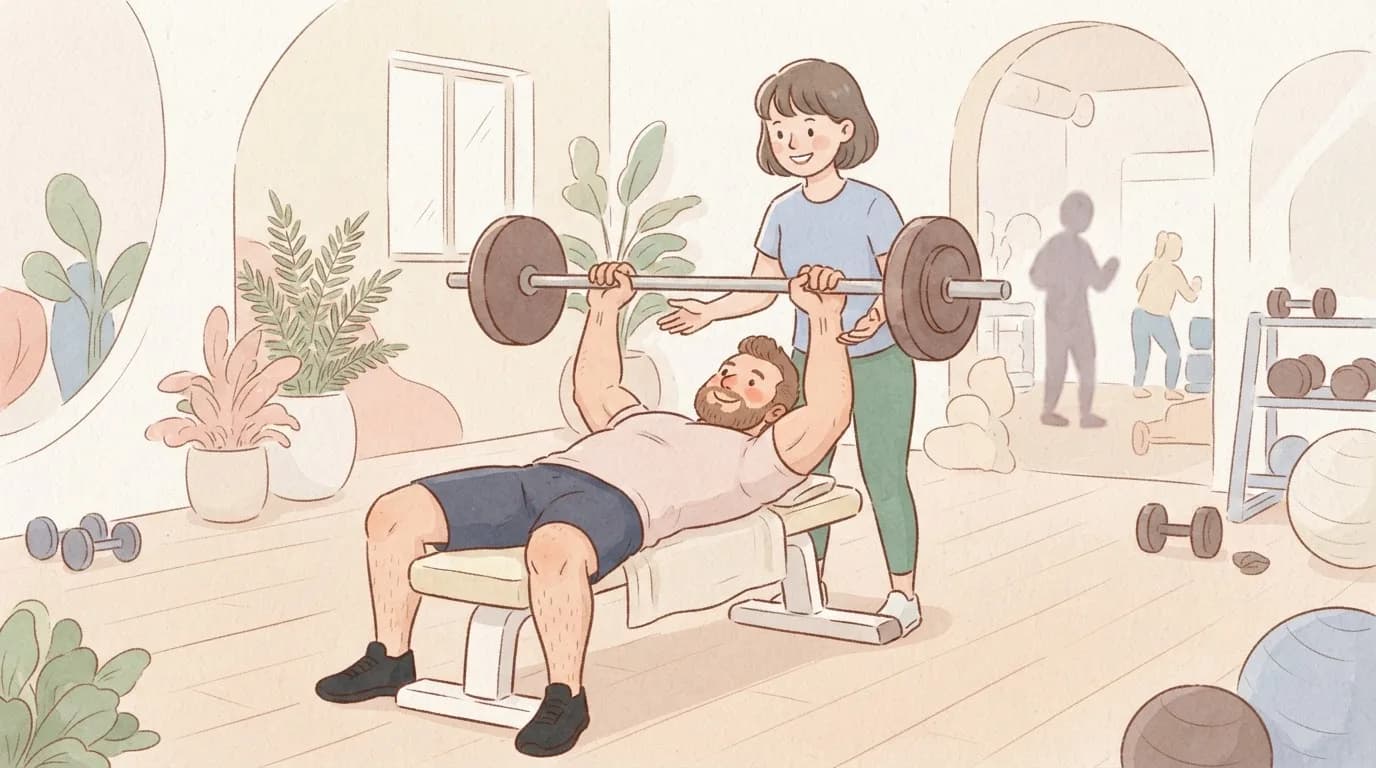
Put the bar low in your palm, close to the heel of the hand, so it sits over your forearm bones instead of up in your fingers. Your knuckles should point roughly at the ceiling and your forearms should be close to vertical at the bottom of the rep. Wrap firmly for heavy sets. If the bench is already hurting, my article on wrist pain when bench pressing goes deeper into grip and accessory work.
Overhead press and push press
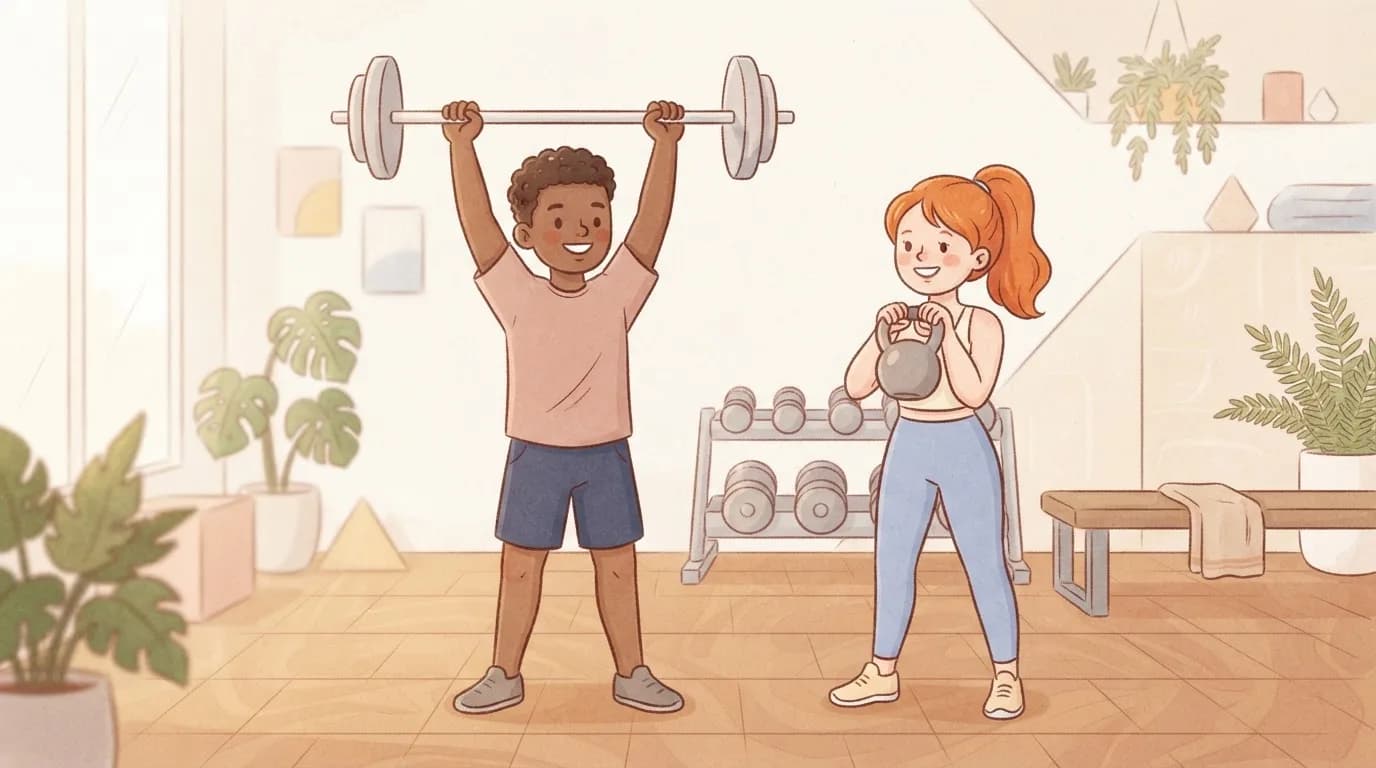
Start with the bar resting on the heel of your palm, right over your wrists, with your elbows slightly in front of the bar. A small amount of wrist extension is normal here, but your knuckles shouldn't be pointing behind you. Wrap firmly and keep the wrap over the joint, because if it's too high up the forearm it won't stop the wrist folding as you lock out.
Front squats, cleans and the front rack
The front rack asks for a lot of wrist extension. Physiopedia lists a normal wrist extension range of about 0 to 70 degrees, and a full-grip front rack can take people towards the end of that. If you wrap very tight, the wrap fights the position, so wear it snug but a little looser than for the bench. Let the bar sit on your shoulders, keep your elbows high and hold the bar with your fingertips if your wrists don't have the mobility yet. Wraps are a comfort, and mobility work is what actually opens the position up.
Jerks and handstand push-ups
Both put a lot of load on a wrist that's already bent back, often quite fast. A firm elastic wrap is helpful here because it gives support while letting the hand settle into position. In the study of hand and wrist injuries in CrossFit athletes, the authors point to cleans, front squats and handstand push-ups as moves that push the wrist hard and fast, so these are the places to be most patient with load and volume.
Dips and push-ups
On dips, keep your wrist stacked straight over the bar handles and avoid letting your hands roll back as you lower. Push-ups bend the wrist more than almost any barbell lift, so wraps are helpful there too, and push-up handles or fists take the bend out completely.
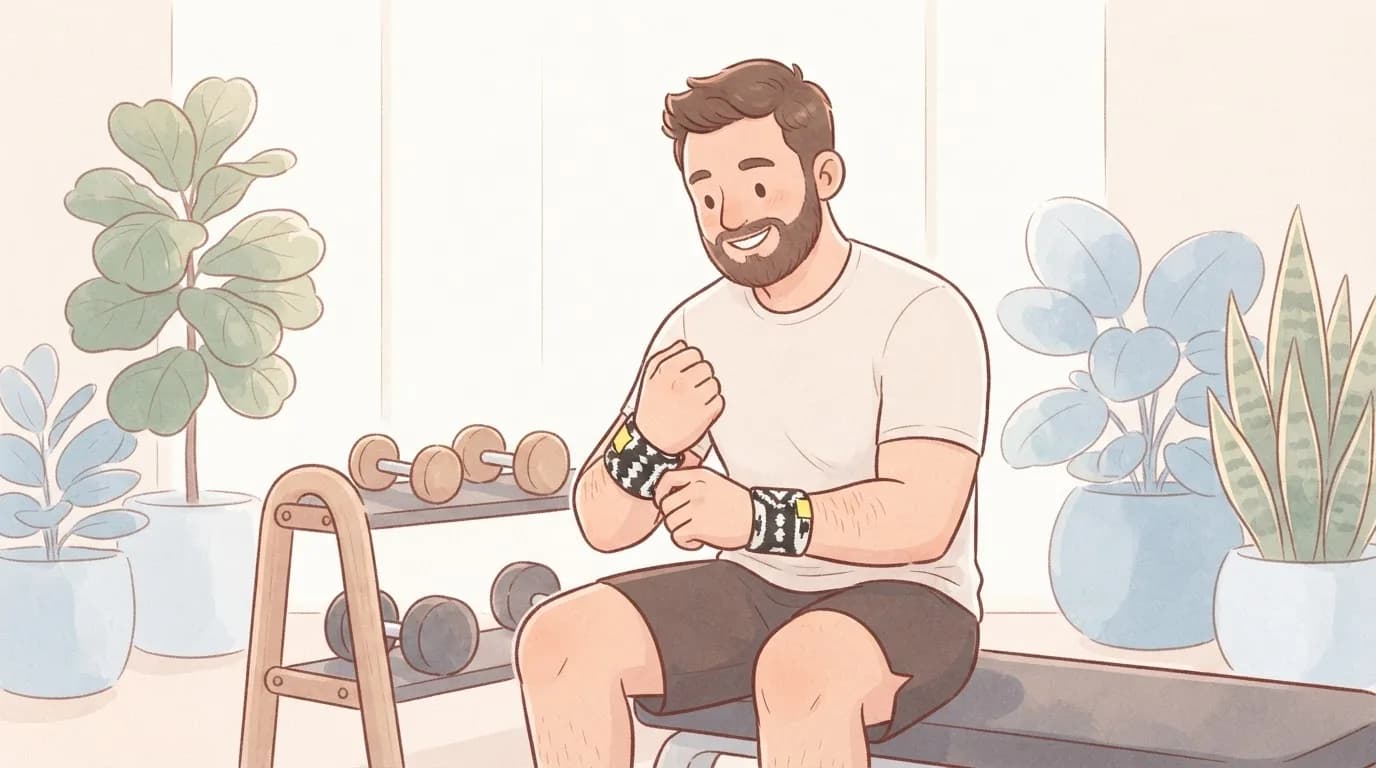
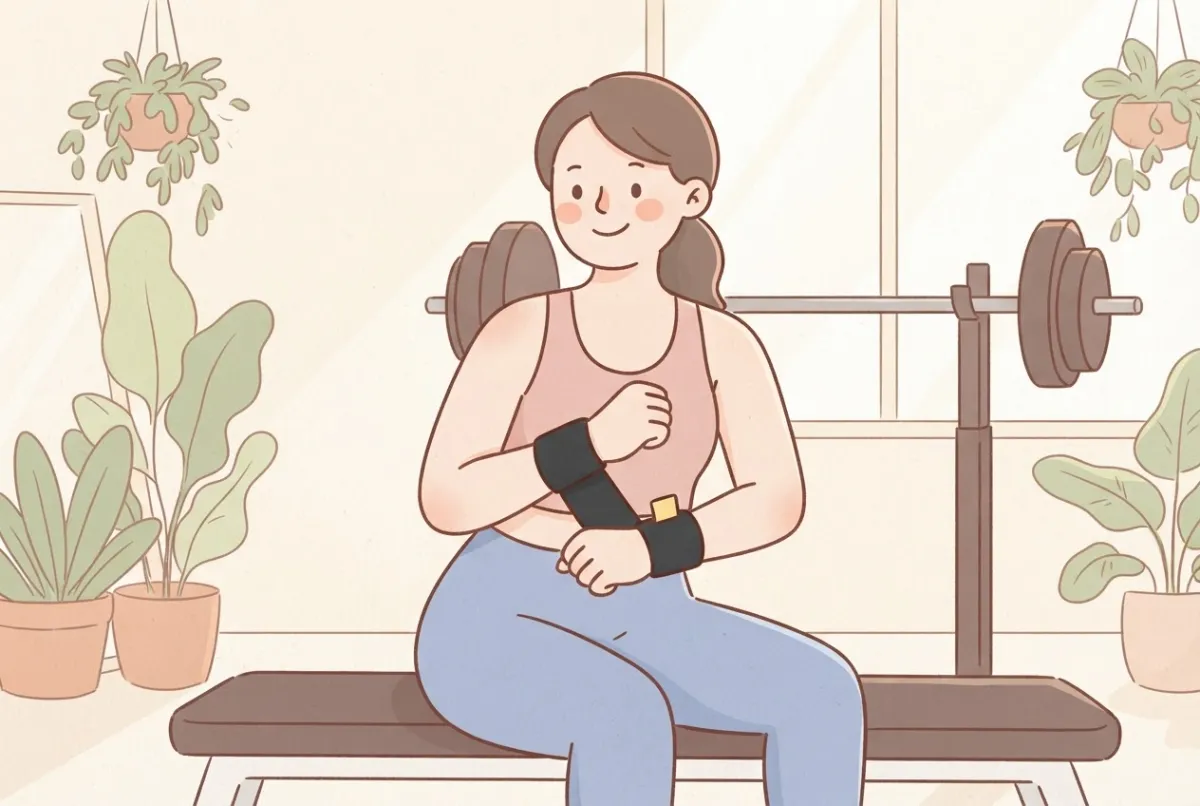
How do you put wrist wraps on properly?
- Start with the wrist straight. Hold your hand in line with your forearm, not bent back or curled in.
- Place the wrap over the joint. Most of the wrap should cover the wrist crease, with a little sitting on the forearm and very little on the hand.
- Add tension as you go round. Pull each layer snug rather than doing it loosely and tightening at the end.
- Close it and test it. Make a fist and open your hand. You should feel firm support, with normal colour in your fingers and no tingling.
- Loosen it after the set. Open the closure while you rest and redo it before the next heavy set.
If your wraps have a thumb loop, use it to hold the wrap while you wind it on, and then slip it off before you lift so it doesn't pull on your thumb.
Which technique cues matter more than the wrap?
A wrap helps you hold a good position, but it can't create one. These cues do most of the work.
- Bar low in the palm. The higher it sits in your fingers, the more leverage it has to bend your wrist back.
- Knuckles up, forearm under the bar. If you could draw a straight line from the bar through your wrist to your elbow, you're in a good spot.
- Squeeze the bar. A firm grip makes the forearm muscles brace the wrist. A loose grip lets it flop.
- Use your thumbs. A thumbless grip on pressing lifts lets the bar roll towards your fingers and is risky with heavy weights.
- Build load slowly. Wrists often complain after a sudden jump in weight or volume, even when technique is decent.
Masha's tip: Film one set from the side with your phone. You'll see straight away whether the bar is sitting in your palm or drifting up into your fingers, and that one clip is often more useful than any piece of kit.
Should beginners lift with wrist wraps?
In your first months, the weights are usually light enough to learn a stacked wrist without help, and that skill is worth having. I'd start using wraps once loads get heavy enough that your wrist position starts to slip, or earlier if your wrists ache after pressing even with good form. If you're coming back after time off or you have wrists that have always been a bit sensitive, there's nothing wrong with wearing them from the start.
What kind of wrap is best for lifting?
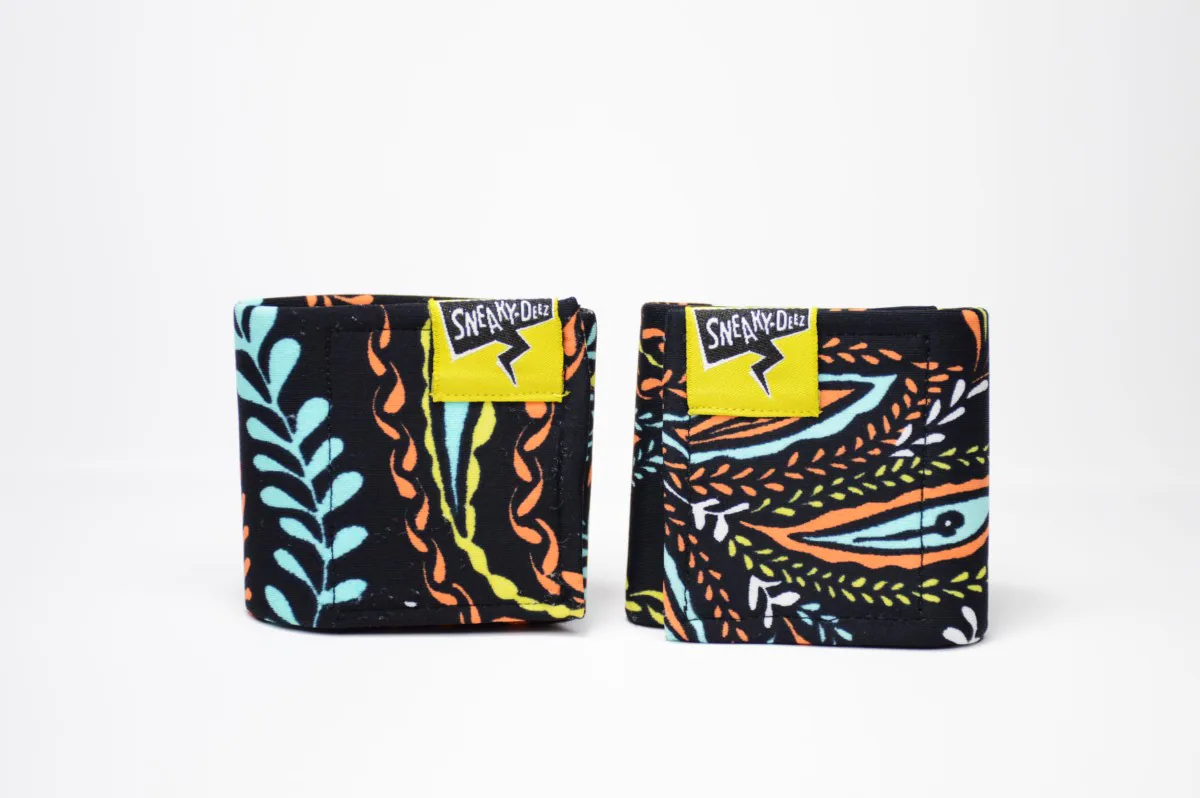
For maximal powerlifting singles, many lifters prefer long, stiff wraps. For everyday strength training, pressing, dips, push-ups and CrossFit-style sessions, a firm elastic wrap is more comfortable and lets the wrist move enough for front racks and bodyweight work. Ours are the elastic kind, with firm compression over the joint and a low position on the wrist so your palm and fingers stay free. The 8 cm width covers more of the joint, which tends to feel more supportive on presses.
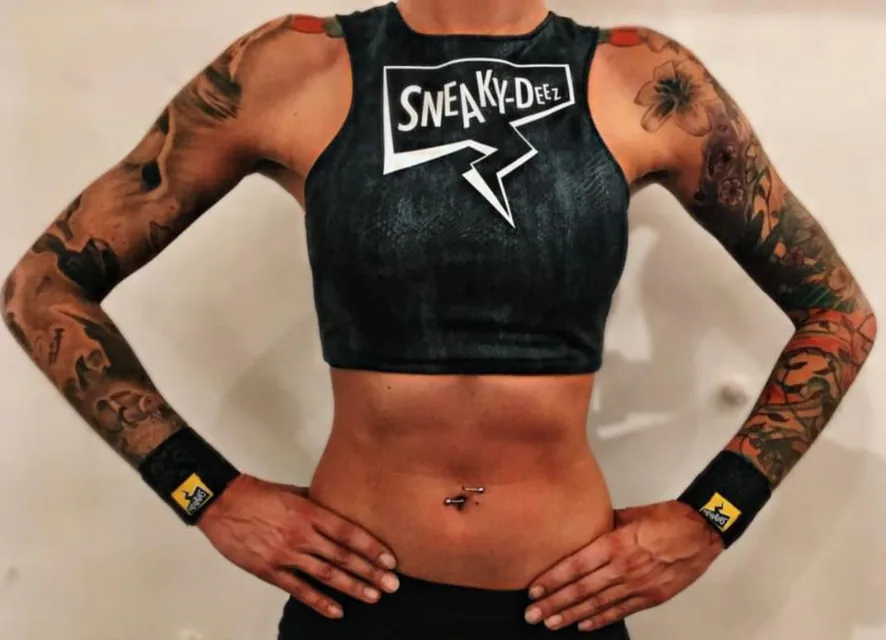
Getting the size right matters a lot for wraps, because a wrap that's too big never gets snug. The guide to measuring your wrist size takes a minute.
What if your wrist hurts when you lift, even with wraps?
Ease off the lifts that hurt and look at your technique and how fast you've been adding weight. Some soreness after a hard session that settles within a day or two is common. Pain that's sharp, getting worse, or sticking around for more than a couple of weeks isn't something to wrap and push through. The NHS advice on wrist pain recommends seeing a GP if pain hasn't improved after two weeks, or if you have tingling or numbness, and getting urgent help if there's swelling, a change in shape, or a snap or crack after an injury. Weakness in your grip and pain at night are also good reasons to get it looked at.
Meanwhile, building up your forearms helps you hold position on your own, and the routines in exercises for stronger, more resilient wrists fit easily at the end of a session.
More in Strength training
- How to Strengthen Your Wrists: A Progressive 8-Week Plan
- Wrist Pain When Bench Pressing: Causes, Grip Fixes and What Helps
- Wrist Pain From Push-Ups: Why It Happens and How to Build Tolerance
- Wrist Support at the Gym: When to Wear It, How Tight and How Long
- Best Wrist Support for the Gym: Wraps, Straps, Sleeves or Braces?
- 7 Push-Up Mistakes That Hurt Your Wrists and How to Fix Each One
- Exercises to Prevent Wrist Injuries: A 7-Minute Warm-Up and Prehab Routine
Questions people ask
Should I wear wrist wraps for deadlifts?
Usually not, because your wrist hangs straight during a deadlift and isn't being bent back. If your grip is what fails, lifting straps or grip training will help more than wrist wraps.
Do wrist wraps help the bench press?
They can make heavy benching feel more stable by compressing the joint and resisting the wrist bending back. They work best when the bar is already sitting low in your palm over your forearm.
Should you wear wrist wraps for front squats?
You can, but wear them a little looser than for pressing, because the front rack needs your wrist to bend back. Mobility work and a fingertip grip often help more than a tight wrap here.
Where should wrist wraps sit on your wrist?
Over the wrist joint itself, with most of the wrap covering the crease and a little on the forearm. If it sits too high up the arm, it can't stop the wrist from folding back.
Can you use wrist wraps and lifting straps together?
You can, but you'll rarely need both on the same lift. Wraps are for presses and straps are for pulls, so most lifters switch between them during a session.
Shop the fix
Wraps made for exactly this
Handmade in Slovenia by a pole teacher, with firm compression that sits low on the wrist.
Sources we checked
Written by
Masha Pinner
Pole dance teacher at Pandora Art of Pole in Slovenia and former fashion designer. Masha started SneakyDeez in 2017 after years of teaching on sore wrists, and she still designs every pair.
Read Masha’s story