The short version
- For sore wrists from typing, keyboard height, straight wrists and frequent short breaks usually help more than any brace.
- Rigid splints are mainly for wearing at night for carpal tunnel symptoms, on professional advice, rather than for typing all day.
- A soft compression band can add comfort and warmth at the desk, but it won't stop your wrist bending and should never feel tight.
- Palm rests are for resting during pauses, so let your hands float while you type.
- Numbness, tingling, weakness or pain that lasts more than two weeks is a reason to see a GP.
For most people with sore wrists from typing, a desk set-up that keeps the wrists straight, short regular breaks and a light touch on the keys help more than any brace. A rigid wrist splint is mainly useful at night if you have carpal tunnel symptoms and a health professional suggests it, while a soft compression band can add comfort and warmth but won't fix a bad set-up on its own.
Plenty of people who sit at a computer all day also train in the evening, and their wrists get a double shift. This is my honest guide to what's worth trying, in the order I'd try it.
Why do my wrists hurt when I type?
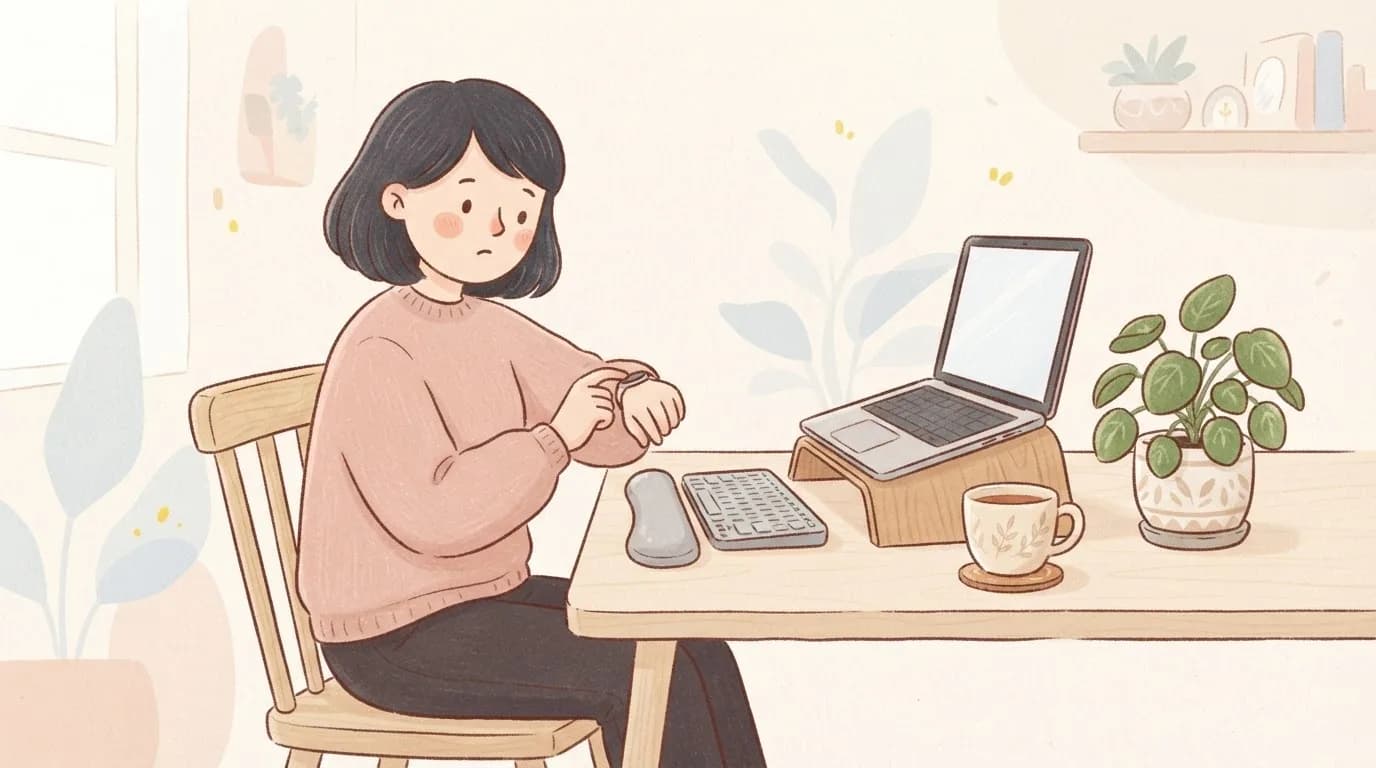
Typing itself is a light task, but you do it thousands of times a day, often with your wrists bent back, tilted outwards towards the little fingers, or resting hard on the edge of the desk. The NHS lists repetitive movements, long spells without rest and awkward postures as the things that raise your risk of a repetitive strain injury, and a typical day at a keyboard can tick all three boxes.
You might be wondering whether typing gives you carpal tunnel syndrome. The evidence on that is surprisingly mixed. Mayo Clinic notes that there isn't enough evidence to call computer use a risk factor for carpal tunnel syndrome, although computer work can certainly cause other kinds of hand and wrist pain. So if your fingers tingle, it's worth getting it checked rather than assuming, and if you simply ache, the fixes below are a good place to start.
What helps more than any wrist support?
Before you buy anything, try these for a week or two. They cost nothing and they make the biggest difference for most people.
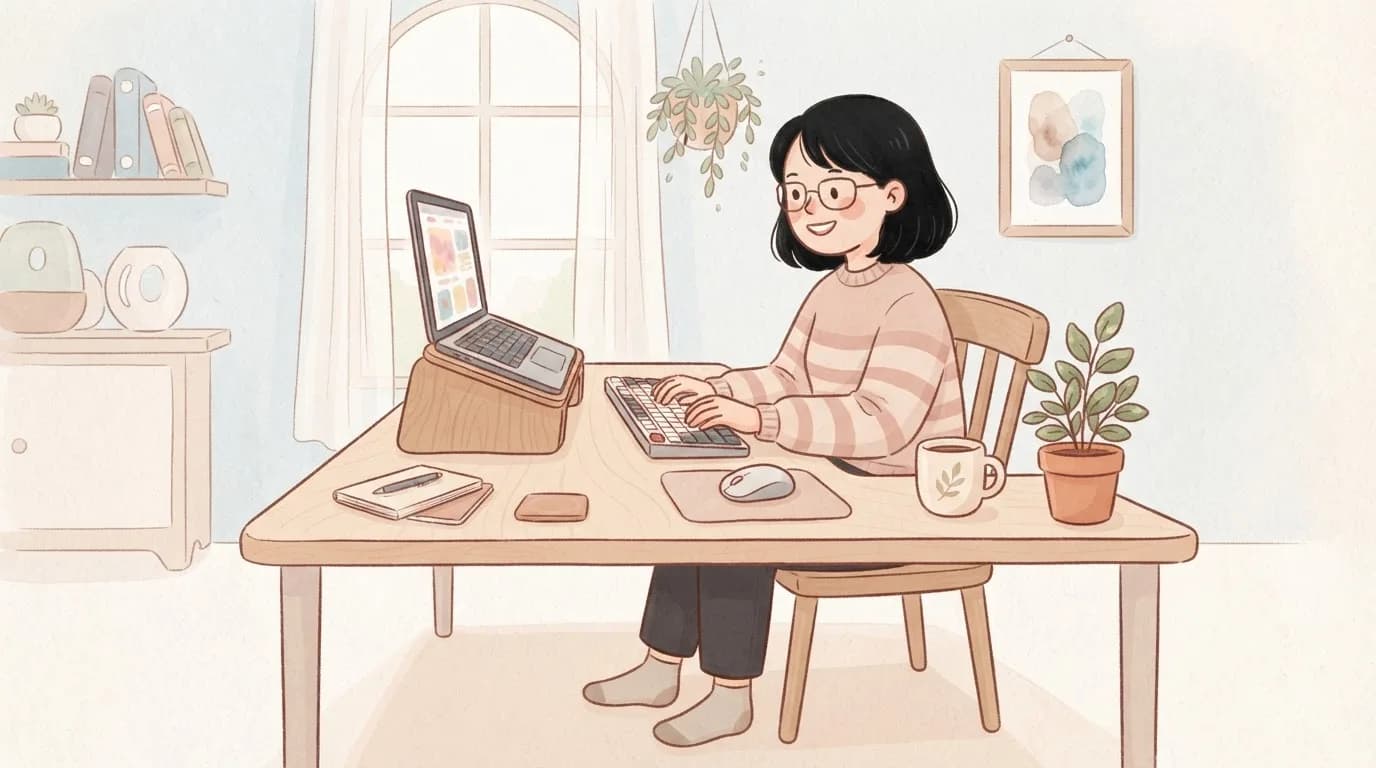
- Get your keyboard to elbow height. Sit with your shoulders relaxed and your elbows by your sides, bent to about a right angle. Your keyboard should be at that height or a touch lower, so your forearms are roughly level and your wrists are straight.
- Fold the keyboard feet away. Those little legs at the back tip the keyboard up and bend your wrists back, which is the opposite of what you want for most people.
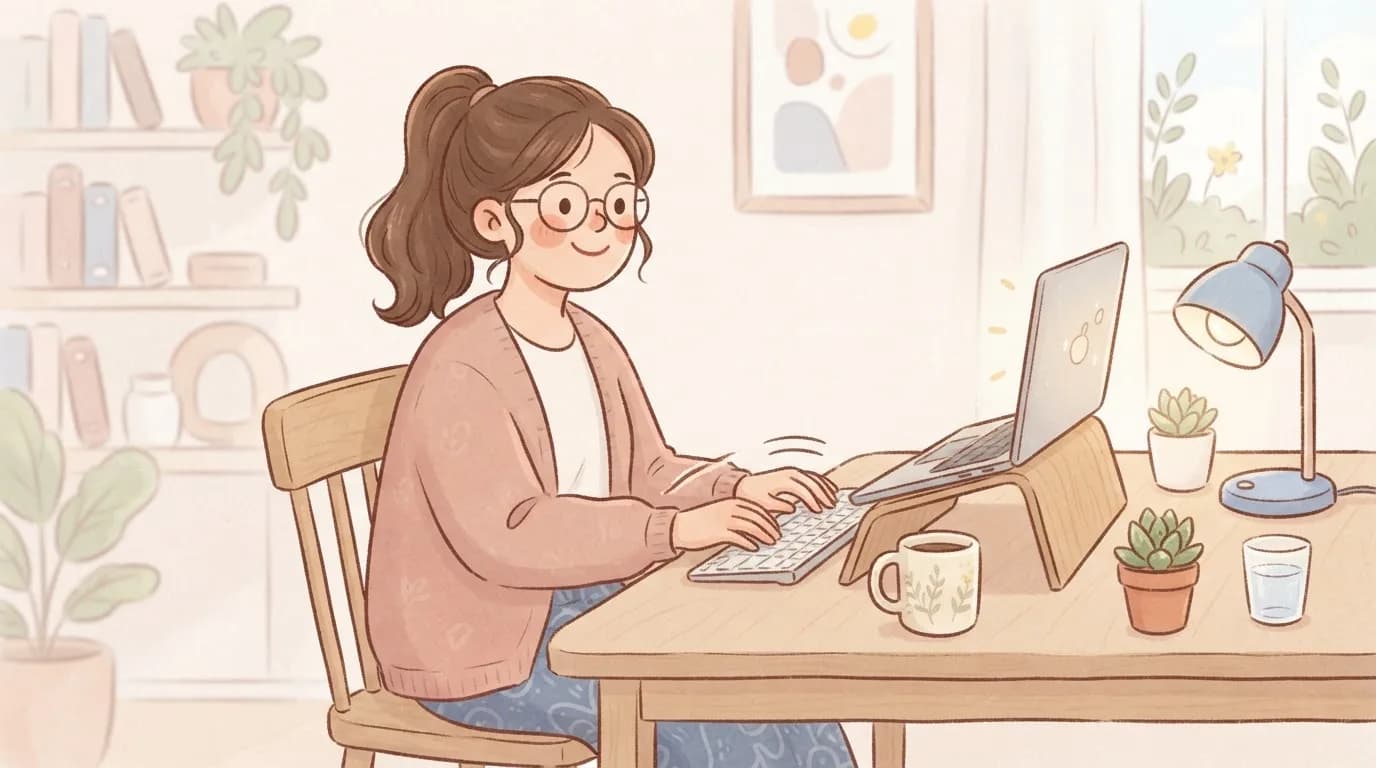
- Let your hands float while you type. Rest only when you pause. This one is so important that I wrote a whole article on why wrist rests can make things worse.
- Type softly. Hitting the keys harder than you need to adds up over a day, so aim for a light touch.
- Take small, frequent breaks. The NHS suggests that smaller, more frequent breaks are better than one long lunch break. Even 30 seconds every half hour to drop your hands and shake them out helps.
- Bring the mouse close. Reaching out to the side for the mouse twists the wrist and shoulder, so keep it right next to the keyboard.
If you'd like to go further with keyboards, mice and laptop set-ups, my article on sore wrists from your computer keyboard covers the gear side in detail.
Which wrist support is best for typing?
If you've sorted your set-up and still want some support, this is how the main options compare for desk work.
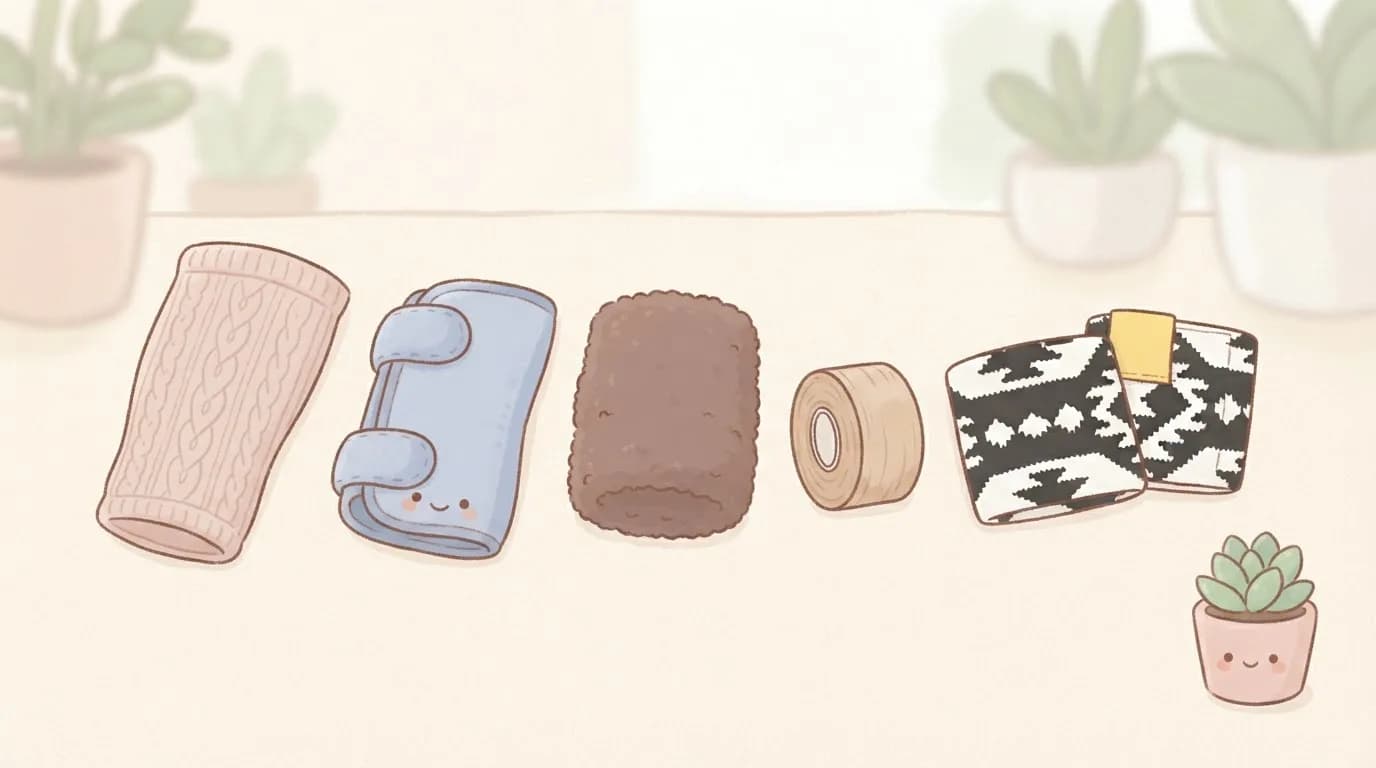
| Support | What it does | Best used | Watch out for |
|---|---|---|---|
| Rigid wrist splint with a metal or plastic stay | Holds the wrist straight so it can't bend | At night for carpal tunnel symptoms, if a GP, physio or pharmacist suggests it | Wearing it all day while typing can make you fight against it with your shoulder and forearm |
| Thumb spica splint | Rests the thumb and the thumb side of the wrist | Thumb-side pain, for example from a lot of phone use, on professional advice | Makes typing and mouse use awkward |
| Soft compression band or wrap | Gives gentle compression, warmth and a reminder of where your wrist is | Comfort during the day, or for people who also train after work | Doesn't stop your wrist bending, and should never feel tight |
| Gel or foam palm rest | Somewhere to rest the heel of your hand during pauses | Between bursts of typing | Leaning on it while you type pushes your wrists into a bent-back angle |
| Fingerless compression gloves | Light compression and warmth over the hand | Cold offices and stiff hands | Very little support for the wrist itself |
Should I wear a wrist splint while typing?
Usually not for long periods. Splints are designed to stop the wrist moving, and typing needs small movements, so people often end up typing with stiff shoulders instead. The NHS patient guide to carpal tunnel splints recommends wearing them at night, every night, because sleeping with your wrists curled is a common reason symptoms are worse in the morning, and it can take several weeks to notice a difference. If you've been advised to use a splint during the day, follow that advice over anything you read online, including here.
Where does a soft wrist wrap fit?
SneakyDeez wraps are elastic compression wristbands that I designed for pole dancing and training, so a desk isn't their main job. That said, plenty of pole dancers work at desks, and some like wearing a pair during the day because the gentle compression and warmth feel comfortable and act as a reminder to keep their wrists straight. They sit low on the wrist, and the 6 cm width is the lower-profile option if you want something less noticeable.

If you try a soft wrap at your desk, it should feel snug and warm and never tight. Pins and needles, cold fingers or red marks when you take it off mean it's too tight or you've worn it too long, so take it off. And please don't use any wrap to keep going through pain that's getting worse.
A two-minute routine for typing breaks
Do this once or twice in the morning and again in the afternoon. Every move should feel easy and pleasant, with no tingling and no pain.

- Shake out: drop your arms by your sides and shake your hands loosely for 10 seconds.
- Wrist circles: make slow circles with your fists, 5 each way.
- Forearm stretch, palm up: arm straight in front, gently ease the fingers down with your other hand for 15 to 20 seconds. Swap hands.
- Forearm stretch, palm down: same arm position, palm facing the floor, gently ease the back of the hand towards you for 15 to 20 seconds. Swap hands.
- Finger spreads: make a soft fist, then open your hand and spread your fingers as wide as you can. Repeat 10 times.
- Shoulder rolls: 5 slow rolls backwards, because tight shoulders often travel down into the forearms.
Masha's tip: Tie your breaks to something you already do, like every time you send an email you've been working on or before each meeting. It's much easier than remembering to stretch, and heat on the forearms and shoulders at the end of the day can feel lovely too.
When to see a doctor about sore wrists from typing
Desk aches usually ease within a couple of weeks once you change your set-up and habits. Please get advice if:
- you have numbness, tingling or pins and needles, especially in the thumb, index and middle fingers, or at night (the NHS page on carpal tunnel syndrome describes the typical pattern)
- your grip feels weak or you drop things
- the pain hasn't improved after two weeks of changes, or keeps coming back
- there is swelling, or pain that wakes you at night
If you've been leaning on a gel rest all day, read my article on what to do when an ergonomic wrist rest doesn't work. For a closer look at the different kinds of supports, there's also my guide to types of wrist support band and one on wrist compression sleeves.
More in Desk & everyday
- Why Your Ergonomic Wrist Rest Isn't Helping (and What to Do Instead)
- Sore Wrists from Your Keyboard? The Set-Up and Gear That Help
Questions people ask
Is it good to wear a wrist brace while typing?
For most people, not for long stretches. A rigid brace stops the small wrist movements typing needs, so you end up working harder with your shoulders and forearms. Splints are more often recommended at night for carpal tunnel symptoms. Fix your desk set-up first and ask a GP or physio if you think you need one.
Does typing cause carpal tunnel syndrome?
The evidence is mixed, and Mayo Clinic says there isn't enough to call computer use a risk factor. Computer work can still cause other kinds of hand and wrist pain, so it's worth improving your set-up anyway. Tingling in the thumb, index and middle fingers should be checked by a doctor.
Should my wrists rest on the desk when I type?
Ideally your hands float over the keys while you type and you rest only during pauses. Pressing the underside of your wrist into the desk edge or a rest puts pressure on the area the tendons and median nerve pass through, and tends to bend your wrists back.
How long does it take for typing wrist pain to go away?
Mild desk-related aches often improve within a couple of weeks once you change your set-up and take regular breaks. If it hasn't improved after two weeks, keeps coming back, or you have numbness or weakness, see a GP.
Can I wear compression wrist wraps at work?
You can, if they're comfortable. A soft compression wrap should feel snug and warm, never tight, and you should take it off if you notice tingling, cold fingers or deep marks. It's a comfort aid, so keep working on your set-up and breaks too.
Shop the fix
Wraps made for exactly this
Handmade in Slovenia by a pole teacher, with firm compression that sits low on the wrist.
Sources we checked

Written by
Masha Pinner
Pole dance teacher at Pandora Art of Pole in Slovenia and former fashion designer. Masha started SneakyDeez in 2017 after years of teaching on sore wrists, and she still designs every pair.
Read Masha’s story